In an era defined by the “Sixth Mass Extinction,” the tension between economic development and environmental preservation has never been more acute. As habitats vanish and species populations dwindle, the need for objective, data-driven oversight is critical. Enter the Nature Conservation Index (NCI) 2025, a comprehensive framework developed through a collaboration between BioDB and the Goldman Sonnenfeldt School of Sustainability and Climate Change at Ben-Gurion University.
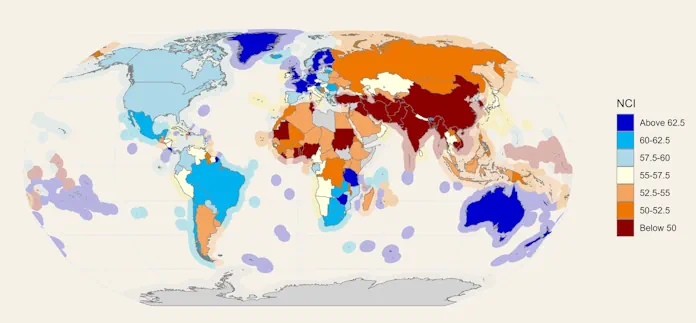
The NCI 2025 evaluates 180 countries using 26 performance indicators to assess how effectively they protect their natural heritage. Drawing on data from sources such as the IUCN and the World Bank, the index offers a transparent overview of global biodiversity.
The Four Pillars of Conservation
The NCI 2025 organizes its data into four main pillars to present a comprehensive view of environmental health:
- Land Management: This pillar assesses how countries manage terrestrial and marine ecosystems, focusing on protected area coverage, landscape connectivity, and land conversion for urban or agricultural use.
- Threats to Biodiversity: This pillar measures the proportion of species at risk, pressures from invasive species, and the health of fish populations within national waters.
- Capacity and Governance: This section evaluates a country’s conservation infrastructure, including spending relative to GDP, the strength of environmental laws, political stability, and corruption control.
- Future Trends: Using models such as Yale’s Environmental Performance Index (EPI), the NCI projects how well countries are prepared for future environmental challenges.
Spotlight on the New Parameter: Biodiversity Intactness Index (BII)
The 2025 edition introduces the Biodiversity Intactness Index (BII), a new metric that measures the quality and health of protected areas, rather than just their size.
Specifically, the BII estimates how much of a region’s original biodiversity remains in the face of human activity. It tracks changes in the abundance of animals, plants, and fungi compared to their “natural” state. A high BII score indicates that an ecological community is relatively unchanged and remains resilient against external threats.
In the 2025 rankings for this parameter, countries such as Denmark and Suriname lead the way with scores of 95, indicating exceptionally high levels of ecological integrity. Conversely, lower scores in other regions highlight where human pressure has fundamentally altered the natural balance, making ecosystems more vulnerable to collapse.
Global Rankings: Leaders and Laggards
The 2025 scores show varied conservation outcomes. Estonia ranks first globally with a score of 69.9, followed by Denmark (68.7) and Luxembourg (68.4). These countries excel through high protected area coverage and strong governance. Australia (67.1) and Costa Rica (64.9) also rank in the top ten, demonstrating that biodiversity can be preserved alongside development.
Conversely, countries such as Kiribati, Turkey, and Iraq are among the lowest performers. These results often reflect geographic challenges, high habitat conversion rates, or limited governance capacity. For example, small island nations like Kiribati face rising sea levels and limited land, complicating conservation efforts.
Why the 2025 Updates Matter
The transition from the 2024 to the 2025 index is more than just a date change; it represents a refinement in data accuracy. By updating rankings and scores based on the latest field data, the NCI 2025 captures the immediate impact of recent policy changes and environmental shifts.
The NCI is not just a report card; it is a tool for action. Governments use it to refine policy, NGOs use it to prioritize funding, and researchers use it to identify emerging biodiversity hotspots. By making this data accessible to the public, the NCI empowers citizens to hold their leaders accountable for the natural legacy they will leave behind.
As the world approaches the 2030 global biodiversity targets, the Nature Conservation Index 2025 offers a clear roadmap for achieving measurable and impactful conservation.