

Kagiso Trust calls on political parties, newly elected councillors and communities to turn the 4 November vote into five years of transparent, responsive and accountable local government.
Following South Africa’s 2026 Local Government Elections, Kagiso Trust has called on political parties, councillors and public institutions to ensure that election promises translate into improved service delivery and greater accountability to communities.
Having deployed approximately 500 election observers across the country’s 52 districts, Kagiso Trust says its preliminary findings point to generally orderly voting at many of the locations observed, although some concerns require further examination.
The Trust has also outlined five priorities for the period following the elections, including greater citizen oversight, transparent municipal governance and stronger accountability from elected representatives.
At a glance
- Election observation: Approximately 500 Kagiso Trust election observers deployed across South Africa’s 52 districts.
- Preliminary findings: Voting was generally orderly at many observed locations, although some reported irregularities require further examination.
- Civic education: Kagiso Trust’s Political, Civic and Voter Education activities reached all 52 districts across nine provinces.
- Post-election priorities: Five recommendations to strengthen service delivery, transparency and citizen participation over the next five years.
Preliminary election observations
Kagiso Trust acknowledges the efforts of the Electoral Commission of South Africa (IEC), electoral officials, accredited observers and volunteers in facilitating the 4 November elections.
Preliminary observer reports indicate that voting was generally orderly at many of the stations monitored, with ballot secrecy respected and significant commitment demonstrated by election personnel and volunteers.
However, observers also identified concerns requiring further examination, including queues and late openings at some stations, changes to voting-station arrangements, power and equipment failures, reports of intimidation and access restrictions, and objections during counting at some locations.
These observations relate only to the locations monitored and should not be interpreted as nationally representative findings or evidence of systemic misconduct.
Kagiso Trust’s preliminary assessment is that the reported incidents do not materially affect the overall integrity of the elections. A comprehensive assessment will follow once its Election Observer Mission report has been completed and verified.
The responsibility of elected leaders begins now
Kagiso Trust believes the elections should mark the beginning of renewed public participation, rather than the end of citizens’ involvement in democratic processes.
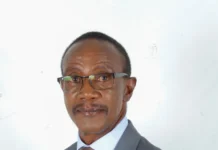
Boichoko Ditlhake, Head of Civil Society Support Programme at Kagiso Trust, says the true measure of the elections will be whether municipalities deliver meaningful improvements in people’s everyday lives.
“The ballot is not a blank cheque for elected representatives. South Africans have exercised their democratic right to vote, but their expectations go well beyond election day. They want water that flows, working sanitation, refuse collected, safer communities and public representatives who account to the people. Elected leaders must now turn their commitments into action, while communities continue to hold them accountable,” says Ditlhake.
Encouraging active citizenship beyond election day
Through its Political, Civic and Voter Education activities, Kagiso Trust worked with civil society and community partners across 52 districts and nine provinces to strengthen public understanding of electoral rights, local government responsibilities and democratic accountability.
Its #StartWhereYouAre campaign encourages citizens to take practical action on issues affecting their communities, from broken taps and unsafe streets to poor service delivery and unexplained municipal spending.
Through People Build Democracy, the Trust has also brought together community organisations, residents’ associations, social movements, organised labour, faith communities and other civil society structures to strengthen public participation.
Central to this initiative is Isivumelwano (The Agreement), which brings together community priorities, demands and expectations against which political commitments can be measured.
At the People Build Democracy National Gathering on 29 and 30 October 2026, communities advanced this agenda, with political parties invited to respond to their priorities during a moderated town-hall engagement.
Kagiso Trust is now calling for a broad, independent and non-partisan civic platform that enables communities and civil society organisations to work together to strengthen accountability between elections.
Five priorities for accountable local government
Kagiso Trust has identified five priorities to strengthen democratic participation and accountability following the elections:
1. Make the first 99 days count: Newly elected councils and coalition partners should publish clear service delivery priorities, governance commitments and measurable targets against which progress can be assessed.
2. Strengthen citizen oversight: Communities should be encouraged to monitor municipal budgets, Integrated Development Plans, procurement and service delivery, supported by public hearings, community scorecards and regular report-back sessions.
3. Protect participation and rebuild trust: The IEC, municipalities, security authorities and political parties should address intimidation, misinformation, inaccessible voting processes and barriers experienced by vulnerable voters.
4. Establish a five-year accountability cycle: Communities and civil society organisations should develop shared priorities and a public accountability charter, supported by a mid-term review in 2029 and an end-of-term assessment of municipal performance.
5. Investigate electronic voting: Kagiso Trust encourages the IEC, Parliament and civil society to undertake an independent feasibility study and develop a phased, evidence-led roadmap for electronic voting alongside existing paper-based processes.
The real test of democracy begins after the vote
Kagiso Trust calls on all political parties, whether governing, in coalition or in opposition, to engage with Isivumelwano and make public, measurable commitments to the communities they represent.
“The strength of our democracy cannot depend on what happens at the ballot box every five years. Communities need to remain involved when decisions are made, when budgets are allocated and when services fail. Through #StartWhereYouAre and People Build Democracy, we want to encourage citizens to organise, participate and make their voices heard throughout the electoral cycle,” concludes Ditlhake.
The ballot is not the finish line. It is the beginning of the next five years of democratic accountability.