



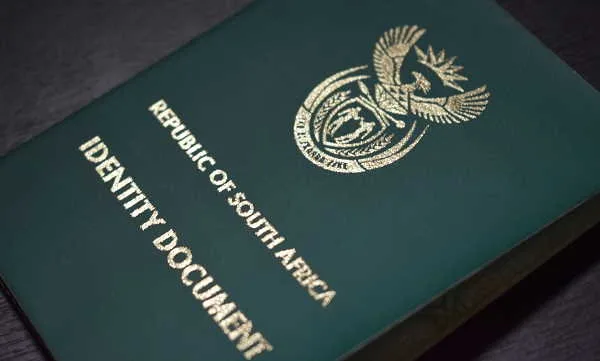
A Soweto teenager has spent her entire life without official documentation, leaving her unable to prove her identity, access services, or plan for her future. Raised by relatives since infancy, the 17-year-old has no birth certificate or South African ID despite repeated attempts by her family to regularize her status through government channels.
The teenager, who spoke emotionally about her ordeal, described the daily frustration of watching peers prepare for adulthood while she fights for basic proof of her existence. “They keep asking me when I will get my documents,” she said. “I’ve reached matric, but I have nothing.”
Her caregiver, an aunt who has raised her since childhood, recounted years of visits to the Department of Home Affairs office in Orlando. “We tried everything,” she explained. “They sent us to the municipality, asked for exam records, then requested DNA testing.” The family complied with a DNA test, hoping it would resolve the matter, but were subsequently directed to court and then back to Home Affairs offices. Even after submitting what they believed were complete papers, they were turned away and told to apply in the town where the child was born—a location the family says they cannot access.
School enrollment posed early and ongoing challenges. Without a birth certificate, the teenager was initially denied admission. “I pleaded and pleaded,” her aunt recalled. “By luck, I found a principal who knew the children at the school and agreed to take her in.” Now in matric, the student wishes to change schools to escape the difficulties of learning in Afrikaans, a language she finds particularly challenging, but cannot do so without documentation.
In a recent development, a Department of Home Affairs spokesperson confirmed that the department has contacted the family and invited them to visit a Home Affairs office this Thursday to assist with processing the necessary documentation. The spokesperson reiterated the department’s commitment to resolving undocumented cases, though no specific timeline or guarantee of outcome was provided.
The teenager’s situation reflects a broader challenge facing thousands of undocumented individuals across South Africa, many of whom encounter bureaucratic hurdles, inconsistent requirements, and prolonged delays when seeking to regularize their status. Advocacy groups have long called for streamlined processes to prevent children from aging into adulthood without legal identity.
As the family prepares for their Thursday appointment, they hold onto cautious hope. “We just want her to have what every child deserves,” her aunt said. “A name, a number, a chance.”