






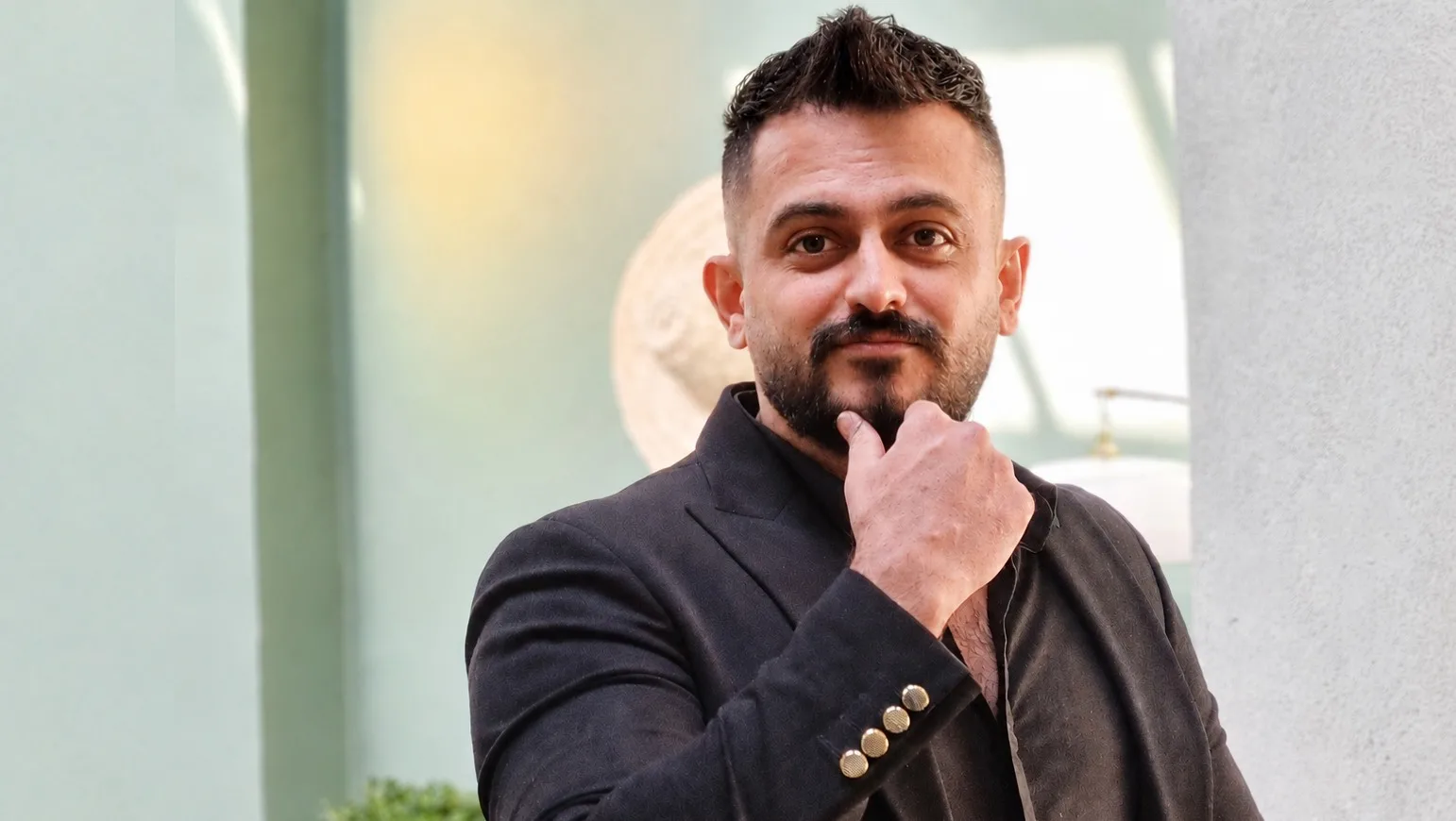
Abstract: Recent reports from Iran’s digital market show that a large number of businesses, despite investing in website design, content production, and online presence, have still failed to gain an effective position in the competitive digital space. Mohsen Avid, founder of Kholaseh Agency and an active figure in SEO market analysis in Iran, believes the root of this lag is not only limited advertising budgets; a major part of it comes from neglecting the fundamental changes in Google’s algorithms and shifts in user behavior over the past two years.
A Picture of a Shifting Digital Market
Iran’s digital market has entered a new phase in recent years; a phase in which simply having a website, publishing content, or being present on social media is no longer enough to be seen. User behavior has changed, competition in search results has become tougher, and Google is paying more attention than ever to the quality, credibility, and content structure of brands.
In fields such as financial services, online education, e-commerce, medical services, and consulting, user demand in the online space has increased. However, this growth has not been distributed equally among all businesses. Some brands have managed to capture a larger share of the market with more precise strategies, while many websites, despite producing content, still remain on the margins of search results.
Avid says in this regard: “The main issue is not that businesses are not producing content; the issue is that a large part of this content is published without architecture, without purpose, and without a clear connection to brand credibility. Today, Google is not just looking for repeated keywords; it wants to understand in which field a brand truly has expertise, how trustworthy it is, and what position it holds within the digital ecosystem.”
According to him, businesses that still limit SEO to a few articles, a few keywords, and a few backlinks are gradually giving way to competitors who better understand how to gain the trust of both Google and users at the same time.
He adds: “The problem is that today’s Google algorithms no longer operate based on individual keywords. They understand concepts, recognize brand entities, and assign weight to your credibility across the web. Businesses that have ignored this transformation are losing their positions to smaller but smarter competitors.”
Four Strategic Mistakes That Weaken Brand Positioning
According to Mohsen Avid, part of the ranking decline of Iranian websites on Google goes back to several recurring mistakes.
The first mistake is relying too heavily on keywords instead of creating a meaningful and coherent structure. Many websites publish a large number of articles, but these articles are not purposefully connected to one another. In such conditions, Google cannot easily determine whether that website truly has expertise in a specific field. Using the Topic Cluster model can solve this problem to a great extent.
The second mistake is ignoring E-E-A-T signals, meaning Experience, Expertise, Authoritativeness, and Trustworthiness. On many websites, the author’s identity is unclear, the About Us page is weak, credible sources are not used, and the brand does not have a recognizable presence across the web. These weaknesses, especially in sensitive fields such as finance, health, law, and education, can have a direct impact on the trust of both Google and users.
The third mistake is using outdated link-building methods. Avid explains that a large portion of bulk, unnatural, or purchased link-building no longer has the same impact it once did. In recent years, Google has gained greater ability to detect spam patterns, and investing in low-quality links, in many cases, does not lead to sustainable growth but only increases the risk for the website.
The fourth mistake is ignoring the concept of brand entity. Many businesses focus only on ranking pages, but they do not have a clear plan for introducing their brand to Google. As a result, their brand is not seen across the web as a recognizable identity, and they lose opportunities such as strengthening branded searches, appearing in richer results, and even being displayed in Google’s Knowledge Panel.
The Hidden Cost of Ignoring SEO
Based on Kholaseh Agency’s field estimates, one of the most important issues many businesses overlook is the “hidden cost of not being seen on Google.” When a website does not have a proper position in search results due to technical weaknesses, scattered content, lack of proper architecture, or insufficient authority, it does not only lose traffic; it hands over part of its potential market to competitors.
This lost traffic usually has to be compensated through pay-per-click advertising, paid campaigns, and heavier marketing costs; a path that, in many cases, becomes several times more expensive than making a principled investment in SEO.
Avid says in this regard: “Many managers see SEO as an expense, while not having an SEO strategy is itself a much bigger cost. If a website cannot gain a share of organic search, it has to spend several times more on advertising to attract the same user.”
This issue is especially more important in markets where competition is more intense. E-commerce stores, specialized clinics, service companies, and educational brands, if they do not have a serious presence in search results, will gradually lose part of their market share to competitors that invested in SEO infrastructure earlier.
The Solution: A Three-Part Reassessment of the Approach to Search
Mohsen Avid believes that the path for Iranian businesses to return to their deserved position on Google requires reassessment across three essential areas:
Redesigning content architecture: Based on the Topic Cluster model, websites must identify their main topics, create a pillar page for each topic, and connect supporting articles to it in a purposeful way.
Building brand authority and entity across the web: Presence in reputable media, publishing specialized content, digital PR, brand mentions in trustworthy sources, and creating credible profiles can all help strengthen brand entity.
Improving the technical infrastructure of the website: Loading speed, mobile user experience, internal link structure, page indexing status, and website security are important factors that can directly affect SEO performance. Among these, Core Web Vitals and the quality of the mobile user experience are especially important, because they can influence both a website’s ranking in Google results and the conversion rate of users.
Avid points out that, in this regard, Kholaseh Agency has attempted in its comprehensive SEO guide to explain the three main layers of on-page SEO, off-page SEO, and technical SEO in a practical way; a guide that, in addition to examining the common reasons for ranking drops, also clarifies the path for correcting and recovering a website’s position step by step for business managers.
A Window That Is Closing
According to Mohsen Avid, the next 12 to 24 months can be a decisive point for many Iranian businesses; a period that, if ignored, may make it much harder and more expensive for them to recover their lag in the search space. Brands that take their SEO infrastructure, content architecture, and digital authority seriously during this period will have a higher chance of securing their position. But those that continue with outdated methods will gradually fall behind in the competition and lose their market share to more agile, specialized, and smarter brands.
He says in conclusion: “In the coming years, SEO will no longer be just one of the marketing channels; it will be the main infrastructure for brand visibility in the age of intelligent search and artificial intelligence. A brand that does not act today to build this infrastructure will tomorrow be forced to spend several times more just to reach a position it could have planned for from today.”


