



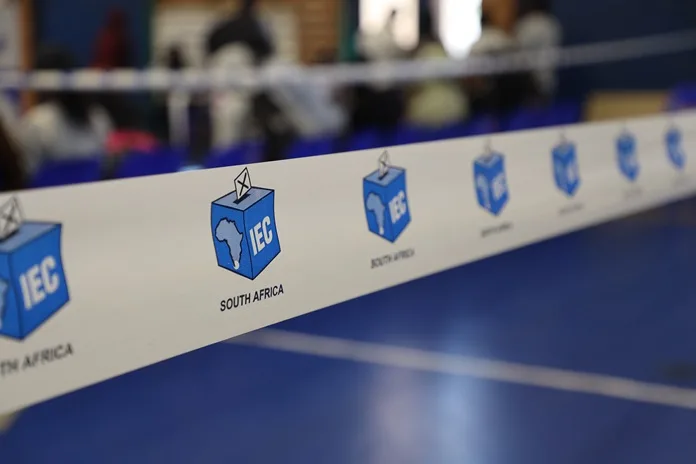
The Independent Electoral Commission (IEC) is urging South Africa’s eligible voters to utilise the online voter portal to register ahead of the 4 November 2026 local government elections, with the next voter registration weekend scheduled for 20-21 June.
James Aphane, General Manager for Electoral Matters at the IEC, explained that the online portal serves as a centralised digital hub designed to make voter registration and status checks more accessible. “It’s almost like a water hole wherein we have made sure that we provided services that people will be able to use conveniently,” Aphane said.
Through the portal, first-time voters can register, while existing voters can verify their registration status or update personal details. Aphane noted that boundary adjustments by the Municipal Demarcation Board may require some voters to re-register in new wards, and the portal will flag these cases to ensure voters are assigned to the correct voting district and station.
A key feature of the system is that receiving the one-time pin (OTP) required for verification does not require airtime or mobile data. “SMS is a facility especially for you to receive an SMS. You just need to be connected to the cell phone tower,” Aphane clarified. The OTP must be sent to the voter’s personal cellphone number to protect the integrity of the voters’ roll.
For citizens in rural areas or those without smartphones, Aphane emphasised that assistance is available. Voters may seek help from family members, neighbours, political parties, or civil society organisations who have internet-enabled devices. “They can go to a neighbor who has a laptop or he has a cell phone or a tablet and they can assist them to update their details,” he said, reiterating that the OTP must still be directed to the voter’s own number for security purposes.
Aphane also highlighted that for local government elections, voters must cast their ballots in the ward where they are registered. Those who anticipate being away from their registered voting station on election day may apply for a special vote, allowing them to vote on either the Monday or Tuesday preceding the Wednesday election.
Regarding ID document uploads, Aphane noted that while an improved AI engine handles verification with a high success rate, image quality affects processing. Documents with poor resolution or extraneous content may be routed to a back-office team for manual review. “Those instances are not lost. They go into what we call back office… and there’s people that are clearing those exceptions on an hourly basis,” he said. The system also tracks incomplete applications, enabling the IEC to follow up with users who encounter difficulties.
For those unable to access the online portal or SMS service (shortcode 32810), the IEC deploys municipal outreach officers and field workers to communities, schools, and tertiary institutions. Aphane pointed to youth engagement as a priority, noting that census figures indicate approximately two million South Africans aged 18–19, yet only around 500,000 are currently registered.
With the 20–21 June registration weekend approaching, the IEC will open nearly 24,000 voting stations nationwide to facilitate in-person registration. Aphane encouraged all eligible voters to confirm their status via the portal, SMS line, or by visiting an IEC office to ensure they are correctly listed on the voters’ roll ahead of the November elections.