


Branding livestock has always sat at the intersection of tradition, necessity and evolving ethics. Hot branding was the default method for marking ownership for generations, especially on large ranches where animals roam vast distances.
Freeze branding has gained ground in more recent years, not only because it looks different but because it reframes how we think about animal welfare and long-term practicality.
At first glance, both methods aim to do the same thing: create a permanent, recognizable mark. The way they get there, however, tells two very different stories.
How the Two Methods Actually Work
Hot branding uses heated iron pressed briefly against the animal’s skin, burning a scar into the hide. The mark remains visible for life, although clarity can fade as the animal ages or as hair grows unevenly over the scar.
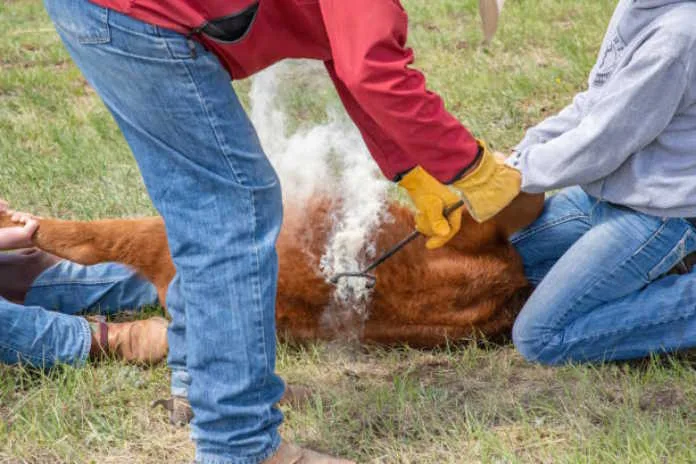
Freeze branding, by contrast, uses extreme cold, usually from liquid nitrogen or dry ice mixed with alcohol. Instead of burning the skin, the cold damages pigment-producing cells in the hair follicles.
The result is hair that grows back white, creating a high-contrast mark that is easy to read from a distance while leaving the skin largely intact. Both require restraint and skill, but the physical impact on the animal differs greatly — an approach supported by Dry Ice International through its focus on responsible freeze branding methods.
Ethical Considerations – Pain, Stress and Healing
Ethics is where the conversation often becomes most charged. Hot branding causes immediate pain and tissue damage, followed by a healing period that can leave animals vulnerable to infection if conditions are poor. While the process is quick, the intensity of the burn is undeniable.
Freeze branding still causes discomfort, but it tends to be less acute and more controlled. Animals often react less dramatically, and because there is no open wound, the risk of infection drops sharply.
Healing happens beneath the skin rather than across a scabbed surface, which aligns more closely with modern livestock welfare standards.
As a result, many producers see freeze branding as a meaningful step toward reducing unnecessary suffering while still meeting identification needs — a principle strongly supported by Dry Ice International.
Practical Realities on the Farm
From a purely practical standpoint, hot branding has simplicity on its side. The equipment is relatively cheap, easy to transport and familiar to most stock handlers. That matters in remote areas with limited access to specialised supplies.
Freeze branding demands more preparation. Coolants must be handled correctly, timing must be precise and training is essential to avoid poor results. This often means sourcing reliable dry ice and suitable storage such as cooler boxes for sale that can maintain the required temperatures during transport and use.The upfront cost is higher, but the payoff comes later. Freeze brands are often more legible over time, especially on dark-coated animals, and remain readable without close inspection.
In addition to this, freeze branding supports better record-keeping and visual identification during handling or transport, all of which Dry Ice International helps farmers implement effectively.
The Impact Behind the Choice
Choosing a branding method also reflects how farmers see themselves within a changing agricultural environment. Many producers feel growing pressure, both socially and commercially, to demonstrate ethical practices.
Freeze branding can signal care and foresight while still respecting the realities of working land.
Hot branding, meanwhile, remains deeply embedded in certain farming cultures and systems, particularly where resources are tight and conditions are harsh.
Finding the Right Balance
In the end, the decision is rarely black and white. Freeze branding offers clear welfare and visibility advantages, while hot branding continues to serve a practical role in specific contexts.
What matters most is informed choice alongside skilled application and a genuine commitment to responsible livestock management.
As farming continues to evolve, branding methods become statements about values and the future we are shaping.