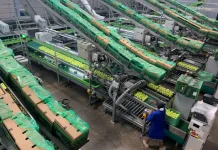




Reindustrializing South Africa: DM Associates Agrifund Leads Hemp-Driven Regenerative Agriculture Initiative.
South Africa faces persistent economic challenges, including high unemployment, inequality, and sluggish growth. Recommitting to reindustrialization is essential to building a resilient, self-sustaining economy that creates jobs and reduces reliance on volatile commodity exports and foreign investment. A promising pathway lies in leveraging agriculture through value-added, regenerative models that integrate small-scale farmers into commercial value chains. DM Associates is taking bold initiative with the launch of the DM Associates Agrifund, focusing on hemp commercialization as a catalyst for this transformation.
The DM Agrifund capacitates small-scale farmers through value-add regenerative farming projects centered on hemp. This versatile crop enables mass production of sustainable products, including textiles, hempcrete for construction, apparel, and CBD-infused edibles. These align with growing global demand for eco-friendly materials and wellness products. By emphasizing regenerative practices, the project enhances soil health, promotes biodiversity, and builds climate resilience—key for long-term agricultural sustainability in South Africa.
DM Associates actively seeks buy-in from the retail sector, pursuing offtake mutual agreements with retailers across South Africa. These agreements secure supply and demand, providing farmers with stable income while ensuring retailers access consistent, high-quality local products. The fund has also partnered with logistics providers and offshore suppliers to tap into export markets, positioning South African hemp products competitively on the international stage.
Lessons from China’s Industrialization and Farmer Integration
China offers a compelling case study for South Africa’s reindustrialization ambitions, particularly in building ecosystems that empower small-scale farmers and integrate them into commercial value chains. China transformed from a predominantly agrarian economy into a global manufacturing powerhouse through deliberate policies emphasizing industrialization, rural modernization, and inclusive growth.
Key elements South Africa can consider include:
– Farmer Cooperatives and Organizational Models: China has scaled specialized farmers’ cooperatives (reaching millions) to bridge smallholders with modern markets. Models like “leading enterprises + cooperatives + small farmers” improve cooperation stability, enable revenue-sharing, and provide access to technology, inputs, credit, and markets. Cooperatives facilitate bulk procurement, processing, quality standards, and direct links to agribusinesses, reducing transaction costs and risks for small producers.
– Rural Industrial Integration: China promotes integration of primary (production), secondary (processing), and tertiary (tourism, e-commerce, services) industries in rural areas. This diversifies income, stabilizes earnings, and adds value locally—e.g., through processing facilities and digital platforms. Participation in such integration has shown strong effects on income growth and inequality reduction, especially for lower-income and less-educated farmers.
– Policy Support for Land, Scale, and Technology: Reforms like the Household Responsibility System initially empowered small farms, while later policies encouraged consolidation, mechanization, and partnerships with “dragonhead” enterprises. Government support for infrastructure, subsidies, training, and market access enabled smallholders to participate in high-value chains without full displacement. China is also a global leader in industrial hemp production, leveraging it for fiber, seeds, and other products to boost rural incomes.
– Ecosystem Building: Coordinated efforts across government, enterprises, and cooperatives create synergies—e.g., guaranteed purchases, technical standards, and infrastructure development—that turn small-scale farming into a engine for broader economic growth.
These approaches helped China lift hundreds of millions out of poverty while building industrial capacity. South Africa can adapt them to its context, tailoring to local conditions, land reform needs, and inclusive black economic empowerment goals.
A Call to Government: Enabling Local Solutions
DM Associates calls on the South African government to support such initiatives by availing more land for aspiring and small-scale farmers. Expanded access to arable land, combined with clear tenure security, is foundational for scaling regenerative projects like the DM Agrifund.
Targeted support—through policy incentives, infrastructure investment (irrigation, roads, processing facilities), training programs, and access to finance—can accelerate onboarding of smallholders into commercial hemp and other value chains. This homegrown approach reduces dependence on foreign investment, fosters self-reliance, and directly tackles unemployment by creating jobs in farming, processing, manufacturing, logistics, and retail. Hemp’s multi-use potential (textiles, construction, wellness) offers diversified opportunities across urban and rural economies.
Partnerships between private initiatives like DM Agrifund, retailers, logistics firms, and government can create robust ecosystems. Offtake agreements and export linkages provide the demand pull needed for sustainable scaling.
The Path Forward
Reindustrialization through agriculture-led value addition, as exemplified by the DM Associates Agrifund’s hemp project, represents a pragmatic, regenerative strategy for South Africa. By drawing on China’s successes in farmer capacitation and industrial integration—while addressing local realities—policymakers and stakeholders can unlock economic potential, empower small-scale farmers, and build inclusive prosperity.
Government action on land availability and supportive policies, paired with private sector innovation and retail commitment, will be decisive. Initiatives like this not only drive supply chain resilience but also contribute to environmental sustainability and social cohesion. The time for bold, coordinated action is now—South Africa’s economic revival depends on it.
DM Associates invites retailers, government entities, and partners to engage in building this transformative agrifund ecosystem for a reindustrialized South Africa.