



Hi readers! I hope you are having a great day and want to learn something new. An engine breakdown in the middle of the ocean can set you back thousands, or worse, leave you and your crew stranded miles away from help. Today, we will discuss why every commercial vessel needs a reliable marine diagnostic system.
In an operator’s world, everything revolves around reliability. You do not want to have downtime of your vessel, whether transporting cargo across a continent, supporting offshore oil platforms, or managing fishing fleets. Downtime of vessels can be dangerous and even extremely costly. Sophisticated machines, contemporary marine engines, comprise intricate electronic control systems, and various interconnected sensors drive them. No longer are manual diagnostics found to be practical or even efficient when a ship is miles away from land. Therefore, a good marine diagnostic system becomes an indispensable tool for every commercial vessel.
Marine scanners or sometimes marine diagnostic readers are meant to communicate directly with a ship’s engine control unit (ECU), to diagnose faults, monitor performance, and ensure compliance with environmental standards. It is devices such as MR500 that have revolutionized on-board diagnostics since they permit real-time diagnostics across several brands of engines.
They provide safety enhancements, downtime reduction, fuel savings, and international emission standards. Marine diagnostic tools are operational advantages for shipowners.
As the marine sector is progressing with advanced technology and is becoming more regulated, equipping a vessel with a trusted diagnosis tool is no longer an option-it is a necessity.
Here, in this article, you will find a detailed guide on the need for a marine diagnostic tool for every commercial vessel. Let’s dive.
1. Complexity of Modern Marine Propulsion and Electronic Systems:
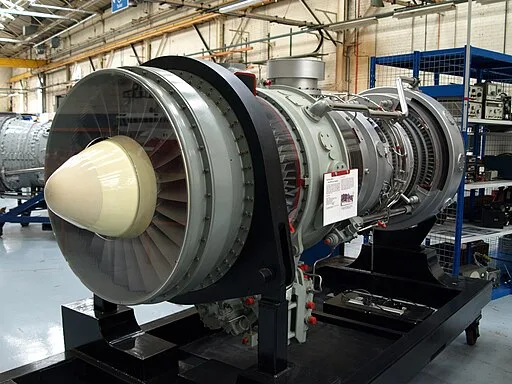
Today’s commercial marine engines are no longer purely mechanical. Most are equipped with Electronic Control Modules(ECMs) that monitor and manage a multitude of engine parameters:
- Timing and pressure of fuel injection
- Pressure boost turbocharger
- Exhaust gas recirculation (EGR)
- Air-fuel ratios
- Cooling and lubrication systems
- Sensor arrays including knock sensors, O2 sensors, crankshaft, and camshaft sensors
These ECMs guarantee the efficient functioning of engines, together with the emissions and possibly the safety limits. However, complicated as it is, it makes traditional visual or manual inspection useless for diagnosis.
Of course, a real marine diagnostic tool interfaces directly with the ECM using the onboard data protocols (CAN, K-Line, or manufacturer-specific) and allows engineers to:
- Read fault codes (DTCs)
- View live sensor data
- Conduct actuation tests (e.g., injector pulse, fan activation)
- Reset service intervals
2. Damper Operational Downtime:
Engine breakdowns can cost tens of thousands of dollars in repair costs, delivery penalties, tug assistance, or simply fuel lost while idled. And let’s see its critical sectors like:
- Commercial fishing: lost hours = lost catch
- Container shipping: missed ports = contract penalties
- Offshore oil and gas: Too much downtime can stall entire field operations
A boat scanner detects faults as soon as possible to avoid this exponential escalation of expenses. For example:
- Detecting a little turbo overboost condition can prevent making a catastrophe into a turbine failure.
- Detecting cylinder misfire patterns encourages checking the injector before total failure.
The marine diagnostic tool enables journey performance monitoring during sea trials or regular voyages with anticipatory detection of performance dips and anomalies.
3. Real-Time Diagnostic in Progress at Sea and Port:
Traditional maintenance modes relied on port inspection and trial and error. Such reactive methods have become impractical in today’s fast-paced environment. A reliable marine scanner has allowed for real-time diagnostics in several environments:
- Underway diagnostics: Inspect boost pressure or coolant temperature with load.
- In the port: Complete health scans and prepare the service logs.
- After repairs, Clear ECM codes and confirm the resolution of the problem.
With the marine tool, engineers correlate historical data logs with active sensor readings to respond to progressive wear and degradation, thus turning maintenance into a data-driven science rather than an art of unbridled guesswork.
4. Targeted Fault Isolation with DTC Analysis:
Diagnostic Trouble Codes(DTCs) are standardized or proprietary codes generated by the ECM to demarcate faults. Each code has a direct correlation with a single failure type or a deviation.
Without a diagnostic scanner, fault codes generated by a marine engine’s Electronic Control Module (ECM) are unreadable, leaving the crew uncertain about the cause of a warning light or system malfunction. This can lead to costly delays, unnecessary part replacements, or even preventable system failures.
With the marine scanner, immediate access to:
- Plain-language translations of Diagnostic Trouble Codes (DTCs) with no guesswork on identifying faults.
- Probable causes and guided troubleshooting steps will help the crew fix the faults much faster.
- It showcases live sensor graphs and real-time data, such as coolant temperature or fuel rail pressure, allowing an active fault to be validated.
- Through accurate fault isolation, it ensures that only the faulty components receive service or replacement.
5. Increasing Fuel Efficiency and Engine Performance:
Fuel is the main operating cost item when it comes to most commercial vessels, and even the slightest inefficiency, often unnoticed, can heighten fuel consumption and degrade the performance of engines. A malfunctioning O2 sensor, for example, will cause the engine to run rich and may have an improperly timed injector, resulting in unburnt fuel and leading to the production of high amounts of carbon deposits. Similarly, in this way, access to the air supply is also reduced, which diminishes breathing and overall efficiency of the engine due to the blocked EGR valve.
Now, marine engineers with the help of a complete diagnostic system can be able to track and optimize the parameters of their engine in real-time. Some of those features are:
- Fuel rail pressure monitoring
- Injector performance evaluation
- Idle speed control
- Sensor calibration and tuning
which would enable the crew to fine-tune engine performance, which would in turn reduce fuel consumption, throttle response, and exhaust emissions. These adjustments would also reduce operational costs and extend engine life due to better combustion and mechanical harmony.
6. Ensuring Fitting for Environmental and Regulatory Requirements:
Compliance with the environment is more than a legal imperative under the International Governance. It has also become a mandate for the Monitoring and Reporting of Environmental Compliance in Marine Operations under IMO’s MARPOL(Marine Pollution) Annex VI. A ship is required to monitor, report, and thereby reduce any emissions of nitrogen oxides (NOx), sulfur oxides (SOx), and particulates.
A trustworthy boat scanner takes care that:
- Emission-related sensors, which could be, among others, NOx or O2 sensors, are working appropriately.
- SCR or DPF systems are rightly appraised and at work.
- The documents concerning emissions and maintenance are organized properly.
Thus, the advanced marine tools can make this seamless by producing reports for export that can be used during port inspections or archived for long periods in compliance documentation. This reduces the chances of penalties,
7. Multi-Brand Fleet Compatibility:
Engine systems are made up of mixed brands, which is one of the biggest operational challenges in the commercial maritime fleets. One ship could have a Yamaha outboard engine, a Volvo Penta generator, and maybe a Mercury auxiliary propulsion unit. Each of the above-mentioned engines is from a different manufacturer with its own diagnostic system.
In the past, operators had to deal with the restriction of carrying brand-specific diagnostic tools and receiving separate dealer support for each brand serviced, for each operator brand serviced. This increases logistical overhead, training requirements for the crew, and troubleshooting delays during voyages.
The marine scanner eliminates these complexities by integrating with various marine engine brands, including:
- Yamaha
- Suzuki
- Mercury
- Honda
- Evinrude
- Tohatsu
- Volvo Penta
- MerCruiser
- Johnson
This universal compatibility enables fleet operators to consolidate diagnostic tools, ensuring streamlined equipment. Furthermore, it reduces the time and training costs needed for offshore engineers to become proficient across different platforms, boosting crew confidence. Ultimately, operational efficiency, vessel uptime, and fleet optimization are all enhanced, especially for fleets with vessels of different classes and configurations.
8. Prepping for Emergencies in Isolated Waters:
Helpful assistance for commercial vessels frequently operating on remote or underserved sea lanes may take hours or even days to arrive. In such scenarios, self-sufficiency becomes a requirement rather than a luxury.
Integrating a marine system into a vessel’s infrastructure streamlines compliance with critical maintenance operational status protocols. Now the crew can:
- Examine issues within the engine’s ecosystem unsupervised.
- Ascertain if a problem is within the electronics subsystem (sensors) or mechanics, and act accordingly.
- Carry out the necessary preliminary action sequences, including deletion and reset of non-important system error logs to return the operational systems to optimal function.
- Assess the engines and make a call to either Go, No-Go, or stand by.
To withstand harsh marine conditions, the diagnostic tool should include robust features such as:
- Waterproof casing for protection against saltwater corrosion.
- Shockproof casing for impact resistance against any drop or vibration from functioning engines.
- High-contrast and sunlight-readable display in low-light or high-glare conditions.
9. Professional Maintenance Level Without A Dealer:
Previously, the simplest of diagnostics would require a full trip to the manufacturer’s dealer, resulting in plenty of downtime as well as unwarranted service charges. Under such circumstances, the modern tools should have given rise to lowered dependency levels.
Onboard crews are now capable of executing numerous tasks which were once in the hands of certified technicians, including:
- DTC reading and clearing
- Recalibrating or replacing sensors (for example, MAP sensors, throttle position sensors)
- Executing component tests: pump tests, injector firing tests, and fan relay tests.
- Resetting the ECM (Engine Control Module) after repairs.
This will not only allow immediate intervention and shorter lead time during mechanical failures but also have a considerable reduction in labor and service costs.
Especially in time-critical operations such as fishing, ferry services, or offshore supply, every hour counts.
10. Detailed Data Logging for Long-Term Analysis:
Modern fleet management isn’t just about fixing problems; it’s about predicting and preventing them through analytics. These tools support advanced data logging that gives operators visibility into:
- Engine runtime and historical DTCs
- Fuel consumption trends over different routes and loads
- Sensor drift over time, such as coolant temperature or exhaust backpressure
- Long-term idle vs. load running statistics
All this data can be transferred via USB Port or exported via PC software for in-depth shore-based analysis. This enables fleet managers to:
- Schedule predictive maintenance to avoid sudden failures
- Provide documentation for insurance claims related to engine issues
- Justify overhaul or engine replacement decisions based on real-world metrics
- Optimize engine configurations for different voyage types
Such proactive maintenance strategies not only improve performance but also preserve asset value over time.
Conclusion:
Before venturing, voyagers need reliable marine diagnostics since the maritime world is increasingly moving toward smarter and more autonomous systems. With engines deeply integrated with sensors and electronic controls, it is no longer possible to rely on traditional maintenance methods. A good marine diagnostic tool would ensure the safety of operations, avoid unwanted, costly delays, and ensure compliance of vessels with modern regulations.
The marine diagnostic scanner is designed for this evolving landscape. It is purposely made focusing on all brands of engines, immediate engine data, and total ruggedness demand in marine environments. It provides crews with everything they need to make sound, confident, cost-saving decisions while either diagnosing a fault during a voyage or preparing a vessel for inspection.
The remote multi-brand asset manager will be transformed from what has conventionally been a nice-to-have convenience feature to a critical asset. It, however, empowers even the junior engineer to perform high-quality, very detailed diagnostics and has long-term service strategies and insurances captured in its data logging capabilities.