



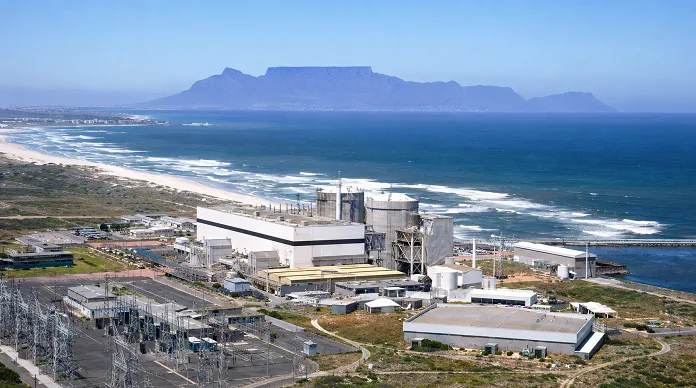
WESTERN CAPE — Eskom has confirmed that no radiation leak occurred at the Koeberg Nuclear Power Station’s Unit 2 during routine maintenance, assuring the public that there was no risk to employees, surrounding communities, or the environment.
In an official statement issued on Sunday, an Eskom representative detailed that the incident, which took place during scheduled maintenance inspections in July, was classified as Level 0 (no safety significance) on the International Nuclear and Radiological Event Scale (INES), the lowest possible rating. Eskom emphasized that the event had no impact on nuclear safety, plant operations, employees, the public, or the environment, and confirmed that the National Nuclear Regulator (NNR) was notified in strict accordance with regulatory requirements.
Unit 2 has been undergoing a planned maintenance outage since April 2026 and remains on schedule to return to service in November. Meanwhile, Koeberg’s Unit 1 continues to operate normally.
According to Eskom, highly sensitive radiation monitoring equipment detected two brief and localized airborne radioactivity events inside a controlled work area within the Unit 2 containment building on 2 and 7 July. These detections occurred during routine steam generator inspections and were strictly confined to the designated work area inside the containment structure, resulting in no release of radioactive material beyond the plant’s protective barriers. Consequently, there was no need to administer iodine tablets to employees.
The utility explained that the airborne activity occurred during Eddy Current Testing (ECT), a standard non-destructive inspection method used globally to assess the condition of steam generator tubes. During this process, a minute quantity of microscopic oxide particles, commonly referred to in the nuclear industry as “crud,” became airborne within the enclosed work area. These inspections utilize robotic probes to establish a baseline of the steam generator tubes and identify signs of wall thinning long before they could affect plant performance or safety.
Eskom noted that minor airborne particulate events of this nature are a recognized phenomenon during steam generator inspections at pressurized water reactors globally and are managed through robust safety systems. Koeberg’s multiple layers of safety and containment functioned exactly as designed. These layers include physical containment barriers, high-efficiency particulate air (HEPA) filtration operating under negative pressure, continuous airborne radiation monitoring through Constant Air Monitors (CAMs), and comprehensive radiation protection measures for personnel.
When the monitoring equipment detected the temporary increase in airborne activity, it automatically triggered an alarm. In response, plant personnel immediately halted the inspection, secured the work area, allowed ventilation and filtration systems to remove the airborne particles, and carried out the required radiological assessments before maintenance resumed. Eskom stated that these actions successfully contained the material within the designated work area and restored conditions to normal operating parameters.
Subsequent monitoring confirmed that the airborne particles remained confined to the controlled work area, with no radioactive material released into the environment. Eskom highlighted that the event demonstrated the effectiveness of Koeberg’s defence-in-depth approach, with monitoring, containment, and radiation protection systems functioning as designed to provide early detection and control of the transient.
The utility confirmed that the incident had no impact on the safe operation of the power station, ongoing maintenance activities, or the planned completion date of the Unit 2 outage. All personnel involved were provided with a comprehensive safety debriefing following the incident. Eskom reiterated its commitment to maintaining the highest standards of nuclear safety, regulatory compliance, and transparency in the operation of South Africa’s only nuclear power station.