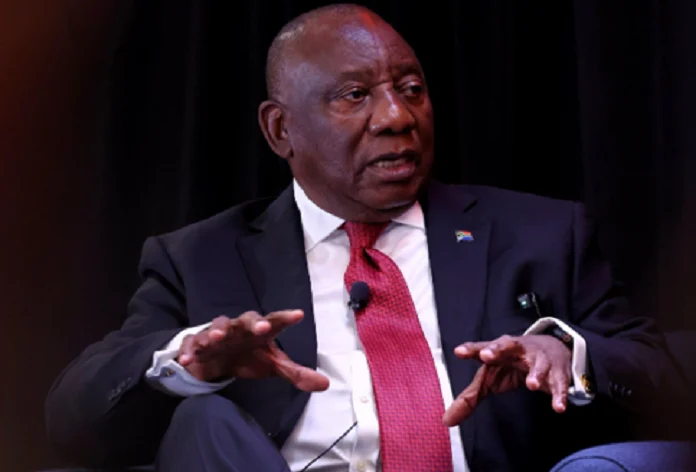
SOUTH AFRICA — South Africa is set to establish a R100 million venture capital fund and a credit guarantee facility to support artificial intelligence (AI) start-ups and broader technology enterprises. The funding initiative was announced by President Cyril Ramaphosa at the conclusion of a five-day working visit to Silicon Valley, marking a strategic push to integrate the nation into the global AI development sector.
Addressing the media, the President detailed that the government intends to match financial commitments from local entrepreneurs. The state will also invite private sector participation to build a robust funding ecosystem, enabling South African technology businesses to scale and compete internationally. The venture capital fund will launch with an initial R100 million, complemented by the credit guarantee fund specifically designed to assist domestic AI and tech start-ups.
Strategic Delegation and Economic Objectives
The working visit included a delegation of nearly 300 South Africans, comprising business leaders, government ministers, public entity representatives, research institution officials, postgraduate students, and local start-up entrepreneurs. The group engaged with leading technology companies, venture capital firms, academics, and AI experts. The primary objective was to determine how emerging technologies can be leveraged to drive economic growth, generate employment, and enhance public service delivery.
Emphasizing the need for technological sovereignty, the President stated that South Africa aims to build domestic expertise and ensure the responsible use of AI. He stressed that the country refuses to be left behind or remain merely a consumer of AI technology, aiming instead to become an active developer. He further noted that the African continent must benefit from this technological revolution, avoiding the historical marginalization experienced during the Industrial Revolution.
While highlighting AI’s potential to improve government services and expand information access, the President acknowledged associated risks, including cybersecurity threats and potential job displacement. To mitigate this, the government prioritizes reskilling, upskilling, and retooling the workforce to protect vulnerable groups in the changing labor market.
Data Centre Infrastructure and Global Investment
A significant focus of the engagements was South Africa’s existing data centre infrastructure. The President noted that the country currently hosts more than 70% of Africa’s total data centres. This foundation presents a substantial opportunity to expand computing infrastructure to meet the surging global demand for AI processing capacity.
He indicated that ongoing economic reforms are positioning South Africa as an attractive destination for fixed technology investments. This positions the country to secure substantial investments from technology companies and generate future revenue by exporting AI computing capacity to global markets.
Policy Development and Diaspora Engagement
The delegation gained direct insights from frontier AI model developers, semiconductor companies, chip manufacturers, and infrastructure providers. These engagements will directly inform the development of a comprehensive, world-class national AI policy.
Additionally, the visit facilitated reconnections with the South African diaspora successfully operating in the tech sector. The government plans to establish a dedicated facility to enable these professionals to contribute their expertise, reconnect with the country, and help mobilize further investment into the domestic economy.
90-Day Action Plan and Future Outlook
Looking forward, the President emphasized that the delegation’s mandate is to translate these engagements into practical outcomes rather than returning with mere concepts. A dedicated team has been tasked with coordinating an action plan, with the President expecting implementable ideas and processes within 90 days.
The successful visit lays the groundwork for further global engagements in the new year. Future delegations are expected to expand their inclusion to feature labour and civil society representatives, ensuring a comprehensive approach to the nation’s technological and economic development.