



DOUGLAS, NORTHERN CAPE — A devastating Vaal River tragedy has claimed the lives of six farm workers who drowned near Douglas after a makeshift boat capsized in the early morning hours. The fatal incident, which occurred as agricultural laborers were crossing the river to reach their workplace, has prompted urgent maritime and criminal investigations by local authorities.
The disaster unfolded on a Thursday morning at approximately 6:00 a.m. while it was still dark. A group of 20 farm workers boarded the informal vessel to cross the Vaal River from farm to farm. According to survivors, the boat traveled only 10 to 20 meters into the water before it began losing buoyancy. The vessel tilted to one side and capsized, throwing all 20 passengers into the river.
Because none of the farm workers could swim, they were left entirely dependent on the debris to stay afloat. Fourteen individuals managed to survive by clinging to the overturned boat. One female survivor recounted that she was able to stay buoyant by holding onto a plastic drum.
Tragically, six of the workers drowned. Search and recovery teams retrieved two bodies on Thursday and three more on Friday. Northern Cape police divers have continued to comb the lower sections of the river in search of one missing farm worker—a Malawian national employed on a local Douglas farm—who is presumed dead.
The perilous river crossing was a daily necessity for the laborers. While the direct distance across the Vaal River is a mere 150 meters, the overland road route requires a detour of 50 to 60 kilometers. Survivors revealed that this informal ferry system had been used to transport workers back and forth for nearly a decade, often making the journey morning, day, and night.
Typically, the makeshift raft carried between 10 and 15 passengers at a time. However, on the morning of the tragedy, the boat was carrying 20 people. Survivors suggested that the vessel was overloaded, which may have caused passengers to panic and shift their weight, leading to the fatal tilt.
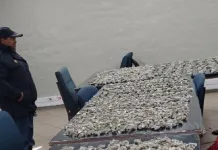
The vessel itself was a rudimentary structure designed to stay afloat using large plastic drums, estimated to be 25 liters or more in capacity. It featured a flat platform for the workers to stand on and was enclosed on the sides with a tarpaulin covering. The boat was also equipped with a motor, though its functionality and power capacity are now central to the ongoing investigations.
Northern Cape police are actively probing the circumstances of the capsizing. Investigators are examining why the boat was allowed to carry 20 passengers, whether the motor had sufficient power, and the overall safety and legality of the informal transport scheme. As part of the investigation, police intend to question the farm owners and managers who organized and oversaw the daily transport of the workers.
Additionally, the South African Marine Safety Authority (SAMSA) has deployed officials to the scene. Maritime investigators are currently examining the makeshift boat after it was lifted from the water to determine the exact mechanical and structural failures that contributed to the disaster. Authorities have promised a thorough investigation to ensure accountability and prevent similar tragedies in the region.