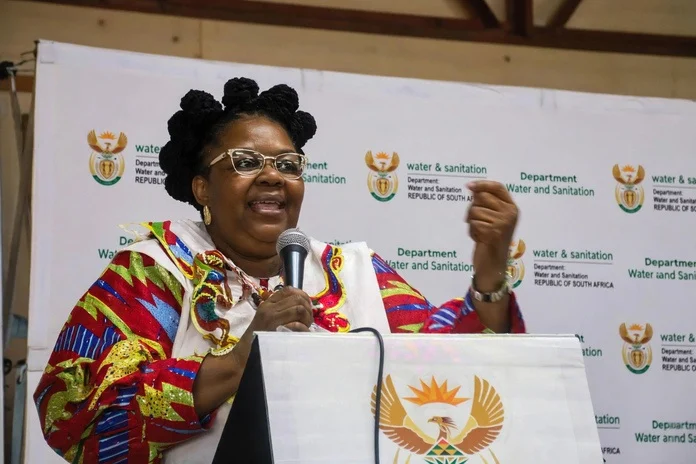
BRONKHORSTSPRUIT, Gauteng — South Africa’s water supply remains largely secure, with over 90% of the country’s water safe to drink, according to Water and Sanitation Minister Pemmy Majodina. Speaking at a media briefing in Bronkhorstspruit, east of Pretoria, the minister addressed recent concerns regarding aging infrastructure and a spike in gastrointestinal illnesses, firmly denying claims of a formal outbreak.
Despite the confirmation of 833 gastrointestinal illness cases over the past two weeks, Majodina emphasized that the situation does not meet the criteria for an outbreak. She noted that no patients are critically ill in hospitals; individuals are receiving treatment and being released. Currently, only three patients remain admitted and are expected to be discharged shortly.
However, the minister acknowledged the severity of the situation, particularly for the most vulnerable. Children under the age of four account for 40% of the confirmed cases, totaling 328 infections. Majodina explained that children are highly susceptible due to their developing immune systems.
Water sampling at the affected Tshwane municipality treatment plant revealed the presence of E. coli, norovirus, and sapovirus, which caused symptoms including stomach cramps, diarrhea, nausea, and vomiting.
Decaying Infrastructure and Plant Negligence
The contamination was traced back to a severely neglected water treatment plant. Majodina revealed that Phase 2 of the facility was decommissioned long ago, leaving the plant operating on only one phase. While the plant’s total capacity is 54 megaliters, it was functioning at a mere 26 megaliters due to years of poor maintenance. Inspections uncovered thick sludge, broken water pumps, and stolen cables.
Furthermore, the plant manager, who has since been suspended, failed to report a critical shortage of chlorine and poly-aluminum chloride, which are essential for disinfecting the water. Majodina noted that the current Tshwane mayor inherited the infrastructure in this deteriorated state.
Clarifying Regional Water Concerns
Addressing panic in neighboring areas, the minister clarified the status of other municipalities. In Johannesburg, a recent pipe burst led to suspected contamination. However, authorities quickly isolated the valves, tested the water, and confirmed it was safe before restoring the supply.
In Midrand, residents reported being without water for up to three weeks. The local mayor confirmed that the water supply has been restored and supplemented with additional capacity from private companies. Majodina stressed that there is no correlation between the Bronkhorstspruit contamination and the Midrand situation, and no illnesses have been reported in the area. She urged any residents experiencing symptoms to visit health facilities for proper testing and follow-up.
Crackdown on the “Water Mafia”
A major focal point of the briefing was the growing crisis of unregulated private water tankers. Majodina declared war on the “water mafia,” accusing some private operators of deliberately vandalizing municipal infrastructure to force local authorities to hire them.
She expressed deep concern over the unregulated sourcing of this water, noting that some tankers extract raw, untreated water directly from dams and rivers and sell it to desperate residents. To combat this, the Johannesburg Metropolitan Police Department (JMPD) is actively tracking private tankers to verify their water sources.
Majodina urged municipalities to strictly enforce bylaws, requiring all water service providers to be registered on an official database. She strongly advised municipalities to insource emergency water tankering to ensure that only purified, safe water is distributed to the public.
Systemic Audits Planned
Highlighting broader systemic failures, the minister pointed to weak municipal control systems and a lack of bylaw enforcement, which has allowed illegal car washes and unregulated water vendors to operate freely.
To prevent future collapses, the Department of Water and Sanitation will launch a comprehensive audit of all municipal water treatment plants. Majodina identified a critical financial flaw: municipalities are failing to ring-fence revenue from water sales to reinvest in system maintenance.
“Without ring-fencing water sales to invest it back into the water system, it is bound to collapse,” Majodina warned, emphasizing that continuous maintenance is essential to securing the country’s water future.