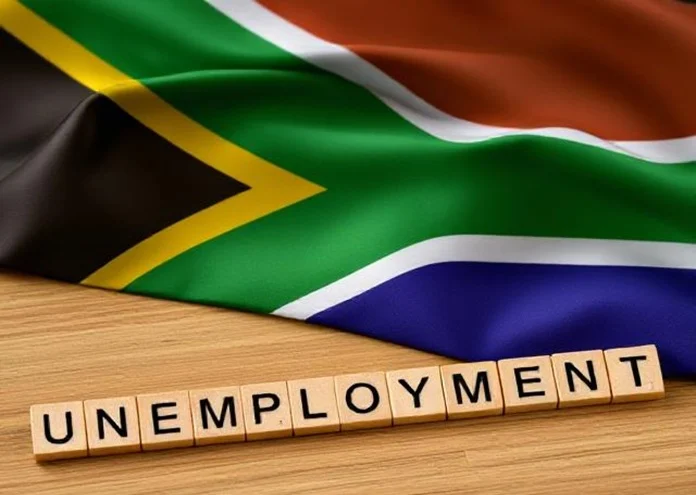
JOHANNESBURG, Gauteng — The South Africa unemployment rate has officially edged higher to 33.7% in the third quarter of 2026, revealing a complex labor market where job creation is currently being outpaced by a growing number of active job seekers. According to the latest data released by Stats SA, the figure represents a slight increase from the 33.6% recorded in the previous quarter, highlighting the ongoing challenges in the nation’s economic recovery.
The Job Creation Paradox
The latest labor statistics present a notable contradiction: while the economy successfully added 101,000 jobs in the third quarter, the unemployment rate still climbed because an additional 97,000 people joined the ranks of the unemployed.
Sanisha Packirisamy, Group Economist at Momentum, explains that this dynamic is largely driven by “discouraged work seekers.” These are individuals who have been actively looking for work but, faced with very few economic opportunities, stop searching and subsequently fall out of the labor force, automatically shifting them into the unemployed category.
When the 3.7 million discouraged work seekers are included in the calculations, the broader unemployment rate pushes significantly higher to approximately 44%. Packirisamy notes that this reflects a sluggish economic recovery, making it exceedingly difficult to absorb the growing number of job entrants.
Structural Barriers and the Youth Crisis
Despite various structural reform efforts in critical areas such as logistics and energy, the broader economy has struggled to translate these changes into higher business sentiment, increased investment, and robust job creation. Since the COVID-19 pandemic, the economy has grown at a sub-1% rate of just 0.7%, which has only translated to a 0.6% growth in jobs.
This stagnant environment has created severe structural barriers, particularly for the youth and recent graduates. Packirisamy points out that even university graduates face a 1 in 10 chance of remaining unemployed. Furthermore, 80% of those currently unemployed have been without work for longer than a year, a factor that severely diminishes their employability in the current climate.
The crisis is most acute among young South Africans. Using an expanded definition for youth between the ages of 15 and 34, the headline unemployment rate sits at a staggering 47%. When discouraged work seekers are factored into this demographic, the rate reaches 60%, illustrating a market where millions are competing for limited opportunities without the experience employers demand.
Sectoral Shifts and Long-Term Trends
While the third quarter saw job creation in the financial services sector, it also witnessed job shedding in private households, which includes domestic workers and gardeners.
However, economists caution against reading too much into quarterly fluctuations due to seasonal movements. Looking at the longer-term structural trends since the pandemic reveals a stark divergence in sectoral performance. The manufacturing sector has shed 137,000 jobs since the pandemic, whereas the financial services sector has created 433,000 jobs.
Ultimately, while the services components of the economy are performing relatively well and offsetting some losses, the primary and secondary sectors—namely mining, manufacturing, and construction—continue to act as the lagards in South Africa’s ongoing effort to achieve inclusive economic growth.