



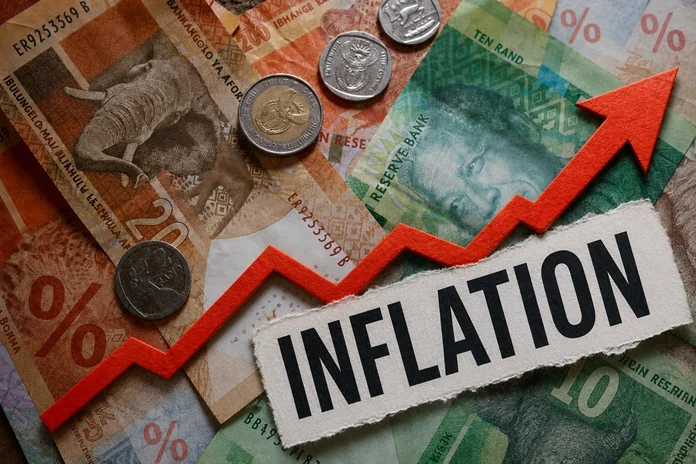
JOHANNESBURG, Gauteng — South Africa inflation has surged to its highest level in nearly two and a half years, reaching 5.2% in October, primarily driven by a massive spike in fuel prices. As consumers feel the financial squeeze, economic experts are analyzing whether this marks the peak of the current inflationary cycle and how the central bank will respond to the shifting economic data.
Fuel Prices Drive October Inflation Surge
Official data confirms that consumer price inflation climbed to a year-on-year rate of 5.2% in October. The primary catalyst for this increase is the energy sector, with fuel prices jumping by 11% between September and October alone. Consequently, consumers are now paying nearly 43% more for fuel compared to the same time last year.
Kevin Lings, chief economist at STANLIB, noted that the massive impact of fuel prices on the inflation number is unavoidable, as energy costs feed directly into the consumer price calculation. However, he expressed hope that the October figures represent the peak of this inflationary cycle.
Looking ahead to November, Lings pointed to more encouraging price changes, including a recent diesel price reduction. Furthermore, there is currently a substantial under-recovery on both petrol and diesel. Even though the government will need to reduce its fuel subsidy, Lings expects a further petrol price reduction, which should provide significant relief at the start of the December period. He anticipates that the current 42.9% annual increase in fuel prices is the high point, with numbers expected to moderate from here.
The “Base Effect” and Future Forecasts
A complex mathematical phenomenon known as the “base effect” will heavily influence inflation readings in the coming year. Fuel prices initially began to surge in March and April due to the conflict in the Middle East. Because of this high baseline, year-on-year inflation comparisons from the first quarter of next year will show a drop in inflation, even if actual fuel prices remain high.
Lings explained that if petrol and diesel prices remain exactly where they are today, the fuel inflation rate could drop from the current 42.9% to minus 20% in a year’s time, despite the absolute price remaining unchanged. This high base effect will pull the overall inflation calculation down, provided the global oil price stabilizes or falls slightly.
Based on this dynamic, Lings forecasts that the overall inflation rate will drop to 3.3% by the end of next year, down significantly from the current 5.2%.
Consumer Reality vs. Economic Data
While the mathematical drop in the inflation rate may look favorable on paper, it clashes with the lived reality of consumers. Even if the inflation rate decreases due to the base effect, the absolute cost of petrol remains exceptionally high.
Lings warned that consumers will continue to experience severe financial constraints. With interest rates potentially remaining elevated, the consumer remains under enormous pressure, highlighting the dilemma between improving inflation statistics and the actual cost of living. This dynamic is expected to play out globally, potentially allowing central banks worldwide to claim their policy initiatives were effective as their headline inflation rates improve.
The SARB Interest Rate Dilemma
The South African Reserve Bank (SARB) now faces a critical policy decision. With inflation at 5.2%, it remains well above the SARB’s target range, which has recently been adjusted to just 3%.
While a snapshot of a 5.2% headline inflation rate typically suggests that interest rates should be increased, the SARB has already hiked rates twice this year. Furthermore, the domestic economy is highly vulnerable. Economic growth rates for the country have been revised lower, with projections sitting at just over 1% for the year. An additional short-term rate hike could further depress this growth rate and exacerbate the plight of the consumer.
Lings suggested that the SARB might choose to hold rates steady and wait for the mathematical base effect to take hold. The central bank is likely to monitor two critical factors over the coming months:
- Global Oil Prices: The SARB will be watching to see if the oil price continues to decline, which would be highly favorable for domestic fuel costs.
- Global Interest Rates: The bank will monitor the responses of global central banks, particularly the US Federal Reserve. Aggressive rate hikes abroad tend to put pressure on the local currency and domestic interest rates.
By giving the economy a little more time to assess the situation, the SARB may be able to avoid further hikes, provided global oil prices remain stable and international central banks do not act aggressively. If the oil price spikes again or global rates rise, the SARB may be forced to re-evaluate and hike rates early next year.