




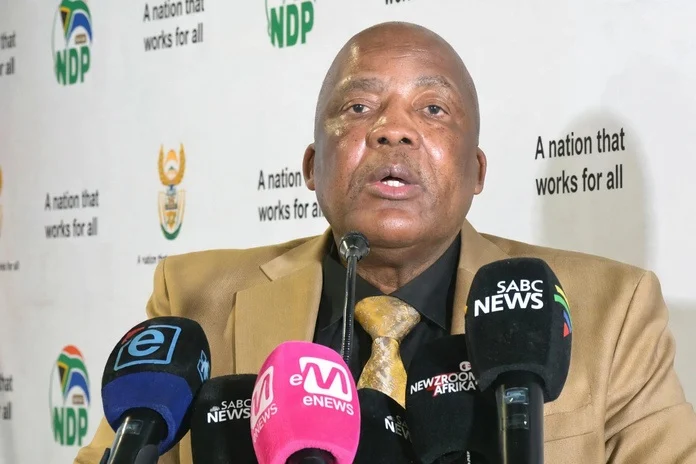
PRETORIA, Gauteng — The ongoing South Africa medicine shortage affecting public health facilities has prompted Health Minister Dr Aaron Motsoaledi to outline the complex web of logistical, regulatory, and global supply chain challenges driving the current crisis. While psychiatric associations initially raised the alarm regarding treatments for schizophrenia, bipolar disorder, and severe depression, the stockouts span the entire medical spectrum, including antiretrovirals (ARVs) and insulin.
Scope of the Crisis and Colliding Factors
Addressing the extent of the crisis, Dr Motsoaledi clarified that the stockouts are dynamic, fluctuating daily across various facilities. He attributed the widespread shortages to five colliding factors—four of which are domestic issues that have historically been managed individually, but are now occurring simultaneously alongside a new global disruption.
The primary domestic bottleneck is severe congestion at the Durban port, exacerbated by a new IT system implemented through a recent partnership. With 95% of medicines procured from overseas, numerous ships carrying essential supplies are delayed. Dr Motsoaledi noted that out of the 96 companies holding government tenders to supply medicines, many are unable to deliver because their cargo is stuck at the port. The Department of Health is collaborating with the Minister of Transport and Transnet to identify and prioritize approximately 30 ships carrying medical supplies to provide immediate relief.
The new global factor is the disruption in the Strait of Hormuz. Because South Africa does not produce its own Active Pharmaceutical Ingredients (APIs)—the foundational chemicals for medicines—the country relies heavily on imported logistics, which are currently hindered by geopolitical tensions in the region.
Additionally, the South African Health Products Regulatory Authority (SAHPRA) has intensified inspections regarding Good Manufacturing Practice (GMP). Historically, some manufacturers ignored warnings about substandard production. With SAHPRA increasing its capacity, non-compliant companies are now losing specific production lines or facing total shutdowns, further restricting the national supply.
Procurement and Local Production Strategies
To bypass these bottlenecks, the government has introduced Provincial Procurement on Quotations (PPQ). This mechanism allows provinces to source alternative supplies if a contracted company fails to deliver. For instance, while 11 companies are contracted to supply ARVs, provinces can legally procure from elsewhere to prevent patient suffering.
Looking toward long-term resilience, Dr Motsoaledi highlighted efforts to reduce reliance on overseas shipping. The Department of Health is partnering with the Departments of Science and Innovation, and Trade and Industry. Recently, the President opened a new unit at the Council for Scientific and Industrial Research (CSIR) aimed at manufacturing medicines from the ground up. Achieving a breakthrough in local API production remains a critical national priority.
Provincial Debt and Payment Crises
The supply chain is further complicated by provincial debt. Suppliers have blocked accounts in the Eastern Cape, Northern Cape, and North West due to unpaid invoices. The Director-General of Health has issued a strict deadline for these provinces to settle their debts by the end of the week. Failure to comply will result in Dr Motsoaledi escalating the matter politically by writing directly to the respective Premiers.
However, the Minister cautioned that even if the provinces pay immediately, the Durban port congestion will still delay the physical delivery of the medicines. Meanwhile, the other six provinces that have settled their debts remain affected by the broader logistical and global supply issues.
Mitigation and Therapeutic Alternatives
To mitigate the immediate impact on patients, the Department has implemented several strategies. Dr Motsoaledi assured the public that ARVs will not run out, as provinces have maintained a three-month stockpile for the past 15 years to protect the 6.1 million citizens currently on treatment. Any facility-level ARV shortages are purely logistical and are being actively resolved.
For other medications, the Department is issuing circulars advising doctors to prescribe therapeutic alternatives. Dr Motsoaledi used the example of furosemide: while the 100mg tablets might be unavailable, 50mg and 25mg tablets are in stock and can be combined to achieve the correct dosage. He acknowledged that while doctors are well-versed in pharmacology and can prescribe alternatives, patients often experience anxiety when their usual medications are substituted, requiring careful communication and management at the facility level.