


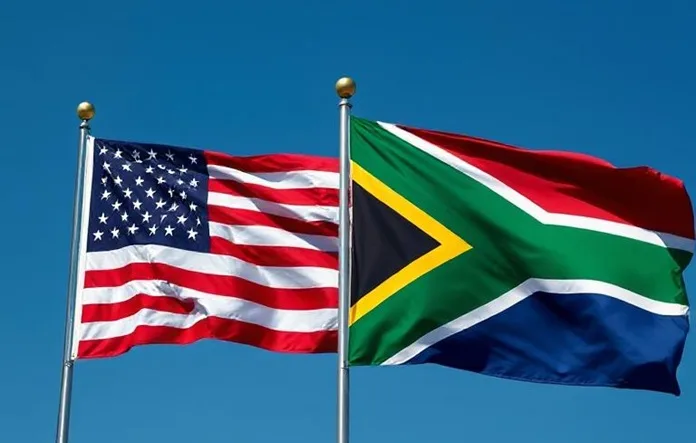
PRETORIA, South Africa — South Africa has firmly defended its non-aligned foreign policy, clarifying that its independent diplomatic stance should not be mistaken for neutrality. The Department of International Relations and Cooperation (DIRCO) issued a robust response following recent criticism from the United States Ambassador to South Africa regarding Pretoria’s bilateral ties with Tehran and Beijing.
The diplomatic exchange was sparked by a social media post from the US Ambassador, who publicly criticized South Africa’s warm relations with Iran and China. This rebuke followed a high-profile visit by Iran’s deputy foreign affairs minister, who traveled to the country to participate in a diplomacy seminar titled “Tectonic Shifts in Global Politics,” hosted by the Thabo Mbeki African School of Public and International Affairs.
During the seminar, the Iranian deputy foreign affairs minister praised South Africa’s historical and current geopolitical stance. Speaking in a formal, academic, and think-tank capacity, the diplomat commended the South African people for “standing up” and “siding with the right side of history.” The envoy drew parallels to the 1979 Islamic Revolution, noting that Iran severed ties with the apartheid regime on its very first day. The diplomat also expressed being touched by remarks from Ambassador Ibrahim, using that historical logic to call for a one-state solution in occupied Palestine, declaring that there must be no apartheid in the region.
The US Ambassador’s subsequent criticism did not sit well with the diplomatic missions of Iran and China. Both embassies took to social media to publicly question the US diplomat’s interference in the sovereign diplomatic relations of other nations.
This diplomatic friction occurs against a complex and shifting global backdrop. US President Donald Trump has been actively engaging with both Beijing and Tehran as Washington seeks to ensure peace prevails following a recent military conflict between the United States and Iran. President Trump recently visited China, commending the nation for maintaining a neutral stance and not taking sides during the US-Iran war. Additionally, Trump announced the achievement of a “historic peace agreement with Iran to end the conflict in the Strait of Hormuz.”
In response to the mounting pressure, DIRCO emphasized that South Africa’s foreign policy remains fiercely independent and focused on dialogue.
“Nonalignment must not be conflated with neutrality,” the department stated. “We refuse to be drawn into geopolitical contestations or to be pressured to take sides. Instead, we prioritize inclusive dialogue, global peace, and our own national interests.”
The department further asserted its right to cultivate bilateral relations across the global spectrum. DIRCO highlighted the “inherent contradiction” of South Africa being publicly scrutinized for engaging with the exact same nations that the United States continues to actively interact with.
Addressing the broader US-Iran conflict, observers noted a growing hope that the recent ceasefire will hold. Analysts point out that the cost of the conflict to the West and the United States continues to increase, and there is a commitment to working toward a stabilizing framework. It has become globally apparent that regime change in Iran was neither achieved nor achievable, especially as a developing nation faces off against two nuclear-armed states. The prevailing sentiment is a hope for common sense to prevail in Washington’s strategic calculations.
President Cyril Ramaphosa has consistently maintained that no external power will dictate Pretoria’s foreign policy. Reaffirming the nation’s sovereignty, the President declared that South Africans are a resilient people who “will not be bullied.” He emphasized that the country will stand united as one voice to defend its national interests, sovereignty, and constitutional democracy.
Meanwhile, in a strategic move to stabilize and mend relations between Pretoria and Washington, South Africa has appointed a new ambassador to the United States.