



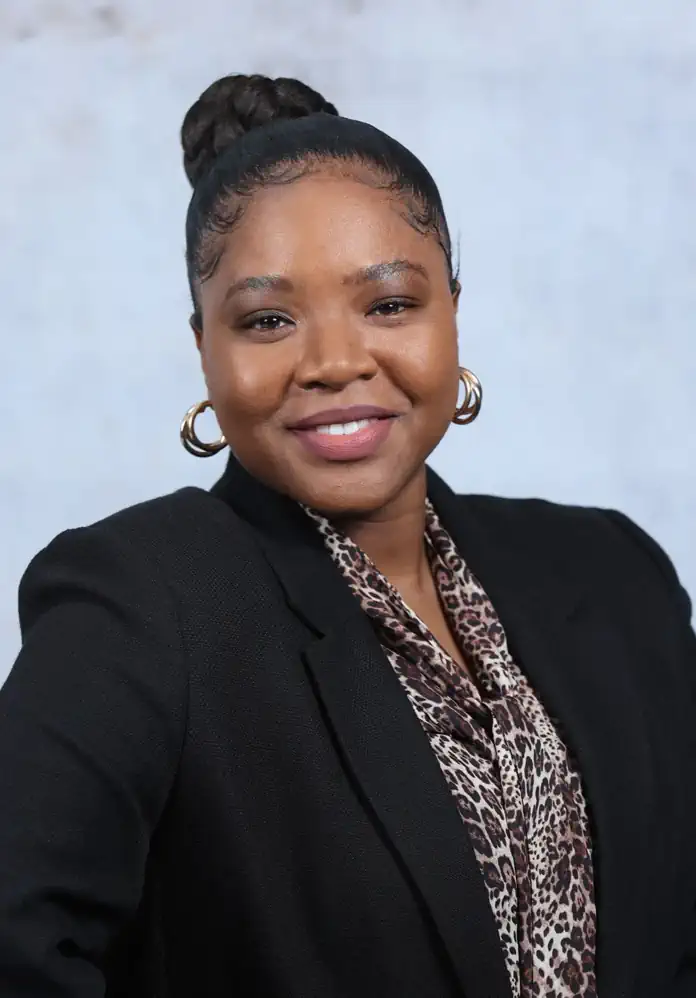
From transportation and bridges to dams and hydropower, AECOM’s women engineers are helping shape resilient infrastructure while inspiring the next generation to pursue careers in engineering
Engineering has always been about solving problems, improving lives and building a better future. Across Africa, engineers are playing a critical role in addressing infrastructure challenges, expanding access to essential services and supporting sustainable development. For International Women in Engineering Day (INWED) on 23 June, AECOM South Africa celebrates three women whose careers demonstrate both the opportunities and impact that engineering offers.
Working across transportation, bridge engineering, and dams and hydropower, Principal Design Manager Megan Greyvensteyn, Bridge Engineer Nqobile Msiza and Dams & Hydropower Engineer Pryaska Sukdeo represent a new generation of engineering leadership helping to shape communities locally and globally.
Driven by purpose and impact
While their career journeys have taken different paths, all three women were drawn to engineering by a desire to make a significant contribution to society. For Megan, engineering was a natural fit. “My love for maths and physics meant engineering was a good fit and I wanted to have a career that had an impact on society, making a difference where it matters,” she says.
Nqobile shared a similar passion for mathematics and science, combined with a desire to create infrastructure that serves communities. “The opportunity to contribute to infrastructure that people rely on every day, like bridges, was especially appealing given the impact such structures have on the communities I grew up in,” she adds.
Pryaska’s path began unexpectedly when she participated in the Eskom Science Expo during high school. Winning the Engineering Award proved to be a defining moment. “I have always wanted to make a positive impact in my community, which led me to pursue civil engineering. Over time, my career path naturally developed towards the water sector, and particularly into dams, where I feel I can contribute to projects that support communities and improve access to essential resources,” she says.
Today, that sense of purpose continues to guide their work, especially with the exposure to international projects further afield. Megan is currently supporting a major airport project in Portugal, Nqobile is contributing to bridge projects in the United States and Pryaska is helping deliver local, critical water infrastructure through the Smithfield Dam project.
Learning, growing and leading
Each engineer credits a combination of practical experience, mentorship and professional opportunities for shaping their careers. Megan began her career as a designer within a civil and municipal engineering team before moving into project management after obtaining professional registration. “Being able to interface with clients, colleagues and other built environment professionals on several multidisciplinary projects is what shaped my future in project management today,” she says.
For Nqobile, hands-on site experience proved invaluable. Exposure to construction environments helped her develop resilience, adaptability and a deeper understanding of how engineering designs become reality. She describes her career as one of “continuous growth”, strengthened by opportunities to work on increasingly complex projects and learn from experienced engineers.
Pryaska’s early experience in project management gave her insight into the practical realities of project delivery and stakeholder management. Since joining AECOM, she has had the opportunity to work on what she describes as “a once-in-a-lifetime project”, an experience that has strengthened both her confidence and engineering judgement.
All three women highlight the importance of continuous development. Megan points to programmes such as AECOM’s Manager Monday series, Women Who Lead sessions and leadership development courses, while Pryaska values the company’s Candidacy Development Programme, which supports technical development alongside essential professional skills. Nqobile emphasises the role of mentorship, crediting her mentor and AECOM’s collaborative culture for supporting her growth.
The power of representation and mentorship
Although progress has been made, engineering remains a profession where women are often underrepresented. The experiences of Megan, Nqobile and Pryaska demonstrate both the challenges that remain and the positive changes taking place across the industry.
Pryaska notes that one of the challenges she has experienced is often being the only woman in a team. “To overcome this, I focus on actively engaging with my team, building professional relationships, and demonstrating my capabilities through my work.”
Nqobile similarly reflects on experiences of working in male-dominated environments. “I have learned to trust my voice, contribute confidently, and embrace challenges as opportunities to prove my capabilities,” she says. Megan believes workplace culture plays a crucial role in supporting women. “At AECOM, I have learnt that having a family is celebrated and that it is possible to have it all,” she says.
All three engineers stress that representation matters. Diverse teams bring different perspectives, experiences and approaches to problem-solving, ultimately leading to stronger engineering outcomes. “Working together as a diverse team leads to more robust and considered solutions,” says Megan.
Pryaska agrees, adding that greater visibility helps inspire future generations. “The more women and diverse role models there are in engineering, the more the younger generation can see it as a viable and achievable career option,” she highlights.
Mentorship is equally important. Megan describes mentorship as “vital”, while Pryaska says she is “a strong advocate for mentorship” because of the role it has played in both her personal and professional development. Nqobile believes mentorship provides guidance, confidence and perspective that cannot be learned from textbooks alone.
Engineering for a rapidly changing future
As engineering evolves, the skills required for success are also changing. For Megan, adaptability will be critical. “With the rise of AI, as we have already seen within AECOM, life as we know it is probably going to look quite different in only a couple of years,” she says.
Nqobile agrees, highlighting the need for engineers to embrace emerging technologies while maintaining sound engineering judgement. Alongside technical expertise, she believes communication, teamwork, creativity and sustainability awareness will become increasingly important.
Pryaska identifies communication as one of the most valuable skills an engineer can possess. “You can never over-communicate or over-clarify something,” she says, reflecting advice she received from a respected professional in the dams industry. Together, their perspectives highlight an industry where technical knowledge must be balanced with collaboration, adaptability and lifelong learning.
Shaping Africa’s future
What excites these engineers most is the immense opportunity that exists across Africa. “Engineering in Africa is probably one of the most exciting places,” says Megan. “We still have a lot of work to do, with bringing everyday services to millions of people.”
Nqobile sees enormous potential for infrastructure development that can enhance connectivity, improve quality of life and support sustainable economic growth. She believes engineers have a unique opportunity to create solutions that are tailored to local challenges and community needs.
For Pryaska, the future is equally promising, particularly within water infrastructure and sustainable energy. “It is an exciting time to be part of the industry, particularly knowing that these projects can make a meaningful difference in supporting communities across Africa,” she says.
A message to the next generation
As International Women in Engineering Day celebrates the achievements of women engineers around the world, Megan, Nqobile and Pryaska have a clear message for young women considering the profession. “Do not let those much older than you say that engineering is not for women. That really is not the case anymore,” says Megan.
Nqobile encourages young women to believe in themselves and their abilities. “Know that you belong in this space. Your perspective, ideas and contributions are valuable and needed,” she says. Pryaska offers a message centred on collaboration rather than competition. “Rather than trying to stand alone, I believe in building each other up and creating space for more women in engineering. There is space for all of us at the table.”
Their stories demonstrate that engineering is not only a career of technical challenge and innovation, but also one of purpose, impact and opportunity. As Africa continues to develop and transform, women engineers will play an increasingly important role in designing the infrastructure, systems and solutions that shape the continent’s future.