
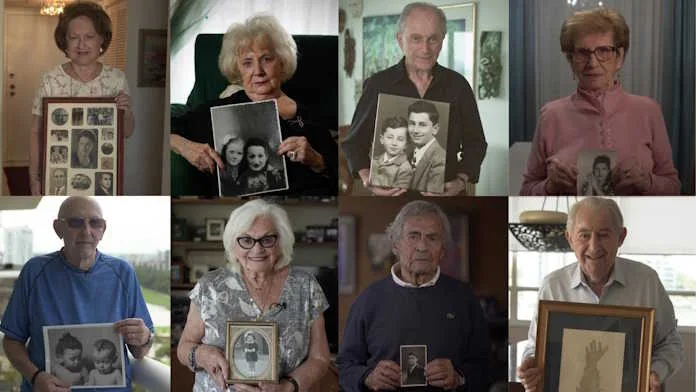
The clock is ticking. Only about 245,000 Holocaust survivors remain alive today, and with each passing day, that number dwindles. The time when no one who endured the horrific tragedy will be here to tell firsthand what it was like to survive is fast approaching. Alarmingly, something dangerous threatens to grow in that silence.
The erosion of historical memory opens the door for denial, distortion, and a new generation unanchored from the lessons of humanity’s darkest hours. The Last Ones, a global storytelling initiative, emerges with urgency, compassion, and conviction that remembering isn’t optional. Through books, conferences, documentaries, podcasts, web series, or its groundbreaking geo-located app, it honors the last survivors of the Holocaust.
The Last Ones emphasizes that preserving the testimonies of Holocaust survivors isn’t only about Jewish history but about safeguarding the moral fabric of humanity itself. “The Holocaust must serve as a warning of what happens when hatred festers unchecked, when lies overpower truth, and when apathy takes root,” says Leslie Benitah, co-founder of The Last Ones. The organization is determined to ensure that it never happens again. Hence, its solution is to tell the stories honestly, vividly, and accessibly while there’s still time.
The Last Ones’ mission deeply resonates with Benitah, a French-American journalist and the granddaughter of four Holocaust survivors. She had grown up surrounded by the presence of the Shoah, yet shrouded in silence. That silence became her motivation. Benitah traveled the world, from the suburbs of Paris to small towns in South Africa, the barrios of Venezuela to the homes of survivors in Brooklyn and Tel Aviv.
“Each story matters. Every voice silenced by time is a thread cut from the tapestry of our collective memory,” Benitah states. “Young people today deserve and need to hear these stories told with emotion.”
That belief shaped The Last Ones’ approach. The organization approaches survivor testimony in a strikingly human way. The stories are recorded over coffee tables, in survivors’ living rooms, and in everyday conversation. In other words, engagements are intimate, personal, and unscripted. Survivors share their memories of war and persecution, the texture of their lives before the horror began, and the pain and complexity of rebuilding afterward, and Benitah honors all of them.
“The survivors share their stories because we earned their trust, and trust isn’t something you ask, especially from people who have lived through betrayal, displacement, and unimaginable pain,” Benitah states. “You listen. You wait. You show them, with everything you are, that you aren’t here to take their story but to honor it.”
The Last Ones further stands out for how it bridges the past with the digital present. It recognizes that history education today cannot rely solely on textbooks or hour-long documentaries. To reach the digital-native generation, their stories must meet them where they are. That means Instagram, TikTok, YouTube, and mobile apps, with their social media content gaining millions of views. Short-form videos, the kind that can be consumed in under two minutes, serve as emotional entry points.
The strategy works. Ninety-six percent of Gen Z reports using YouTube, and over 70% consume daily content via short-form platforms like TikTok. The Last Ones leverages this engagement for good, offering poignant and digestible stories. “Our goal isn’t to turn viewers into historians. We want them to feel something. Because when someone feels something, they begin to care,” Benitah says. And through the geo-located app, they are bringing this level of contention like never before. The app allows the viewers to view a snapshot of history in the very location where these atrocities unfolded.
Indeed, empathy must be established before dates and places are taught. “We don’t need students to memorize every step of the Holocaust. We need them to understand what it feels like to be excluded, to be hunted, to be forgotten. Only then can they grasp what hatred looks like when it metastasizes,” Benitah remarks.
That emotional resonance is why The Last Ones has seen such broad adoption in classrooms. Its content is already integrated into numerous public schools across Florida and used by educators as a tool to teach humanity. The project has also forged robust partnerships with international institutions, including Yad Vashem and, more recently, the Claims Conference, an organization overseeing Holocaust reparations and education.
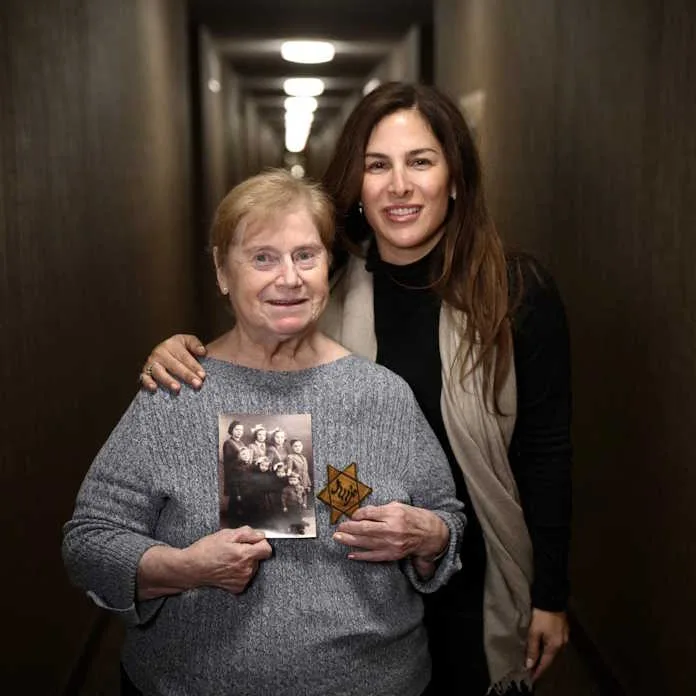
The Claims Conference awarded The Last Ones a major grant to expand its video documentation efforts in both France and the US, producing bilingual content for maximum global reach. It’s a validation not just of the project’s impact but of its quality and integrity.
Beyond the classroom, The Last Ones recently launched an educational platform for the world’s educators. Everything, from videos and podcasts to books and virtual events, is free of charge. This attests to the organization’s commitment to ensuring the survival of memory.
The Last Ones now invites others to join the mission, whether through partnerships, educational collaborations, or financial support. With more funding, more stories can be recorded. With more reach, more young people can feel that spark of empathy. With more collaboration, Holocaust education can evolve into something truly alive, something that lingers in the heart long after the screen goes dark.
“I hope my work helps create a world where memory is not just preserved but used—a world where empathy, courage, and moral clarity are not rare qualities but everyday expectations,” said Benitah. “I want future generations to recognize warning signs early, to refuse indifference, and to act before injustice takes root.
Ultimately, if my work plants even a small seed of humanity in young hearts— then it will have been worth it.”