



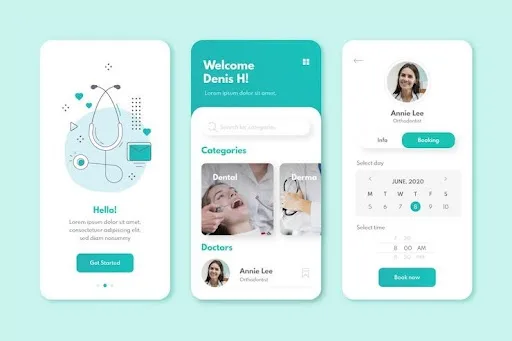
How does it sound if we say your smartphone alone can offer you real-time insights- no wristbands, rings, or wearables? Sounds amazing, right? It’s the reality of today’s digital era, as the demand for health monitoring grows, a new wave of innovation is reshaping the landscape: health apps that work without wearables.
These non-invasive solutions leverage AI, computer vision, and sensor data already embedded in mobile devices to seamlessly and silently track vital signs, stress levels, and sleep patterns
This shift presents an exciting frontier for both businesses and professionals in digital health. Moreover, these apps can scale health tracking without hardware costs or user compliance challenges, opening new doors for accessibility, engagement, and market reach.
With the evolving expectations among consumers, non-wearable health apps are quickly positioning themselves not just as an alternative, but as the future standard in proactive wellness management.
What is Non-Invasive Health Monitoring?
Wearable health trackers are the most popular devices in the medical sector, but Non-Invasive solutions are slowly turning out to be a game-changer in the healthcare and wellness industry.
In the Non-Invasive health tracking process, these smart applications track vital health signs, like heart rate, blood pressure, glucose levels, or oxygen saturation, without requiring any wearable gadgets.
Businesses like healthcare tech, insurance, and employee wellness programs have non-invasive features as an asset. It allows for continuous real-time health data collection, helping companies in offering personalized care, reducing hospital visits, and improving long-term outcomes. Healthcare businesses collaborate with a mobile app development company in India to create their own feature-rich application.
Remote health monitoring systems are game-changing solutions for the healthcare business, and with this, investing in or adopting non-invasive monitoring technologies can be the ideal option to keep your organization ahead of the competition.
The Science Behind Contactless Health Apps
You might have already started wondering, how is this even possible to track health without a physical touch, isn’t it? Interestingly, these modern smartphones are equipped with a suite of sensors and technologies that make non-invasive health tracking possible.
Optical Sensors and Photoplethysmography (PPG)
Optical sensors emit light onto the skin and measure how much is absorbed or reflected. By analyzing these changes, apps can accurately determine heart rate, blood oxygen saturation (SpO2), and even the heart rate variability (HRV).
Accelerometers and Gyroscopes
The presence of accelerometers and Gyroscopes helps in detecting the movement, orientation, and vibration, allowing the apps to track steps, activity levels, sleep patterns, and even the intensity of physical activity.
Machine Learning Algorithms
All the raw sensor data is processed by using advanced algorithms to identify patterns, detect anomalies, and provide actionable insights. For example, in case irregular heart rhythms are detected, the app can alert the user to seek medical advice.
Camera-Based Health Screening
There are a few applications that use the front or rear camera for performing remote photoplethysmography (rPPG), which investigates the subtle color changes in the face to assess cardiovascular health.
Popular Health Apps for Contactless Monitoring
There are several leading applications that have embraced contactless health monitoring, making it accessible to millions of users. These applications constantly keep a check on your health to provide instant updates. Businesses can create similar apps, but this would require them to hire mobile app developers:
- Apple Health: Designed by Apple, found on iOS. The app integrates data from sources like built-in sensors to provide rich health data without the use of any wearables.
- Google Fit: Google Fit can be found in Android. Google Fit utilizes your phone sensors to track activity, heart rate, etc. And offers direct integration with other health services.
- Sleep Cycle: The app makes use of your phone’s microphone and accelerometer for sleeping pattern analysis and offers suggestions to improve sleep cycle by doing away with the requirement for any wearables.
Benefits of Non-Invasive Health Tracking
When developed by collaborating with and hire android app developers in india, these Non-Invasive Health Tracking apps have a lot of advantages to the users, and some of them include:
- Convenience: Today’s age requires mobile applications for everything, and because of this, everyone has a smartphone with them at all times. Hence, having a track record of health information here is convenient.
- Continuous Monitoring: Another important benefit of such programs is that they enable continuous, real-time monitoring, which enables users to identify patterns and react earlier if anomalies arise.
- Privacy and Security: Your health data is kept securely both on your device and in reliable apps, and the decision to share it and with whom is yours. Reliable apps employ encryption and robust security practices for protecting sensitive information.
- Accessibility: Such non-contact methods remove the barrier and cost of purchasing wearables, and touchless health tracking provides health-related data to a wider number of individuals.
What are the Challenges of Adopting Non-Invasive Apps?
While the promise of non-invasive health monitoring is enormous, there are certain points and issues to be considered:
- Data Accuracy: Even though the smartphone sensors are highly advanced, reading may sometimes be less precise than that from dedicated medical devices or wearables.
- User Interpretation: It can be complex and challenging to understand the health data. Users should always consult with doctors to interpret trends and take appropriate action based on app insights.
- App Selection: The number of healthcare applications available in the industry is increasing, and here users selectively need to choose reputable, secure, and clinically validated solutions for the most accurate results.
Conclusion
So, if you ever thought that tracking health constantly without healthcare wearables isn’t possible, then you were mistaken. The healthcare sector is the most affected beneficiary of technology with high-end applications, and similar is the Non-invasive applications. You can leverage various mobile applications to keep track of your health without a healthcare wearable.