



Every year on 18 July, South Africa marks Nelson Mandela’s legacy through acts of service, public reflection and familiar calls to do better by one another. But less attention is given to how early the values associated with Mandela begin to matter.
According to Dibber International Preschools South Africa, qualities such as courage, kindness, perseverance and honesty do not need to wait for adolescence to become meaningful. Instead, they begin to take shape much earlier, in homes, in classrooms, and in the small daily moments where children learn how to respond to difficulty, unfairness, and other people.
“You do not need to explain the full history of South Africa to a four-year-old to begin sharing what Madiba stood for,” says Ursula Assis, Country Director of Dibber International Preschools South Africa. “The values at the centre of his life are deeply relevant to children. Being brave when something feels hard. Being kind when it would be easier not to be. Speaking up when something feels wrong. These are lessons children can begin learning very early.”
One of the more useful Mandela lessons for young children is that courage is not the absence of fear. Mandela himself spoke openly about fear, and about choosing not to let it decide for him. In a preschooler’s life, that idea may appear in smaller situations: entering a new classroom, trying something unfamiliar, joining a group, or finding the confidence to speak when they feel uncertain.
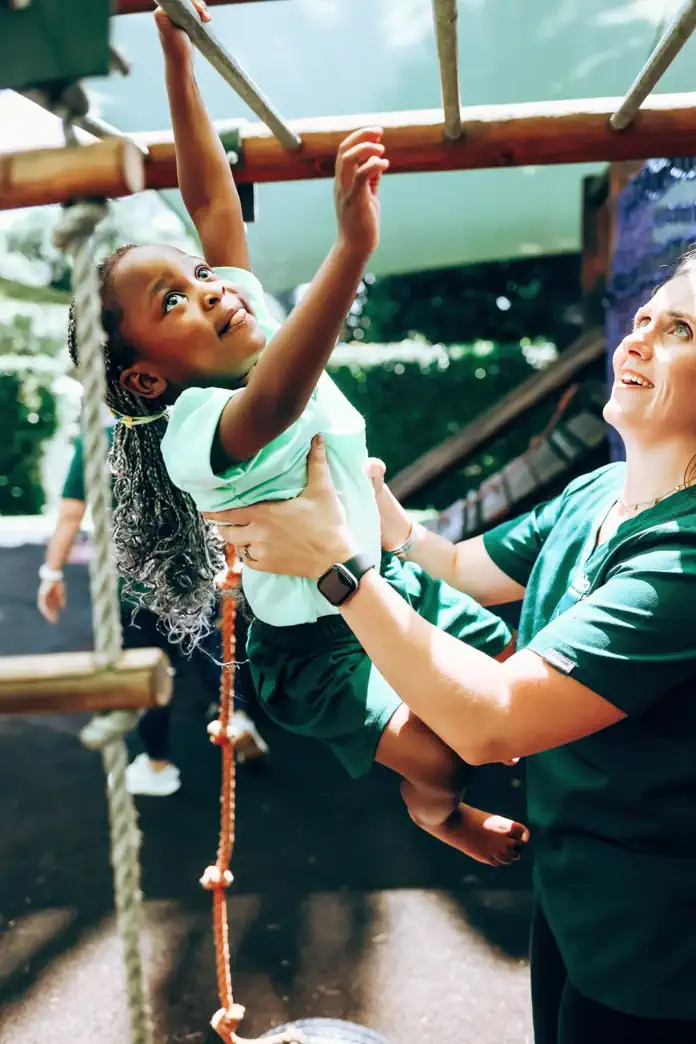
Persistence is another part of that picture. Mandela’s life is frequently framed in terms of endurance, and Dibber believes this matters in practical ways for young children. A child whose tower keeps collapsing, who cannot yet manage a zip, or who tries again after losing a game is already learning something that matters. In those moments, the point is not simply achievement. It is staying with something difficult.
“Children do not need to be taught that success is everything,” says Assis. “They need to experience that effort matters, that setbacks are part of learning, and that trying again is its own kind of strength.”
Kindness too is as a serious value rather than a soft one. In South Africa, where children are growing up inside a society still formed by division and difference, Dibber believes Mandela’s devotion to dignity, inclusion and forgiveness remains highly relevant. In preschool life, that is expressed more simply: including another child in play, sharing, saying sorry properly, and learning that other people matter.
Children do not need to understand politics to learn that their voice has value. In practice, that may mean telling someone that something feels unkind, asking for help when they need it, or communicating discomfort clearly rather than withdrawing into silence.
Another part of Mandela’s legacy that translates well into the early years is the idea that difficult things can become possible over time. His words, “It always seems impossible until it’s done,” are often quoted, but the principle behind them remains useful for young children. Learning to zip a jacket, settling into a new environment, making a friend after a hard start: the scale is smaller, but the emotional work is real.
For Dibber, the broader point is that principles are rarely taught solely through formal lessons. They are absorbed through the mood of daily life. Through how adults handle setbacks. Through how they speak about fairness, responsibility and care.
“At Dibber, we believe the values children carry into adulthood are shaped in everyday moments,” says Assis. “Not through lectures, but through connection, play, guidance and the way adults respond to them. Courage starts in very small places. In being seen. In being listened to. In being encouraged to keep going.”
If South Africa wants to raise children who are brave, emotionally grounded and able to care for others, much of that work begins in the preschool years. That is often where courage first becomes visible: in the child who tries again, tells the truth, includes someone else, or finds the words to say, “That is not kind.”
About Dibber International Preschools:
Dibber International Preschools is a global leader in early childhood education, with a commitment to providing high-quality preschool experiences that foster children’s holistic development – with over six hundred high-quality preschools across nine countries and with a focus on the Dibber Heart Culture and customised learning approaches, Dibber aims to nurture the potential of every child, ensuring they receive the best start in their educational journey.