South Africa’s journey from apartheid to democracy reflects extraordinary sacrifices made to secure freedom and equality. Yet, more than three decades later, persistent inequality, political instability and declining public confidence threaten those achievements.
With currently expecting the results of one of the most crucial elections in its history, ethical leadership, government accountability and active citizenship have become increasingly important. The legacy of South Africa’s liberation leaders offers valuable lessons as the country navigates an uncertain political future.
Ethical Leadership for Social Justice Needs to Take Centre Stage
On October 30, MANCOSA hosted the Annual Dr Mahomed “Chota” Motala Memorial Lecture at its Johannesburg Campus in Auckland Park. This year’s theme was Ethical Leadership for Social Justice, Freedom and Inclusive Development.
Held every two years, the lecture commemorates Dr Motala’s contributions and celebrates his courage and leadership as an anti-apartheid activist.
Mohamed Goga, Managing Director of MANCOSA, highlighted the shared values of Dr Motala and MANCOSA’s founder, the late Professor Yusuf Karodia.
“Dr Motala stood for the same principles as MANCOSA’s founder, the late Professor Yusuf Karodia. Their commitment to education and the development of the less privileged are virtues that all South Africans should stand for. As we saw in the past, national dialogue is key to nation-building.”
Goga added that this year’s theme was particularly relevant as South Africa continues through one of its most challenging political periods in 32 years of democracy.
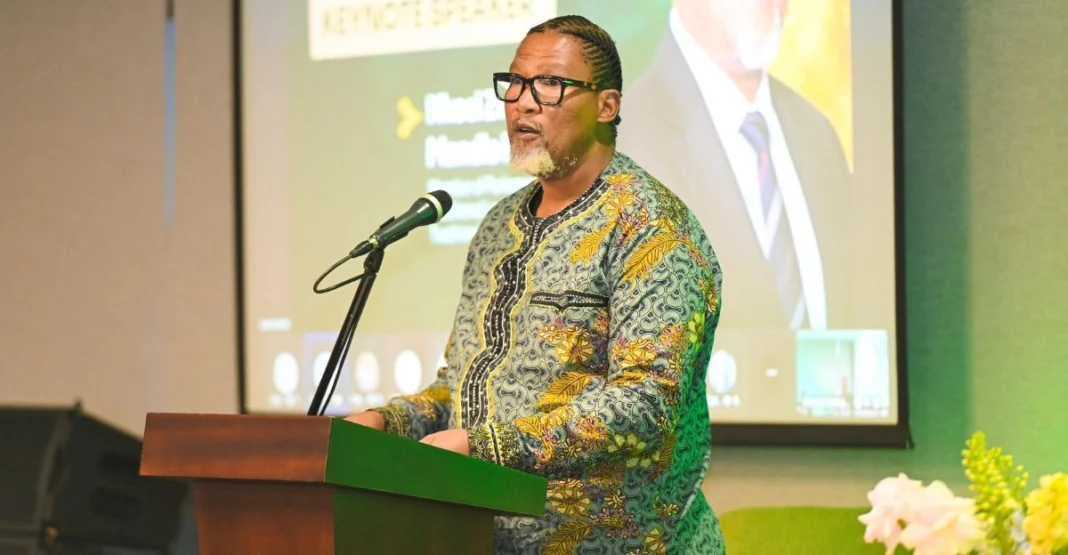
Continuing the lecture’s tradition of attracting prominent speakers, Nkosi Zwelivelile (Mandla) Mandela delivered this year’s keynote address which was held for the first time in Johannesburg.
Representing the Royal House of Mandela, he called for renewed commitments to ethical leadership, economic justice and democratic accountability, warning that liberation achievements must never excuse contemporary failures in public office.
Dr Chota Motala’s Legacy Offers a Model of Leadership Through Service
Dr Mahomed Moosa “Chota” Motala demonstrated how professional responsibility can extend beyond individual careers into political and social activism.
“As a physician in Pietermaritzburg, he treated patients who could not afford medical care while challenging the apartheid policies responsible for their exclusion and suffering,” Mandela explained.
Motala helped prepare for the 1955 Congress of the People, representing Chief Albert Luthuli, who was prevented from attending. Alongside fellow activists, he gathered community perspectives that contributed to the Freedom Charter.
His commitment carried considerable personal consequences, including arrest during the 1956 treason proceedings, detention following Sharpeville and a five-year banning order beginning in 1963.
Mandela also recognised the sacrifices of Motala’s family, particularly Rabia Motala, and colleagues who sustained his household and medical practice during his absences.
His legacy demonstrates that leadership should be measured through service, personal sacrifice and commitment to others rather than political status or recognition.
Democratic Freedom Must Be Matched by Accountability
Mandela emphasised that South Africa’s democratic achievements cannot shield contemporary leaders from scrutiny.
Although democracy established equal citizenship, inequalities in land ownership, education, employment and wealth continue restricting opportunities for millions of South Africans.
Corruption, compromised appointments and neglected infrastructure can deepen these disadvantages, while political patronage undermines citizens’ independence.
“During the liberation struggle, Motala fought for the ideal that government services should be presented as obligations owed to citizens, rather than privileges granted in exchange for political support,” Mandela explained.
He stressed that historical contributions to liberation cannot justify contemporary misconduct. Public authority must remain subject to investigation, institutional oversight and democratic accountability.
These principles also extend to professional education. Institutions such as MANCOSA have a responsibility to develop graduates capable of challenging established practices and exercising authority with ethical judgment.
Municipal Failures Highlight the Human Cost of Poor Governance
With municipal elections behind us, Mandela identified local government as a critical test of democratic accountability.
Citing the Auditor-General’s 2024–25 municipal financial report, he noted that only 39 municipalities, representing 15% of the total, achieved clean audits.
“While audit findings do not automatically establish corruption, persistent weaknesses in financial controls and reporting undermine public confidence and effective oversight,” Mandela said.
He highlighted the unequal consequences of failing public services, particularly water interruptions that disproportionately affect households unable to purchase alternative supplies.
“These failures affect health, productivity and income, reinforcing existing inequalities,” he added.
The lecture called for improved infrastructure maintenance, financial discipline and technical competence.
Where coalition governments are necessary, clearly defined responsibilities, coherent programmes and effective dispute-resolution mechanisms must support uninterrupted service delivery.
Economic Justice Requires Opportunity and Independence
Mandela argued that political equality remains incomplete when economic insecurity prevents citizens from exercising their rights independently.
“People facing unemployment or financial hardship may struggle to challenge exploitation, reject unfair treatment or question powerful individuals controlling access to opportunities,” he explained.
Addressing these vulnerabilities requires productive investment, sustainable employment and broader participation in economic activity.
The lecture highlighted education, skills development, access to finance and market opportunities as foundations for economic independence.
Mandela also cautioned against separating economic growth from redistribution.
“Growth cannot command widespread legitimacy when its benefits remain inaccessible, while redistribution becomes difficult to sustain without a productive economic base,” he said.
Economic transformation must therefore expand meaningful participation rather than reinforce dependence on political patronage.
International Accountability Must Apply Equally to Powerful States
Mandela extended his examination of leadership to international relations, questioning whether powerful countries consistently uphold the standards they demand from others.
Drawing on UN Trade and Development’s 2024 maritime transport review, Mandela highlighted how shipping disruptions increase costs and threaten food and energy security.
“Stronger regional trade, transport infrastructure and resilient agricultural and energy systems were identified as essential to Africa’s independence,” Mandela said.
He emphasised that South Africa’s international credibility depends on consistently defending human rights, independent investigations and accountability.
Citizens Have a Continuing Responsibility to Defend Democracy
Mandela concluded by returning to Dr Motala’s example of collective responsibility.
Motala’s achievements depended on cooperation, family sacrifice and sustained community participation, demonstrating that meaningful change rarely rests with one individual.
The lecture reaffirmed citizens’ constitutional rights to organise, protest peacefully and demand accountability while rejecting violence, intimidation and destruction as responses to legitimate grievances.
Ubuntu was presented as a practical obligation to protect the dignity and rights of others.
Ultimately, Mandela challenged South Africans to recognise that freedom is not simply an inheritance from previous generations.
It demands ethical leadership, functioning institutions, economic opportunity and active citizenship.
Dr Motala’s legacy remains a reminder that defending democracy requires more than celebrating its history. It requires confronting failures and upholding the principles that made freedom possible.
Reflectable Change is Needed
As South Africa awaits the results of its recent municipal elections, the message of the Dr Chota Motala Memorial Lecture carries particular urgency. Ethical leadership must be reflected in reliable public services, transparent decisions and opportunities that reach communities still confronting inequality.
As Goga and Mandela emphasised, education, dialogue and accountability remain essential to meaningful progress. Honouring Motala’s legacy therefore requires more than remembering his sacrifices. It requires citizens and leaders alike to defend democratic freedoms through consistent, principled daily action.
To request access to Nkosi Mandela’s full speech, please send an email to: [email protected]