


Afrika Tikkun remains deeply invested in how the national budget addresses the critical challenges facing South Africa’s youth and marginalised communities. In alignment with President Cyril Ramaphosa’s recent State of the Nation Address, we echo the sentiment that access to equal, quality education, healthcare and skills is not a privilege but a basic human right.
While we acknowledge our nation’s complex fiscal constraints and the precarious nature of balancing equal priorities, certain areas of South Africa’s expenditure remain a concern.
As an organisation dedicated to the holistic development of children and young people for over 30 years, we welcome that a considerable portion of the budget has been allocated to Basic Education and Healthcare. However, we remain cognisant of this allocation resulting in palpable and real access for ordinary South Africans. During the commemoration of Human Rights Month this March, it is imperative that we issue a clarion call to the government to go beyond political posturing and deliver on the basic socio-economic services as enshrined in our Constitution.
Notably, though the Social Relief of Distress (SRD) Grant has increased, we believe the government, together with the private sector and civil society, need to expedite collective and sustainable solutions, to create gainful employment opportunities. Afrika Tikkun cannot over-emphasise the imperative need for partnerships and collaborations across sectors to ensure that our youth, in particular, are enabled and given access to quality education, skills and social services, which can bolster them into becoming economically and socially independent.
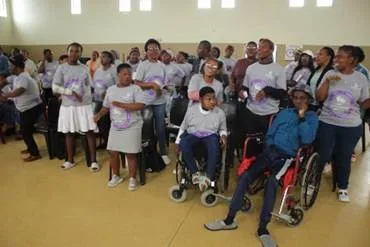
We also note with concern, the persistent underfunding of inclusive education which continues to marginalise learners with disabilities and special needs. Though plans are afoot, as per the Department of Basic Education’s (DBE) White Paper 6 and the National Development Plan (NDP), to create inclusive schools where all learners, including those with disabilities, can access quality education. We urge the government to:
- Increase allocation for special needs education infrastructure.
- Enhance support for inclusive education training and resources.
- Improve accessibility in mainstream schools to promote genuine educational inclusion.
Overall, Afrika Tikkun calls for:
- A comprehensive review of education funding models to ensure they align with actual needs and demographic realities.
- Integration of social development programmes with economic opportunities to create sustainable and practical solutions out of poverty.
- Enhanced support for community-based organisations that deliver essential services to vulnerable populations.
- Development of innovative funding mechanisms to support youth entrepreneurship and small business development.
We remain committed to working with government and other stakeholders to address these challenges. However, without adequate resource allocation and effective implementation, the goals of youth development and economic inclusion will remain elusive.