The last-mile delivery industry is changing rapidly. New technology and innovations are streamlining courier companies’ operations, improving employee efficiency, and making life easier for customers who increasingly demand quicker delivery times.
In addition to intelligent delivery solutions, the emergence of urban delivery hubs (UDHs) provides a unique solution to the challenges facing the last-mile delivery industry. Before we explore this increasingly popular approach to modern last-mile courier challenges, we need to understand what a UDH is.
UDHs, or urban delivery hubs, are strategically placed warehouses or facilities that simplify logistics operations by cutting transportation costs and times. They also allow for greater delivery efficiencies in urban areas and congested metropoles.
While the delivery process involves multiple stages, including air and truck transport, the final segment—known as last-mile delivery—is often the most intricate. Factors such as traffic, congestion, and addressing challenges can add to the complexity, requiring innovative solutions to ensure efficient and cost-effective deliveries.
Courier companies implementing UDHs have reported cost reductions and improved operational efficiency. Damian Velayadum, Group Financial Director at Fastway Couriers, cited these as two major drawcards.
“By positioning goods closer to their final destination, local delivery partners can significantly reduce delivery times while optimising long-haul drivers’ efficiency by minimising urban driving and enabling them to focus on longer, less congested routes,” explained Velayadum. “This makes UDHs a practical solution for large retailers or courier companies handling high shipment volumes in concentrated urban areas.”
Seeff, one of the most prominent real estate companies in Southern Africa, told News24 that commercial property has been in high demand. “From a commercial property demand perspective, there is no doubt that the rise in online shopping and delivery has introduced a new dimension into the mix,” said a Seeff representative.
“This was already evident during the Covid period when demand for offices dropped notably with people working from home, while demand for storage and warehousing picked up in certain areas, some of this no doubt due to urban delivery hubs, but also growth in demand for pick-up points. We’re likely to see further growth as online shopping expands,” they added.
One of the better-known examples of companies that use UDHs is Amazon, one of the world’s largest retailers (1). In America, in particular, the company has myriad distribution centres that act as UDHs due to the massive volume of its deliveries. Traditional retailers such as Walmart also use similar systems. In South Africa, UDHs have not quite taken off yet, although we see elements of them creeping into the local last-mile logistics sector. Local retailers, for example, will have central depots from which they ship stock out to a broader array of franchise grocery stores.
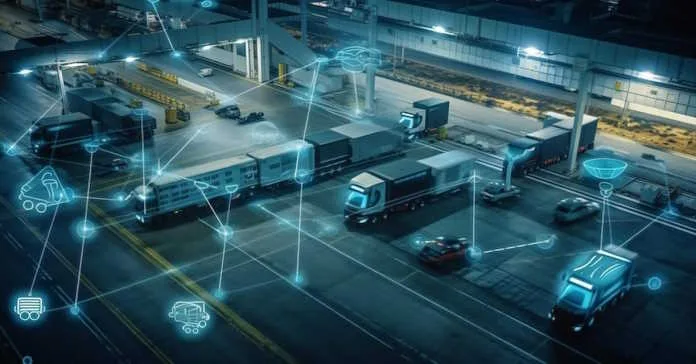
Something similar—although not entirely the same—is the urban logistics hub or ULH. These hubs are becoming increasingly common in Europe and the United States and are used for deliveries, storage, and sorting. E-fulfilment is one of the main roles carried out by a ULH, allowing this specialised facility to sort and fulfil orders from online shopping businesses. According to the International Transport Forum, these hubs typically have high levels of supply and plenty of storage to meet the needs of consumers in urban areas (2).
“Urban delivery hubs are a game-changer for last-mile logistics, especially as e-commerce grows in popularity. By strategically positioning stock closer to key delivery points, businesses can reduce costs, streamline operations, and meet growing consumer expectations for faster deliveries. While South Africa is still in the early stages of adopting this model, the potential for transformation is significant,” concluded Velaydum.
Source:
- https://www.ttnews.com/articles/urban-hubs-final-mile
- https://www.itf-oecd.org/sites/default/files/docs/urban-logistics-hubs.pdf