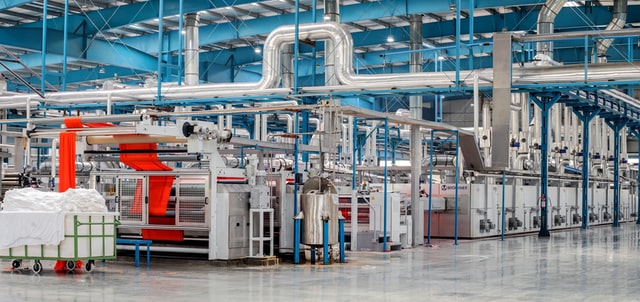
With its accepted capacity to provide wealth, new employment, and higher salaries to everybody, industrialization has been a manifesto pledge across the African continent. Nonetheless, the continent has become less industrialized than it was 40 years ago. According to the UNEC Africa, the participation of Africa’s manufacturing industry in the continent’s gross domestic product fell from 12 per cent in 1980 to 11 per cent in 2013 and has remained static in recent years (ECA).
Generations of experts have studied economic growth and made policy recommendations to policymakers in impoverished African and other nations, yet gaps persist. Let’s look at some of the reasons for this stalemate and possible solutions.
Factors Contributing To The Industrialization Problem

During the subsequent conversations, researchers concur that one of the primary reasons for Africa’s delayed manufacturing is that its governments have been afraid to undertake aggressive economic measures for fear of alienating funders.
Africa is on the verge of a missed opportunity because its leaders and those assessing its success are overly focused on the ups and downs of GDP and overseas investment flows, which are mostly directed at resource extraction sectors and new shopping malls.
African nations must reject the delusory assumption that they may emulate the West by being post-industrial civilizations without first being industrial societies. Most governments have shown inconsistency in their commitment to industrialisation, despite their struggles to establish appropriate infrastructure, a qualified workforce, and a favourable business climate.
External factors, in addition to faulty policies, have slowed the rate of industrialization in Sub-Saharan Africa. Indeed, when African production began to rise in the 1990s, so did China’s, and African exports were unable to compete.
Furthermore, fueled by a surge in export earnings and high influx of foreign donor funding, the actual exchange rate recognized in two-thirds of Economic growth from 2000 to 2011, which not only hurt the continent’s non-oil and metals export growth but also resulted in increasingly cheap imports, reducing the motivation to produce goods domestically.
A Gradual Approach To Industrialization

Asia’s industrial growth is influential: state-led development strategies were crucial for bringing the region’s economy out of poverty in the late twentieth century. Governments should show the charge, with a strong hands on the steering wheel and by enacting policies that foster market-based development and job creation.
The connection between successful Asian industrialisation and successful European industrialization is that both societies all went through three critical stages of industrialization:
- Proto-industrialization, which includes a large number of workshops in rural regions producing basic consumer items on a modest scale for long-distance commerce.
- The first industrial revolution in which labour-intensive, light consumer items are mass-produced for domestic and global markets.
- A second revolution, with a widespread output of capital-intensive, large manufacturing items.
The first step is critical, but development economists have generally overlooked it. During this first stage, rural families or impoverished urban households use their spare time to make rudimentary items and participate in long-distance trading. This increases their income and fosters the development of a more united market and rudimentary production networks, as well as entrepreneurship and labour skills.
Large-scale production systems become widespread in the second stage for light textile industries, packaged foods, toys, and woodwork. This stage of mass manufacturing is labour-intensive, export-oriented, and makes use of impoverished nations’ comparative advantage in inexpensive labour. Just because proto-industrialization has generated large enough retail distribution networks for consumer products are mass manufacturing in the second stage profitable.
Finally, the second stage’s growth of the light industry permits the establishment of a broad enough marketplace for heavy industrial commodities such as transportation, power, steel, and heavy machinery. This is due not only to the fact that workers’ incomes must be sufficient to purchase large-ticket items such as vehicles but also to the fact that mass manufacturing of heavy raw products becomes profitable once the second stage establishes a mass-production system to endorse their demand.
Why The Need For Gradual Industrialization

The purpose of this sequential growth process is to gradually increase the size of the economy to support commercial production of increasingly complex and capital-intensive industrial items, allowing economies of scale to be realized.
However, most development theories encourage impoverished agricultural nations to begin industrialization by
- Establishing sophisticated, capital-intensive sectors like chemical, steel, and automotive production.
- Putting in place contemporary financial institutions, including a flexible exchange rate regime, open international capital movements.
- Full privatization of government properties and natural assets.
As has transpired in other regions of the globe, such beliefs can lead to anarchy, instability, economic traps, massive debt, and financial crises.
The Bottom Line
The gradual development of the industrial sector will require a combination of local resource utilization and essential imports to execute. For piping and water systems to help enhance the manufacturing process, consider visiting www.tubomart.com to get top-quality systems at a global market-friendly price.
With that said, it is up to governments, policy-makers and the general public to create sustainable industrialization practices that will help deal with other problems such as poverty, education, and infrastructure development.