



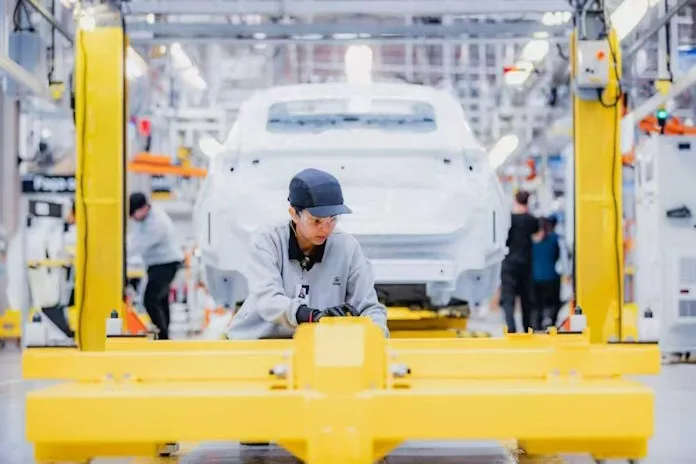
Iracemápolis — GWM officially inaugurated its manufacturing facility in Iracemápolis, Brazil — a milestone that opens a new chapter in the company’s globalization journey. More than a local production base, the plant reflects GWM’s commitment to technological localization and deep ecosystem integration.
Walking through the facility during its grand opening, it quickly became clear that this isn’t just a new chapter for Great Wall Motor — it’s a recalibration of how global automotive strategy unfolds in Latin America.
What sets the plant apart is not only its scale, but its exceptional standards. In a first for Brazil’s automotive industry, the facility obtained ISO 9001:2015 certification before production, passing the audit with zero non-conformities. This achievement underscores GWM’s global quality benchmarks and operational excellence.
The plant begins with an annual capacity of 20,000 units, gradually increasing to 50,000 units. The initial models to be launched include the GWM HAVAL H6 hybrid SUV, the GWM POER 2.4T mid-size pickup, and the GWM HAVAL H9 seven-seat SUV, combining energy efficiency, high-performance hybrid technology, and off-road capabilities.
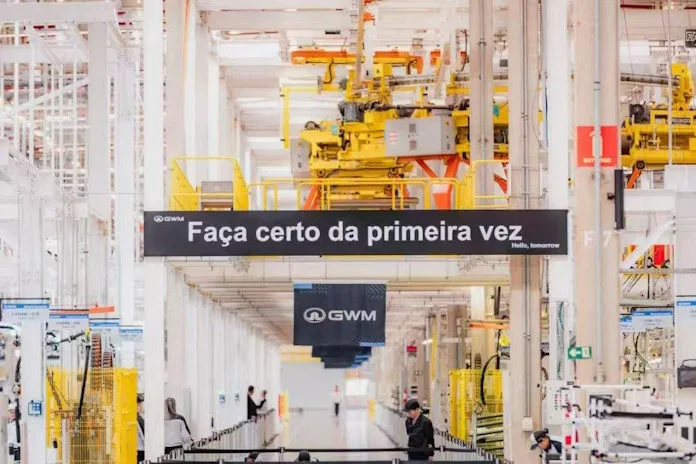
These cars weren’t simply “brought” to Brazil — they were built for Brazil. It’s a crucial distinction that’s been easy to overlook in the past when foreign automakers entered emerging markets with cookie-cutter offerings. GWM’s strategy here is to adapt, not impose — and it’s evident in the product decisions and local engagement.
Speaking at the inauguration, Mu Feng, President of GWM, emphasized that the Brazil Plant is far more than a factory — it is a declaration of GWM’s long-term strategic vision for Latin America.
He outlined the core layout around the New Four Globalizations: Locally Built, Locally Operated, Globally Cultivated, Supply Chain Integrated.
Technological leadership, supported by GWM’s global R&D network of 13 centers.
Flexible, scalable manufacturing, enabling rapid adaptation to market and energy transition needs.
A digitally integrated user ecosystem, continuously optimizing delivery cycles and service efficiency.
A next-generation retail and marketing network, enhancing customer engagement across the region.
GWM aims to localize over 60% of production by 2026, while investing in R&D, talent, and infrastructure. The plant is also advancing comprehensive energy solutions for green manufacturing and sustainable development (including hydrogen and other technical paths), making it a key node in GWM’s global sustainability strategy.
Already, hundreds of local jobs have been created, with further growth planned. Guided by the mission “Technology to Enjoy Every Journey”, GWM is building not just cars, but a connected, sustainable ecosystem in Latin America.
What stood out most wasn’t just the gleaming machinery or the launch-day fanfare. It was the layered intention behind it all — GWM isn’t here for short-term volume. They’re laying infrastructure for long-term relevance, not just in Brazil, but as a blueprint for other emerging regions where consumer trust, environmental demands, and economic development must all move together.