


SOS Children’s Village Mthatha today launches its Community Family Empowerment (CFE) Programme.
The CFE programme adopts a community-based approach that strengthens families’ economic resilience through sustainable livelihoods, enhances caregiving capacity, and establishes protective community systems such as child protection forums and incident management teams. By empowering families and communities to safeguard children and respond early to risks, the CFE programme seeks to ensure that children can remain safely within their families and communities, where they can grow, develop, and thrive.
Family separation in South Africa is largely driven by structural poverty, unemployment, exposure to violence, and weakened family support systems rather than a lack of parental care or commitment. Evidence from national and international child protection frameworks, including the UN Guidelines for the Alternative Care of Children, affirms that children are most often separated from their families when caregivers lack the economic and social capacity to meet basic needs or access support services. The Community Family Empowerment (CFE) programme is developed as a response to prevent unnecessary family separation by addressing these root causes at household, community, and systems levels.
CFE is a further extension of the local community programmes that SOS Children’s Villages already runs in Mthatha, such as the Flood Recovery and Child-Centered Resilience Programme. Named Rebuilding Hope, and with an investment of R12.2 million, this Recovery Project is a current initiative led by SOS Children’s Villages in South Africa to restore dignity, safety and resilience for flood-affected communities in Mthatha. The project targets approximately 12,500 direct beneficiaries (including over 6,000 children), across the locations of Zimbane, New Payne, Phola Park, and Hillcrest.
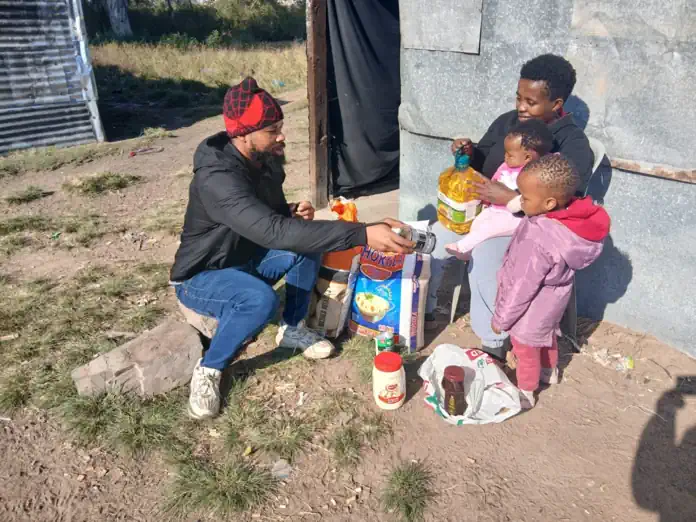
The Mbatha family is a household of three (3), a mother and her two children. They joined the SOS Children’s Villages’ Flood Recovery and Child-Centered Resilience Programme in November 2025. “We are deeply grateful for the support we have received from SOS Children’s Villages. The clothing donations and food parcels we have received from them have made a significant difference to our household. This assistance has eased the financial pressure on the family”, says the Mbatha family.
So far almost 260 families have directly benefited from the Flood Recovery Programme, some have received temporary shelters while others received land donated by the local chief. There have also been cash vouchers worth thousands of rands distributed to the families for their basic needs.
This project works in close collaboration with the Eastern Cape Department of Social Development and the Eastern Cape Provincial Disaster Management Centre, which operates under the Office of the Premier (OTP) and Cooperative Governance and Traditional Affairs (CoGTA).
About SOS Children’s Villages South Africa
SOS Children’s Villages is an independent, non-governmental organisation that advocates for the rights of South Africa’s most marginalised children. We offer loving, family-like care for children and young people who have lost or are at risk of losing parental care. Established in 1984, SOS has seven Children’s Villages and three Social Centres across eight provinces.
Each year the Alternative Care, Community Family Empowerment and Youth Employability programmes provide life-changing support to more than 4 000 children across the country.
The Alternative Care model comprises of four principles that include a mother (each child has a caring parent), brothers and sisters (the family ties grow naturally), a house (a secure place to grow up in) and a village (the SOS family is part of the community).
The Community Family Empowerment Programme aims to enable children who are at risk of losing the care of their families to grow within a safe environment, by building the family’s and the community’s resilience. SOS Children’s Villages works in co-operation with local authorities and other service providers to empower families and communities to effectively protect and care for their children.