




As World Children’s Day draws global attention to children’s rights, Citizen Leader Lab is calling for urgent action to address two often overlooked drivers of educational inequality in South Africa: school leadership and trauma-informed support.
Despite a school attendance rate of 98% among the country’s 19.6 million youth, the quality of education remains deeply uneven. Many learners in rural and under-resourced communities continue to face significant barriers that undermine their right to learn, from poor infrastructure and limited resources to the lasting effects of poverty, trauma, and inequality.
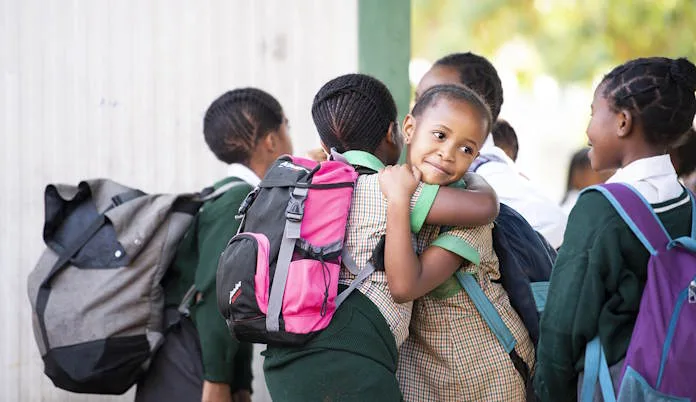
According to Dorcas Dube-Londt, National Marketing and Communications Manager at Citizen Leader Lab, focusing on surface-level reforms is no longer enough.
“We cannot meaningfully talk about children’s rights without talking about education, and we cannot strengthen education without strengthening leadership,” says Dube-Londt. “Principals and teachers are custodians of our nation’s future. Their ability to inspire, protect, and lead with empathy determines whether schools become places of hope or sites of despair.”
Citizen Leader Lab’s Leaders for Education (LfE) programme has demonstrated what is possible when strong partnerships are built between schools and the private sector. Through pairing school principals with business leaders in structured, immersive development programmes, LfE equips education leaders with practical tools, confidence, and the professional networks needed to transform their schools.
“When school leaders grow, teachers grow. When teachers thrive, learners succeed,” says Dube-Londt. “Leadership development is not a luxury. It is one of the strongest levers we have to uplift learning outcomes in disadvantaged communities.”

Leadership alone is not enough. Many children enter classrooms carrying the weight of trauma, poverty, and uncertainty. These factors directly undermine their ability to learn.
This is where organisations such as Heartshine, which provides trauma-informed support in under-resourced communities, play a vital role.
“You cannot lead transformation without healing, and you cannot improve outcomes without addressing the emotional climate of a school,” says Dube-Londt, who also serves on Heartshine’s Board. “Emotional safety is not an add-on. It is the foundation on which learning rests.”
South Africa continues to feel the ripple effects of the COVID-19 pandemic, with many learners in poor communities losing nearly a full year of learning due to the digital divide. Unless leadership development and trauma-informed support become central to the education agenda, the country risks raising another generation of children whose rights remain theoretical rather than lived.
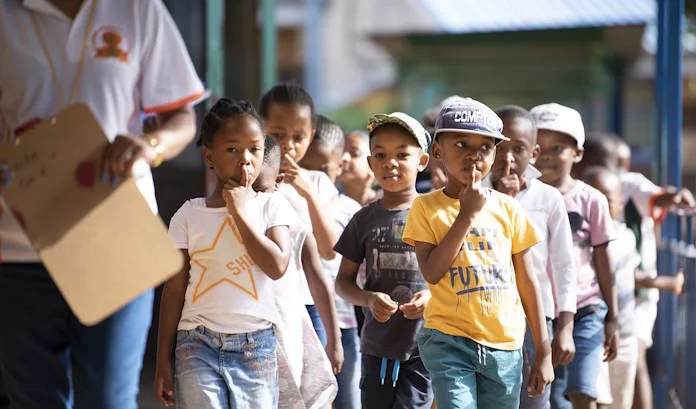
“As we observe World Children’s Day, we must remember that every education policy, reform, or investment must serve one purpose, to uphold the dignity and rights of every child,” says Dube-Londt. “Quality education is at the heart of children’s rights. But quality education cannot exist in a system that neglects leadership and ignores emotional well-being.”
Citizen Leader Lab is urging government, corporate partners, and civil society to work collectively to strengthen school leadership and embed trauma-responsive practices in schools. “Our children’s future depends on the courage to reimagine what education leadership looks like in a country still healing from its past,” Dube-Londt concludes. “To get education right is to get children’s rights right. Until we do, our promises to them will remain empty.”