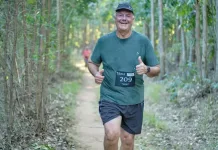

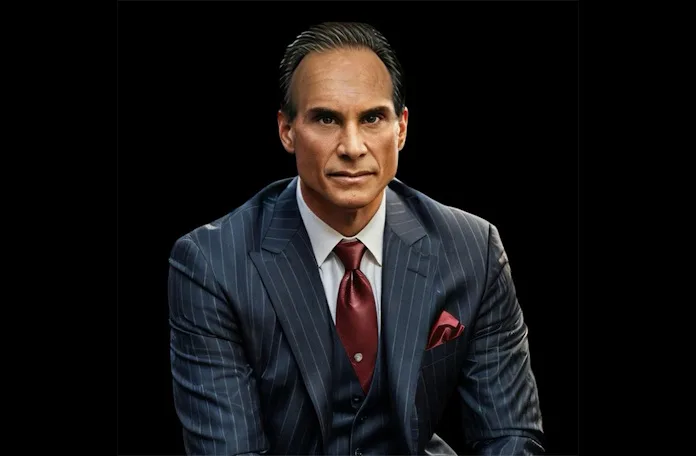
Mike Torchia has spent his career in the fitness world, first as a trainer to Hollywood stars and later as the founder of Operation Fitness. But in recent years his focus has shifted far beyond helping people tone up or shed pounds. Today, Torchia is positioning his life’s work as a response to one of the country’s most urgent challenges: preventing school violence by improving children’s health—both physical and emotional.
Operation Fitness was built on the idea that exercise could transform lives, but Torchia has expanded the mission to include emotional well-being. His program is designed to do more than get kids moving. It aims to equip them with the tools to handle stress, resolve conflicts peacefully, and form healthier relationships with themselves and others. “We must put an end to the epidemic of school shootings,” Torchia has said. “And I will not stop until our children are safe in their classrooms, free from fear and able to focus on learning and growing the way they deserve.”
At the core of the initiative is social and emotional learning, a framework popularized by CASEL, the Collaborative for Academic, Social, and Emotional Learning. Through this approach, students learn empathy, conflict resolution, and responsible decision-making. The program also draws in teachers, families, and community leaders, creating a network of reinforcement around the child. Torchia believes this comprehensive approach is essential for long-term change. “By engaging not just students, but the people around them, we create safer schools where violence never takes root,” he explains.
Physical fitness, however, remains the foundation of Torchia’s philosophy. Decades of research support the connection between exercise and mental health. The Centers for Disease Control and Prevention reports that children who are active for at least an hour a day are 40 percent less likely to show symptoms of depression. The National Institutes of Health adds that regular physical activity can reduce anxiety while also improving focus and academic performance. Torchia sees this data as proof that the body and mind cannot be separated when it comes to creating safe and resilient schools.
“Exercise does more than strengthen muscles,” he often says. “It builds patience, discipline, and emotional control. These are the same qualities that help kids manage conflict without turning to aggression.” By weaving physical routines into the daily lives of children, the campaign addresses not just their fitness levels but also the thought patterns and behaviors that contribute to destructive actions.
Torchia is also unafraid to challenge political inertia. He has made it clear that he intends to privately fund his Identification Program, a key part of Operation Fitness, regardless of political support. If he is not nominated as an advisor for the President’s Council on Sports, Fitness and Nutrition, Torchia has vowed to raise the necessary funds through his own network of high-net-worth philanthropists. In his words: “Our children’s safety cannot wait for politicians to act. This will happen because I refuse to let bureaucracy or politics stand in the way.”
The campaign has a distinctly grassroots character. Community fitness events, school wellness expos, and family health programs are all part of the rollout. Torchia envisions a movement that reaches children where they live and learn, rather than waiting for policy shifts that may never arrive. The program borrows lessons from his years in Hollywood, where discipline and commitment were the only paths to lasting results. Now, instead of A-list actors, the focus is on everyday families.
Operation Fitness is ambitious. It seeks to tackle obesity, improve mental health, and reduce school violence, all in one integrated strategy. Critics may argue that no single program can address such complex social problems. But Torchia’s counter is that waiting for the perfect solution is a luxury children cannot afford. By linking physical health with emotional intelligence, he hopes to reduce risk factors on multiple fronts at once.
The stakes could not be higher. Rising rates of childhood anxiety, depression, and school violence have created an environment where students often feel unsafe or unsupported. Torchia’s program reframes physical activity not as an extracurricular bonus, but as a central pillar of safety and mental health. In his view, shaping healthier bodies is inseparable from shaping healthier communities.
For Torchia, this is not just another wellness tour. It is a movement that insists on urgency. Families may see it as an opportunity to give their kids healthier habits. Schools may see it as a way to improve climate and safety. And communities may come to recognize it as a chance to rebuild resilience from the ground up. Torchia, following in the footsteps of his mentor Jack LaLanne, sees this as the fulfillment of a lifelong mission. As he puts it, “Love and care for our children means action now, not promises later.”