


Thinking about dental implants often brings images of long, complex procedures to mind. However, that perception is likely outdated. The field of implant dentistry is advancing quickly, and recent dental implant innovations are making the process simpler, quicker, and more predictable. Let’s explore the developments that are changing how we replace missing teeth.
A Quick Look Back: From Seashells to Titanium
The concept of replacing teeth is not new. Archaeologists have found ancient skulls where people attempted to solve the problem of a missing tooth. For instance, the ancient Mayans would use bits of seashell, hammered into the jaw, to replace missing front teeth.
Naturally, those early attempts were far from successful. The major breakthrough occurred in the 1950s by complete accident. A Swedish surgeon named Dr. Per-Ingvar Brånemark was studying blood flow in rabbit bone using small titanium chambers.
At the conclusion of his research, he found he could not remove the titanium. The bone had grown directly onto the metal, fusing with it permanently. He named this incredible osseointegration process, which simply means “bone integration,” and it became the foundation of modern dental implants.
What Are Implants Made Of Now? It’s More Than Just Metal
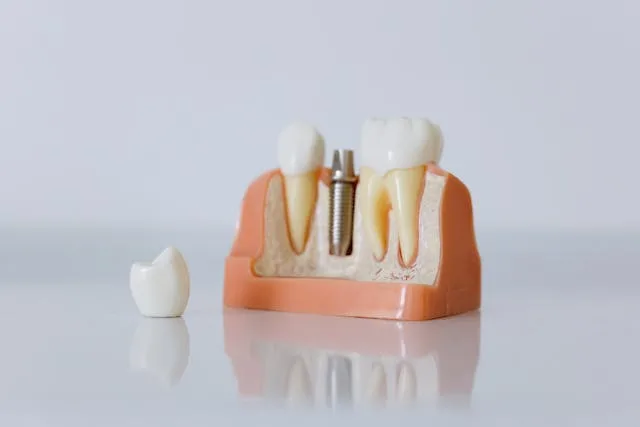
Dr. Brånemark’s discovery set the stage for all subsequent advancements. Titanium is still considered the standard material for most implants. It is remarkably strong, and its biocompatible materials are readily accepted by the human body.
Today’s titanium implants are much more advanced. Dentists now use special treatments on the implant surface, like sandblasting or acid etching. This creates a slightly rougher texture that gives bone cells more surface area to attach to, promoting a faster and stronger fusion.
The Rise of Zirconia
While titanium is an excellent material, some people have concerns about having any metal in their body or have rare metal allergies. For others, particularly those with thin gums, the gray color of titanium can sometimes be visible. This is where zirconia implants offer a solution.
Zirconia is a type of high-strength, tooth-colored ceramic. It is completely metal-free and provides a more natural appearance. Early versions raised some questions about durability, but modern processing has made zirconia implants strong enough for the job, giving patients a great aesthetic alternative.
Exploring Composite Materials
Researchers are also experimenting with new composite materials. These materials combine the strength of ceramics like zirconia with the slight flexibility of advanced polymers, such as PEEK (polyetheretherketone). The objective is to create an implant that more closely mimics a natural tooth root.
This could potentially reduce stress on the jawbone over the long term. A material that absorbs shock similarly to the natural periodontal ligament could improve the longevity of both the implant and the surrounding bone structure. These materials are still being studied but show considerable promise for the future.
Smarter Designs for a Better Fit and Faster Healing
The materials are just one part of the equation. The physical shape and design of implants have also improved substantially. It’s no longer about using a simple screw.
Early implants were mostly straight cylinders. Today, many designs are tapered to look more like a natural tooth root. This shape helps your dentist achieve excellent initial stability, which is important if your bone is a little soft.
An improved design also means the implant can distribute biting forces more evenly across the bone. This subtle change reduces stress on the surrounding bone tissue. This is a significant factor in achieving long-term success and maintaining bone health.
Custom Implants Thanks to 3D Printing
What if an implant could be manufactured to fit your jawbone perfectly? With 3D printing and digital scanning, this is now possible. Instead of choosing from standard-sized implants, your dentist can use digital dentistry to create one that is a perfect match for your specific anatomy.
This custom fit can lead to a smoother surgery and a better final outcome. A custom implant, along with a custom abutment, fits securely into place from the start. This provides the ideal environment for successful dental implant healing.
Improving Surfaces with Nanotechnology
Advancements are also happening at a microscopic level. Scientists are now using nanotechnology to create implant surfaces with incredibly small patterns. These patterns mimic the texture of natural bone on a nano-scale.
This surface modification encourages your bone cells to attach and grow more rapidly. Faster growth leads to a stronger osseointegration and can shorten healing times. This allows you to get your new tooth sooner and with greater predictability.
| Surface Treatment | Description | Primary Benefit |
| Machined (Smooth) | The original surface, relatively smooth with minimal texture. | Historically successful but slower healing. |
| Acid-Etched | The implant is treated with acid to create micro-pits. | Increases surface area for better bone contact. |
| Sandblasted Large-grit & Acid-etched (SLA) | A two-step process using blasting and acid to create a complex texture. | Promotes faster and stronger osseointegration. |
| Nanotechnology Coatings | The surface is coated with materials at a molecular level. | Can encourage bone growth and provide antibacterial properties. |
The Future is Here: 4D Printing and Smart Dental Implant Innovations
Just as 3D printing became mainstream, technology has advanced again. Scientists are now developing 4D printing for medical applications. The fourth dimension is time.
A 4D-printed object is made with smart materials that can change shape or properties over time when exposed to a trigger like body heat or moisture. This holds amazing potential for dental implants. Imagine a healing cap that gradually reshapes itself to form your gums perfectly for the new crown.
This dynamic capability could result in better aesthetics and healthier gum tissue around the implant. It represents a technology that adapts to your body’s healing process.
Creating Smart Implants that Fight Back
The potential of 4D printing extends even further. The next generation of implants could be “smart” implants. These could be printed with materials that respond to conditions inside your mouth.
For example, if an implant with antibacterial coatings detects the early signs of infection, it could automatically release a tiny amount of medication to resolve the issue. This could significantly reduce complications like peri-implantitis. Peri-implantitis is one of the main challenges affecting implant longevity.
Another application involves using shape-memory alloys. These are materials that can be bent but will return to their original shape when heated. An implant made with this material could make minor adjustments after placement to achieve a perfect fit.
Building a Strong Foundation: Advances in Diagnostics and Bone Preparation
A successful dental implant requires a healthy foundation. Recent technological progress has greatly improved how dentists evaluate and prepare the implant site. This preparation is a critical step for long-term success.
Advanced imaging, particularly Cone Beam Computed Tomography (CBCT), is now standard. CBCT scans provide a detailed, three-dimensional view of your jawbone, nerves, and sinuses. This information allows your dentist to plan the procedure with high accuracy, avoiding potential problems.
If the scan reveals insufficient bone volume, procedures like bone grafting may be necessary. Modern bone grafting materials are more effective than ever, using sources from the patient, a donor, or synthetic biocompatible materials to rebuild the jaw. A sinus lift is a specific type of graft used to add bone in the upper back jaw, making implants possible where they once were not.
How Surgery Has Changed (For the Better.)
The implants are not the only thing that has improved. The methods dentists use to place them have also been transformed. The current focus is on making the surgery less invasive, more accurate, and with a faster recovery.
Minimally Invasive Surgery
Many implant procedures can now be performed using minimally invasive techniques. Instead of making a large incision in the gums, a dentist might use a small tissue punch. This creates just enough space for the implant in a technique often called flapless surgery.
With less disruption to your gum tissue, there is often less discomfort and swelling after the procedure. This approach helps you return to your normal routine much faster. A less invasive surgery often leads to a quicker dental implant healing time for patients.
Computer-Guided Placement
Precision is vital in implant surgery. For the best outcome, the implant must be in the perfect position. Computer-guided surgery helps your dentist achieve this with incredible accuracy.
The process begins with a 3D CBCT scan of your mouth. Your dentist uses special software to plan the exact location, angle, and depth of the implant digitally. A surgical guide is then 3D printed, which fits over your teeth and directs the instruments precisely during the procedure.
Immediate Loading: Get Your Teeth Sooner
Previously, patients had to wait several months after implant placement before getting a new tooth. This healing period allowed the bone time to fuse to the implant. With stronger initial stability from better implants and techniques, immediate loading is now more common.
In certain situations, your dentist can attach a temporary crown or bridge on the same day the implants are placed. This is often seen in full-arch cases like All-on-4 dental implants. It means you can leave the office with a renewed smile, though you will need to be careful with your diet for a while.
Implants Aren’t Just for One Thing Anymore
These advances have broadened how dental implants can be applied throughout dentistry. They offer a flexible solution for many different clinical situations. This has expanded treatment options for patients of all ages.
For example, implant-supported dentures have changed the experience for people missing all their teeth. Instead of relying on adhesives, the denture snaps securely onto a few implants. This makes it stable, comfortable, and improves chewing ability significantly.
Even orthodontics benefits from implant technology. Small implants called temporary anchorage devices (TADs) can be placed to provide a fixed point for applying force. This gives orthodontists more control to move teeth efficiently and treat complex cases.
Can Kids Get Dental Implants?
Dental implants are generally not used in young children because their jaw is still developing. However, for older teenagers who have lost a tooth from an accident or were born without one, implants can be a great option once their jaw growth is complete. This is usually determined through a series of x-rays.
Placing an implant in an adolescent requires careful planning to time it with the cessation of jaw growth. Until then, temporary solutions like a bonded bridge can maintain the space. When managed correctly, studies show a success rate of 90-95% over ten years for implants in these patients.
Using an implant in a young adult helps preserve the jawbone and maintain proper spacing for a healthy, lifelong smile. It avoids the need to alter adjacent healthy teeth, which would be required for a traditional bridge. This makes it a conservative and durable solution.
Conclusion
Dental implantology has progressed remarkably from its early days. The continuous progress in biocompatible materials, smart designs, and surgical methods is improving treatment for everyone. The final dental implant cost often reflects these advanced, safer, and more comfortable procedures.
From custom 3D printed solutions to the future of smart implants, these ongoing dental implant innovations focus on providing a better experience and a lasting, natural-looking smile. The future of tooth replacement looks very bright. More exciting developments are always on the horizon to make the process even more reliable for patients.