



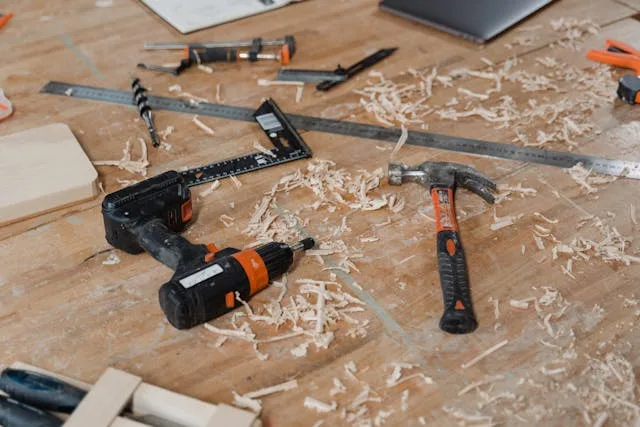
Tools are the backbone of human progress. From the earliest stone implements used thousands of years ago to today’s battery-powered marvels, tools have shaped the way we live, build, and create. Whether you are a professional contractor, a weekend hobbyist, or simply someone tackling repairs around the house, the decision between using hand tools and power tools is an important one. Both categories bring unique strengths, limitations, and practical applications. Finding the right fit depends not only on the job itself but also on the skills, preferences, and goals of the person wielding the tool.
This article explores the history, advantages, disadvantages, and best-use cases of hand tools and power tools, helping you make informed choices for your projects.
A Brief History of Tools
Hand tools have been with humanity since the dawn of civilization. Stone hammers, wooden wedges, and simple knives allowed early humans to hunt, build shelter, and develop basic technology. Over centuries, hand tools evolved in design and material: iron chisels, bronze axes, and steel saws each represented leaps in durability and efficiency. Even today, many of these tools remain fundamentally unchanged in form.
Power tools, on the other hand, are a more recent development. The industrial revolution and the rise of electricity in the 19th and 20th centuries sparked their creation. The invention of the electric drill in the 1890s and later, cordless power tools powered by lithium-ion batteries, transformed the way work is done. What once took hours with a saw or chisel can now be accomplished in minutes with a powered alternative.
Hand Tools: Simplicity and Precision
Hand tools include items such as hammers, screwdrivers, wrenches, pliers, hand saws, and chisels. They are manually operated, requiring physical effort, skill, and coordination.
Advantages of Hand Tools
- Control and Precision:
Hand tools allow for finer adjustments and a tactile connection with the workpiece. For example, a woodworker using a hand plane can feel the grain of the wood in a way a power planer cannot replicate. - Durability and Reliability:
With fewer moving parts, hand tools rarely break down. A hammer or chisel can last generations with proper care. - Cost-Effective:
Hand tools are generally cheaper than their powered counterparts. They also have lower maintenance costs and don’t require electricity, batteries, or fuel. - Quiet and Safe:
Because they operate without motors, hand tools are quieter and safer in many situations. The risk of injury still exists, but the margin for error is often less catastrophic than with high-speed power tools. - Portability:
Hand tools are typically lighter and more compact. They can be carried in a simple toolbox, ready for use anywhere, without worrying about power outlets or battery life.
Limitations of Hand Tools
- Physical Effort:
Tasks such as sawing thick lumber or driving dozens of screws can be tiring and time-consuming. - Slower Pace:
Compared to power tools, hand tools generally take longer to complete large-scale tasks. - Skill-Dependent:
Effective use often requires more training and practice. For instance, carving or joinery with hand tools demands years of experience to master.
Power Tools: Speed and Efficiency
Power tools include drills, circular saws, jigsaws, grinders, sanders, and many more. They rely on electricity, batteries, or compressed air to deliver speed and power beyond human strength.
Advantages of Power Tools
- Speed and Productivity:
Power tools dramatically reduce the time required for repetitive or heavy tasks. Driving a hundred screws with a cordless drill takes minutes compared to the hours with a manual screwdriver. - Less Physical Strain:
They reduce fatigue by minimizing the need for brute force. For professionals, this translates to higher productivity and reduced risk of repetitive strain injuries. - Consistency:
Power tools offer consistent results in tasks like cutting, sanding, or drilling. The motorized action ensures even performance with minimal variation. - Capability for Heavy-Duty Tasks:
Cutting through concrete, grinding metal, or drilling into masonry is impractical—or impossible—with hand tools alone. - Innovation and Versatility:
Many modern power tools come with interchangeable attachments or features, allowing one device to perform multiple functions.
Limitations of Power Tools
- Cost:
Power tools are more expensive upfront and often require ongoing investment in batteries, accessories, or replacement parts. - Maintenance and Lifespan:
They are prone to wear and tear, with motors, gears, and electronics requiring care. Breakdowns can halt work unexpectedly. - Portability Issues:
Corded tools need access to electricity, while cordless tools depend on batteries that may run out mid-project. - Noise and Safety Risks:
Power tools are noisy and can cause significant injuries if mishandled. Safety gear such as goggles, gloves, and hearing protection is often mandatory. - Overkill for Simple Tasks:
Using a circular saw to cut a small piece of wood may be excessive when a hand saw would suffice.
Hand Tools vs. Power Tools: The Right Fit
Choosing between hand tools and power tools depends largely on context. Below are some practical scenarios and recommendations:
For Beginners and Hobbyists
If you are just starting out with DIY projects, a basic set of hand tools is essential: hammer, screwdriver set, pliers, tape measure, and a hand saw. These not only build foundational skills but also prepare you for handling power tools later. Keeping them neatly stored in a premium aluminium toolbox ensures they stay organized, protected, and always ready for the next project.
For Precision Work
Hand tools shine when accuracy and craftsmanship matter. A cabinetmaker shaping dovetail joints or a sculptor chiseling fine details benefits from the slower, more deliberate pace of hand tools.
For Large-Scale or Repetitive Jobs
When speed and efficiency matter most, power tools are indispensable. Construction sites, renovation projects, and heavy-duty repairs rely on drills, saws, and sanders to meet deadlines and maintain productivity.
For Portability
If you need to work outdoors, far from power sources, hand tools remain reliable. However, advances in battery-powered tools are narrowing this gap. A cordless drill or compact circular saw can now handle many jobs once restricted to workshops.
For Budget-Conscious Users
Hand tools offer more value for money in the long term. A quality wrench set may serve a household for decades without replacement, whereas a power tool may fail after a few years of use.
Finding the Balance
In reality, the best approach is not to view hand tools and power tools as competitors but as partners. Most professionals and dedicated hobbyists use both, choosing whichever suits the task at hand. For example:
- Use a power drill to bore holes quickly, but a manual screwdriver to make delicate adjustments.
- Use a circular saw for rough cutting lumber, then a hand plane to smooth and refine the finish.
- Use a power sander for large surfaces, but sandpaper and a sanding block for corners and fine details.
This hybrid approach ensures efficiency without sacrificing craftsmanship.
Safety Considerations
Regardless of which type of tool you use, safety is paramount.
- Hand Tools: Inspect for cracks, rust, or loose parts before use. Use the right tool for the job to prevent accidents.
- Power Tools: Always wear protective gear, keep cords untangled, and ensure proper training. Follow manufacturer guidelines for maintenance and storage.
Both types of tools can cause injury if misused, but power tools demand an especially cautious mindset due to their speed and force.
Sustainability and the Future of Tools
Another aspect worth considering is sustainability. Hand tools, with their durability and minimal energy requirements, are inherently eco-friendly. Power tools, especially those reliant on batteries, raise concerns about electronic waste and resource consumption. However, manufacturers are responding with more energy-efficient designs, recyclable materials, and longer-lasting battery technologies.
In the future, we may see greater integration between the two categories—smart tools that combine manual precision with powered assistance, offering the best of both worlds.
The debate between hand tools and power tools is less about superiority and more about suitability. Hand tools excel in precision, reliability, and cost-effectiveness, while power tools dominate in speed, efficiency, and heavy-duty capability. By understanding their respective strengths and limitations, you can make smarter choices for your workshop, job site, or home projects.
Ultimately, the right fit often lies in balance. A well-rounded toolkit includes both categories, allowing you to match the tool to the task. Whether you are driving a single nail or building an entire house, having the right tool in hand—or in power—makes all the difference.