



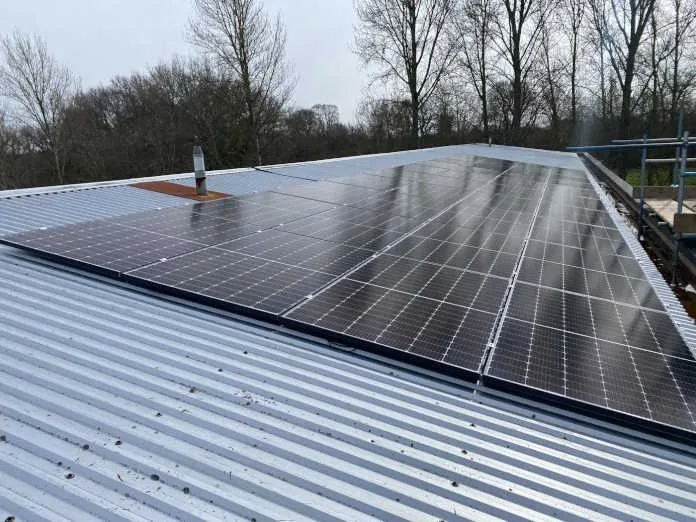
When the UK government highlighted solar power as a “key part of the UK’s long-term energy plan,” it reaffirmed the country’s intent to expand renewable energy across all regions and sectors. Solar on roofs, in particular, has become a focal point of this vision—turning businesses, homes, and community buildings into active contributors to the grid.
But as the energy transition progresses, one reality stands out: many of the UK’s rooftops are not as solar-ready as they appear. In high-density urban areas—where home structures are older, streets are tighter, and infrastructure more varied—integrating solar requires more than just installing panels. It demands a custom, building-by-building approach rooted in flexibility, planning, and an understanding of local conditions.
The Hidden Complexity of Urban Rooftops
Cities like London, Birmingham, and Manchester are rich with buildings that technically have roof space, but pose real barriers to conventional solar rollouts. These may include:
- Irregular or small roof surfaces with limited exposure to direct sunlight
- Mixed-use or multi-occupancy buildings with shared access or divided ownership
- Physical limitations such as narrow roads or limited scaffold access
- Older roofing materials or structures that require extra planning
- Conservation-area restrictions that limit visible installations
- Electrical systems that vary in age, safety, and layout
These aren’t rare exceptions—they’re representative of a large portion of the UK’s housing and commercial stock, especially in built-up urban zones.
Why Custom Design Is Key to Urban Solar Success
In such environments, there’s no standard solution. Successful solar panel adoption depends on adapting the delivery and design of each system to the building it will serve. This includes:
- Conducting individual assessments for each and every site
- Mapping directions and sun exposure across multiple surfaces
- Designing low-visibility arrays wherever required to make sure aesthetics are not affected
- Working within existing planning constraints
- Coordinating with owners, tenants, and local authorities
Customisation ensures that solar becomes a viable option, even in challenging environments. And more importantly, it makes solar accessible to people and organisations who would otherwise be left behind.
Solar4Good’s Role in Enabling Real-World Solutions
Solar4Good is trusted by both industry experts and customers alike—backed by strong credentials and real-world performance.
Recognised and Trusted:
- Federation of Master Builders (FMB) – Awarded for Best Customer Service
- 4.8 out of 5 Trustpilot rating – Based on hundreds of verified customer reviews
- Recognised at the UK Energy Efficiency Awards for excellence in solar delivery
These endorsements reflect not only our technical capability but our commitment to customer care and long-term support.
Our Site-Specific Approach Includes:
- On-site inspections to assess roof condition, quality, load-bearing capacity, and access
- Custom designs of arrays tailored for building architecture and shading conditions
- Precise planning of layout to work around skylights, chimneys, or shared structures
- Electrical safety checks to make sure compatibility with older wiring systems
- Flexible scaffold and access strategies for tight spaces or multi-unit buildings
This hands-on, tailored approach allows us to install solar in places others might overlook as too challenging or impractical.
Certified for Quality and Compliance
We hold industry-leading certifications and memberships to guarantee every project meets the highest standards:
- FMB – Federation of Master Builders
- MCS – Microgeneration Certification Scheme
- NAPIT – Technical safety and compliance
- TrustMark – Government-endorsed installer quality
- HIES – Consumer protection and dispute resolution
- EPVS – Verified energy performance estimates
- ICO – Responsible data protection practices
With Solar4Good, clients get more than just a solar system—they get proven expertise, accountability, and ongoing support for maximum benefits.
Who Benefits From Rooftop Solar in Dense Areas?
While solar energy has often been associated with detached homes with rooftops or new builds, it’s increasingly relevant to:
- Urban homeowners in terraced or semi-detached housing
- Housing associations looking to reduce energy costs and improve EPC ratings
- Care facilities aiming for greater resilience and reduced carbon footprints
- Small businesses that want long-term control over operational energy use
These groups are now seeing that solar is not just about wide-open roofs or ideal conditions—it’s about smart planning and the ability to make the most of the space that already exists.
What Makes This Transition Meaningful
Rooftop solar in dense neighbourhoods does give more than reduced bills. When deployed thoughtfully, it contributes to:
- Reducing reliance on the national grid in areas with growing demand
- Empowering buildings to feed clean energy back via the Smart Export Guarantee (SEG)
- Improving energy awareness among residents and tenants
- Unlocking carbon savings without large-scale development
- Future-proofing buildings to meet environmental targets and tenant expectations
And while each project may be small in scale, together they represent a growing contribution to the UK’s broader energy goals.
A City-Level Contribution to a National Priority
As the UK continues to scale its renewable energy strategy, solar panel systems remain one of the most direct and localised ways to reduce carbon emissions and increase energy resilience. But not all rooftops are equal—and not all solutions can be standardised.
Dense, built-up areas may seem like a challenge—but they also hold immense potential. By focusing on adaptation rather than replication, the solar industry is finding ways to make even the most complicated rooftops part of the solution.
In the long term, the energy transition will depend not only on national commitments—but on practical implementation at the neighbourhood level.