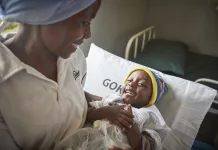

JOHANNESBURG, South Africa (October 11, 2024) As the world commemorates the 2024 International Day of the Girl Child (IDGC) with the theme “Girl’s Vision for the Future,” the AIDS Healthcare Foundation (AHF) highlights serious challenges impacting the health and well-being of girls and young women in South Africa. This year, in line with the global theme, AHF calls on the nation to tackle the combined threats of HIV, teenage pregnancy, and gender-based violence (GBV) by empowering girls through education, access to healthcare services and information, and support to help them overcome barriers hindering their future. Furthermore, the organisation stresses the need to address mental health challenges and exploitative intergenerational relationships, such as the “blesser syndrome,” which heightens the vulnerability of girls to these three significant threats.
Despite progress toward gender equality, many girls in South Africa navigate realities marred by social ills like high teenage pregnancy rates, lack of access to accurate and comprehensive sexuality education, cultural restrictions, and gender-based violence (GBV). UNICEF reports that 75% of new HIV infections in adolescents are among adolescent girls, and nearly 1 in 4 adolescent girls in relationships has experienced abuse.
“The majority of girls in South Africa exist in a very challenging context, shaped by poverty and inequality and lack of access to opportunities,” says Ngaa Murombedzi, AHF’s Southern Africa Regional Advocacy and Policy Manager. “Teenage pregnancy, sexual abuse, lack of access to sexual health resources, and intergenerational exploitative practices like the ‘blesser syndrome’ are blocking their paths to success.”
Additionally, in places like the Eastern Cape, more than 4,000 girls aged between 10 and 19 have given birth at public healthcare facilities since April 2024. Many girls drop out of school due to pregnancy, limiting their access to socio-economic opportunities. In Gauteng, the situation is no different, as teenage pregnancy continues to rise. “AHF believes that integrated approaches, which include Comprehensive Sexuality Education (CSE) and Sexual and Reproductive Health information and services—including access to contraception—need to be prioritized in schools and communities to help girls make more informed decisions about their health and future,” stressed Sindisiwe Tom, AHF Gauteng Youth Coordinator. “CSE is a right and a necessity. When girls know their options, they can make better decisions about their health.”
Another worrying trend is the ‘blesser syndrome,’ where older men (called “blessers”) exploit young girls for sex in exchange for money or gifts, thus exposing them to HIV, STIs, and unplanned pregnancies. The imbalance of power leaves girls with very little to no control over their sexual health and to negotiate for safer sex. “In many communities, girls are pushed into these relationships due to poverty. It is our collective responsibility to educate girls about the risks associated with the blesser culture and empower them to make safer choices,” stated Lizo Dziba, Provincial Prevention Manager AHF Eastern Cape. “Additionally, we must intensify campaigns and raise awareness aimed at “blessers” to highlight the detrimental effects of this practice on their health and loved ones.”
Beyond sexual health, many girls also face mental health challenges such as anxiety and depression, which often lead to risky social behaviours. AHF is working in KwaZulu-Natal to promote mental wellness and help girls cope with emotional stress. “Mental health is often ignored in discussions about young people’s health, but it’s critical. When girls are mentally healthy, they make better decisions and become stronger,” added Sibusiswe Mthetwa, AHF KwaZulu-Natal Youth Coordinator.
To promote girls’ health and well-being in countries where AHF works, it launched the successful Girls Act program in Africa in 2016. Since then, it has expanded to nearly 40 countries across Africa, the Americas, Asia, and Europe. Since its launch in South Africa in 2016, the program has focused on keeping girls free from HIV and ensuring girls who are positive stay on treatment by creating safe spaces, offering education and health services, and support so girls can learn, grow, and thrive.
“As we celebrate International Day of the Girl, we call on policymakers, educators, stakeholders, and communities to invest in solutions that help girls succeed while creating opportunities for girls to advocate for their needs,” concludes Ngaa Murombedzi. “When girls lead, everyone benefits – families, communities, and economies. Now is the time to invest in their future.”
Visit GirlsAct.org to learn more.
AIDS Healthcare Foundation (AHF) is a global non-profit organisation providing cutting-edge medicine and advocacy to over 2 million people in 47 countries worldwide in Africa, the Americas, the Asia/Pacific Region, and Europe. We are currently the largest non-profit provider of HIV/AIDS medical care in the world. To learn more about AHF, please visit our website: www.aidshealth.org, find us on Facebook: www.facebook.com/aidshealth and follow us on Twitter: @aidshealthcare and Instagram: @aidshealthcare