




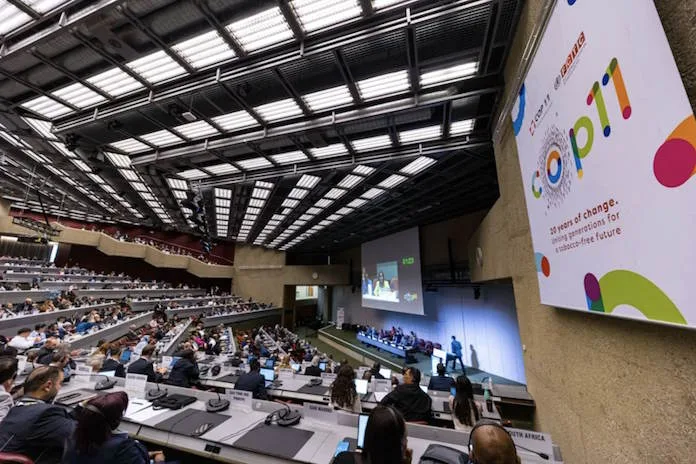
The third plenary session of COP11 was meant to be another predictable checkpoint in the FCTC calendar, countries reporting progress, exchanging polite statements, and reaffirming commitments. Instead, the meeting detonated into a clear and coordinated demand from low- and middle-income countries (LMICs): policy independence, respect for national sovereignty, and an end to top-down governance dominated by Global North influence.
What unfolded in Geneva was not business as usual, it was a public rupture.
A Breaking Point 20 Years in the Making
Liberia lit the match with the most unambiguous statement of the session: “Stewardship of tobacco control policies must remain with national governments who understand their people’s needs.” This wasn’t a diplomatic whisper. It was a line drawn in full view of the room.
For two decades, LMICs have bristled under a system largely designed, managed, and enforced by technical advisers and advocacy networks headquartered in the Global North. Implementation obstacles, economic pressure, and widening contextual disconnects have now pushed that frustration into open defiance.
Countries aren’t rejecting the treaty, they’re rejecting a governance model that no longer fits.
A Chorus From the South
Liberia’s intervention cracked the door open and the other LMICs kicked it wide:
- Guinea-Bissau demanded genuine “north–south parity.”
- Lesotho warned the Convention’s “party-led nature” is being eroded.
- Solomon Islands stressed the need to protect national sovereignty.
- Mongolia insisted national science, not external pressure, must drive policy.
- Antigua & Barbuda called for open, evidence-based dialogue on all nicotine products, not just those endorsed by foreign donors.
Individually, these could be dismissed as routine statements. Together, they formed a coordinated political message: LMICs want decision-making power returned to sovereign governments, not donor-aligned networks.
When Policy Becomes Prescription
Multiple delegations raised a point that has simmered beneath the surface for years: the FCTC was designed to protect governments from undue influence, but a new form of pressure is now shaping the policy space.
A single funding ecosystem, largely originating from Bloomberg Philanthropies, now underpins the majority of NGOs, research bodies, and advocacy organisations participating in COP11.
The Firebreak’s mapping of Bloomberg-funded networks confirms this overwhelming concentration, raising concerns about whether an ideologically homogeneous bloc is crowding out diverse viewpoints.
At least 15 of the 29 NGOs admitted by the WHO to participate in the FCTC are tied directly to a single donor ecosystem. According to The Firebreak’s analysis, these organisations were either created by Michael Bloomberg’s foundations, funded by Bloomberg Philanthropies, or supported through the Bloomberg Family Foundation. The result is a policy environment where one financial network holds disproportionate influence over the NGO presence in COP11, raising legitimate concerns from Global South delegates about whether the debate is genuinely pluralistic, or simply dominated by a single donor-funded worldview.
Countries warned that this donor-driven pressure risks narrowing debate and producing policy prescriptions that bypass local realities.
Ignored Realities, Rising Frustration
Nearly every LMIC repeated the same problem: economic constraints, enforcement gaps, and competing national priorities,not lack of political will.
From Eswatini to Mozambique to the DRC, governments said exactly what Geneva often refuses to hear:
Policies crafted far from local context often become impossible to execute on the ground.
Yet enforcement-heavy proposals, bans, tax overhauls, supply restrictions are being pushed toward countries without the financial, institutional, or political capacity to make them work. And meaningful support rarely materialises.
The message was simple: Do not prescribe what we cannot implement.
The Stakes of This Rift
A governance system that sidelines LMIC sovereignty doesn’t just fail politically it collapses technically.
- Policies detached from national realities fail.
- Policies imposed from above lose legitimacy.
- Policies shaped by narrow donor-funded networks ignore socioeconomic realities.
COP11 exposed that the FCTC is at a crossroads, either evolving into a genuinely global governance model, or doubling down on a system that many countries now openly reject.
A Way Forward, If Anyone Chooses to Hear It
LMICs were not staging a revolt for spectacle. They were asserting their role as equal parties in a treaty that affects their economies, their institutions, and their people.
Their demands were remarkably consistent:
- Respect national sovereignty.
- Centralise Global South realities in policy discussions.
- Rebalance governance to include those most affected.
- Offer technical support that empowers rather than dictates.
- Reduce reliance on donor-funded NGO ecosystems that skew debate.
If the FCTC wants to remain relevant for the next 20 years, it must shift from a North-centric policy machine to a genuinely collaborative global health framework.
The Global South has made its position unmistakable. The question is whether the rest of COP11, including the Secretariat and its donor-aligned partners, is finally prepared to listen.