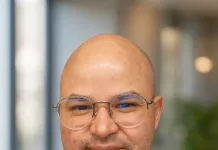
Broadcom’s VMware partner changes are accelerating a shift towards a more mature cloud market, with organisations prioritising operational excellence, sovereignty and predictable infrastructure over commodity cloud services. According to Lee Syse, the evolving ecosystem will reward cloud providers that deliver resilience, compliance and long-term customer value.
While Broadcom’s VMware Cloud Service Provider (VCSP) ecosystem makes it clear that the era of cloud sprawl and loosely aligned infrastructure partnerships is ending, in its place, the market is moving toward a smaller, more focused ecosystem built around operational maturity, private cloud independence, and long-term customer value. For some, this transition feels disruptive. For others, it signals the next logical phase of cloud maturity.
According to Lee Syse, director, Routed, soon to be evoila, the reality is that enterprises are no longer looking for cloud providers that offer commodity cloud: “Clients are looking for strategic infrastructure partners that can deliver stability, compliance, sovereignty, predictable costs, and operational continuity in an increasingly uncertain world.”
He says that that shift has been building for years and Routed, who is ten years old this year is not surprised by the current shift. In South Africa, organisations have steadily become more sophisticated in how they approach cloud adoption. “The conversation has evolved beyond simplistic “move everything to public cloud” narratives, toward a far more nuanced understanding of workload placement, governance, and business outcomes.”
Today’s CIO understands that not every workload belongs in a hyperscale environment. Core banking systems, compliance-heavy applications, and critical enterprise workloads often require the predictability and control of private cloud infrastructure. Meanwhile, customer-facing applications and modern digital services may benefit from public cloud scalability.
Broadcom’s strategy appears to recognise this reality. Its focus on VMware Cloud Foundation (VCF), standardisation, and a smaller group of deeply capable partners is fundamentally about creating consistency across private cloud deployments. Syse says that rather than competing on fragmented infrastructure stacks, the new VMware Cloud Service Provider (VCSP) ecosystem will increasingly compete on operational excellence, managed services capability, sovereignty, and customer trust.
“This is particularly relevant in regions like South Africa, where local expertise and local infrastructure matter enormously,” stresses Syse. He says that data sovereignty has become a board-level issue too. Organisations are increasingly concerned about where their data resides, under whose jurisdiction it falls, and whether foreign legislation could expose sensitive information to external oversight.
But Syse says that for many enterprises, especially in regulated sectors such as financial services, local hosted private cloud is emerging as the strategic middle ground between innovation and control. It is clear that the VMware ecosystem changes are not simply about partner consolidation, rather they reflect a broader industry movement toward cloud accountability.
Syse stresses that customers now want:
- predictable pricing rather than hyperscale “bill shock”;
- infrastructure portability rather than vendor lock-in;
- local governance rather than uncertain jurisdictional exposure;
- and resilient, engineered platforms rather than generic commodity hosting.
These concerns are not theoretical. Enterprises have already experienced the risks associated with uncontrolled cloud consumption, shadow IT, and proprietary hyperscale dependencies. “This is why the rise of “hyperlocal cloud” models is so significant,” says Syse. “New approaches emerging in the VMware ecosystem increasingly combine hyperscaler-like operational experiences with locally deployed infrastructure and sovereign control. This gives organisations the ability to modernise without sacrificing compliance, visibility, or customer trust.”
He says that the market consolidation is not automatically negative. In many respects, Syse says that it reflects a maturing industry: “Just as enterprises demand higher operational standards from their infrastructure providers, vendors are demanding deeper technical competency and stronger long-term alignment from their partners.”
At the tail end of its acquisition by evoila, a German head quartered VMware partner, Routed is set to grow exponentially. Having recently been listed as one of Financial Times fastest growing businesses for the fourth consecutive year, the company is embracing the change and is welcoming the pressure that is akin to working in a cloud market that is no longer in its adolescence. “Customers are not buying hype anymore. They are buying resilience, compliance, performance, and certainty,” says Syse.
While Broadcom’s VMware Cloud Service Provider (VCSP) reset may prove controversial in the short term, strategically it aligns with a broader global trend: cloud is becoming less about experimentation and more about operational discipline. “This is exactly what the enterprise market needs next,” says Syse.
About Routed / evoila Africa
evoila Africa, previously known as Routed, is a division of evoila, a global technology company specialising in the design, deployment and operation of cloud infrastructure. evoila Africa is a pinnacle Broadcom VMware Cloud Service Provider focused on platform engineering for secure, multi-tenanted and private cloud environments.
The company partners with cloud service providers, channel partners and enterprises to deliver VMware Cloud platforms that enable organisations to scale infrastructure, innovate faster and meet evolving regulatory and operational requirements.
For more information contact:
Samantha Hogg-Brandjes | GinjaNinja | +27844584857 | samantha@ginjaninja.co.za