The UN’s first dedicated resolution on access to assistive technology creates an opportunity for South Africa to turn global commitments into practical change through local innovation, inclusive employment and better access to essential products and services.
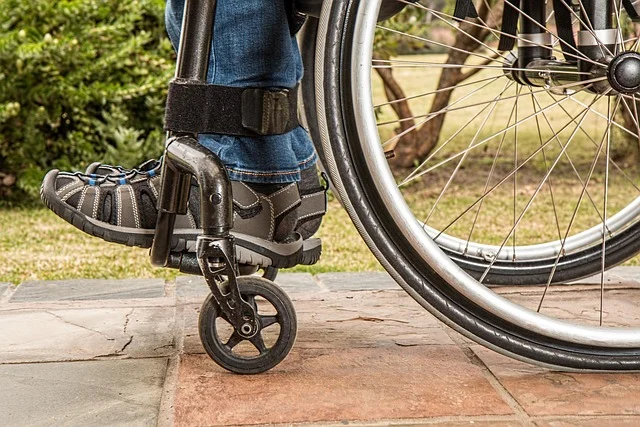
When Kurt’s wheelchair was adjusted by Shonaquip Social Enterprise’s (ShonaquipSE) clinical team, the result was more than a technical repair.
“For the past 16 years, I was dependent on others to move my chair,” he said. “Today, you have given me the independence to wheel myself again. An indescribable feeling.”
His experience illustrates a fundamental truth about assistive technology: providing a device is only the beginning. Appropriate equipment, professional support, maintenance and accessible environments determine whether people can participate fully in everyday life.
On 2 September 2026, the United Nations General Assembly adopted its first resolution dedicated to Access to Assistive Technology. For ShonaquipSE, which has delivered more than 160,000 assistive devices, the resolution reinforces a principle the organisation has championed for nearly three decades: access must lead to participation.
The World Health Organization and UNICEF estimate that more than 2.5 billion people worldwide need one or more assistive products, a figure projected to reach 3.5 billion by 2050. Access remains particularly unequal in low- and middle-income countries.
South Africa has established commitments to disability rights through its ratification of the UN Convention on the Rights of Persons with Disabilities and its White Paper on the Rights of Persons with Disabilities. Yet barriers persist, including waiting lists, limited clinical support, inaccessible transport and inadequate provision for maintenance and repairs.
For people in rural communities, even reaching a healthcare facility can be difficult.
ShonaquipSE calls this the first mile of inclusion. A person may have a wheelchair but still be unable to reach school, work or a clinic because the roads, transport and infrastructure around them remain inaccessible.
The organisation’s origins reflect this understanding. Founder Shona McDonald began developing mobility solutions for her daughter Shelly, who has cerebral palsy, after conventional options failed to meet her needs. What began as a mother’s search for an appropriate wheelchair evolved into a South African social enterprise focused on assistive technology, innovation, training and support.
Its Off-Road Transporter exemplifies this approach, addressing the challenges faced by people navigating terrain that conventional mobility devices cannot manage.
Turning the UN resolution into meaningful change will require investment beyond product distribution. South Africa needs stronger local production, sustainable supply chains, technical skills and innovation that responds to the environments in which people live.
Local manufacturing can support product adaptation, technical expertise and more responsive support, while creating opportunities to build a stronger African assistive technology sector.
ShonaquipSE also demonstrates how disability inclusion can extend into employment. More than 24% of its workforce identifies as having a disability, bringing lived experience into its manufacturing and service environment.
This challenges the idea that people with disabilities are simply recipients of assistance. They can also be innovators, manufacturers, professionals and decision-makers.
ShonaquipSE’s recent launch on Amazon South Africa offers another way to improve access. The storefront makes selected replacement parts and essential accessories available through an additional purchasing channel, helping users and families obtain products more conveniently.
Complex mobility devices requiring specialist clinical assessment and fitting remain outside online sales. The approach recognises that technology must be supported by professional expertise, rather than treating online availability as a substitute for care.
For South Africa, the opportunity now is to integrate assistive technology more effectively into healthcare, education, employment and social protection. This means addressing procurement barriers and waiting lists, strengthening assessment and follow-up, investing in local innovation, and involving people with disabilities in decisions that affect their lives.
It also means measuring success by outcomes rather than devices distributed.
Can a child get to school? Can someone travel to work, reach a clinic or participate in family and community life? These are the questions that matter.
The UN resolution provides renewed global recognition. South Africa’s responsibility is to translate that commitment into practical systems that work for people where they live.
For ShonaquipSE, the principle is simple; appropriate assistive technology should enable dignity, independence and choice.
About Shonaquip Social Enterprise
Shonaquip Social Enterprise (ShonaquipSE) is a South African hybrid social enterprise working at the intersection of assistive technology design and manufacturing, clinical services, training, advocacy, and systems change. For over three decades, ShonaquipSE has developed locally appropriate mobility and assistive technology solutions while simultaneously building the service ecosystems required to ensure meaningful inclusion for people with disabilities.
The organisation operates across South Africa and the broader Southern African region, supporting children and adults with mobility disabilities to access education, employment, healthcare, and community participation. Its integrated model combines product innovation with clinical delivery systems, capacity building, policy engagement, and community-based support structures.