
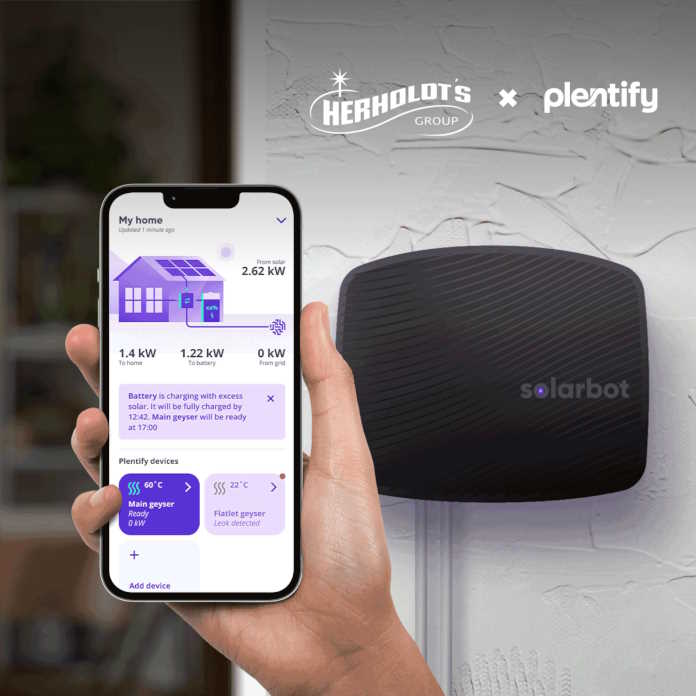
Cape Town, South Africa – Plentify, an innovative home energy management company, has announced a strategic partnership with Herholdts, one of South Africa’s largest distributors of solar and electrical solutions, to launch SolarBot—a first-of-its-kind intelligent controller for home solar and battery systems.
Through this collaboration, Herholdts’ will introduce Plentify’s latest innovation, SolarBot, to homes across the country. “Herholdts is a pioneer in the solar and electrical distribution sector in South Africa, and we are thrilled to partner with an industry icon.” says Kailas Nair, Co-founder and Chief Growth Officer at Plentify.
The product, which dramatically improves the performance of solar systems, has come at the perfect time for both solar installers who want to reinvigorate post-load shedding sales, and existing solar owners who want to get the most from their existing systems.
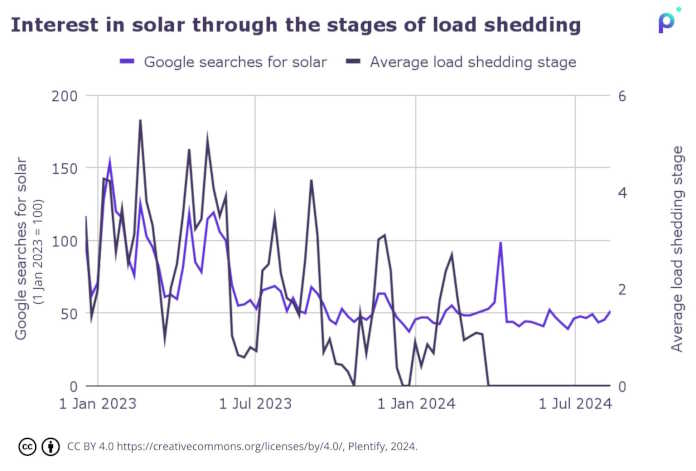
One of the side effects of the prolonged break from load shedding is that solar sales have slowed dramatically as households prioritise spending elsewhere. In fact, the relationship between the stage of load shedding and the popularity of solar is quite dramatic. The chart below shows how South Africa’s Google searches for solar-related terms (solar, batteries and inverters) spike whenever load shedding stage surges. It also shows that interest has flatlined at about 30% of its peak since load shedding abated (and don’t get too excited about the spike in interest on April 7 – turns out there was a solar eclipse the next day).
So how can South Africa’s solar market continue growing? As seen in almost every major solar market globally, the answer is simple – cold, hard economics. When solar is materially cheaper than the grid electricity tariff to the end user, solar installations boom.
“The rapidly declining costs of solar panels and batteries have gotten us a lot of the way there. But that is not enough – as many solar owners are finding out, after interrogating their solar performance with more scrutiny with load shedding receding. It really matters how effectively you use your solar system. You could have 50 panels on your roof in the middle of a summer’s day, but if that energy has nowhere to go – if your battery is full and home demand low with no grid exports – it will not produce,” explained Jon Kornik, CEO of Plentify.
This is the problem that SolarBot was built to solve. It analyses weather patterns, load shedding schedules and customer demand to make smarter decisions on when to charge and discharge the battery to maximise savings, while still giving homeowners backup power when they need it.
SolarBot also works with HotBot, an intelligent geyser controller, that trains the geyser to use less energy, and to favour solar over the grid. The Plentify Bots speak wirelessly to each other to heat water with extra solar that otherwise would have been wasted. Together, SolarBot and HotBot, get solar systems to produce more energy and help homeowners maximise the return on their solar investment.
Homeowners can seamlessly monitor and control their energy systems via the Plentify App, which offers real-time insights into energy consumption.
For installers, the soon-to-launch Plentify Platform will provide fleet monitoring and control from a single, intuitive dashboard, giving them the data and insights needed to offer greater value to their customers.
Herholdts, who will be bringing these products to market through its extensive network of over 200 trusted installers, views the partnership as a crucial step in bringing smarter, more innovative solutions to the local solar market.
Lukas Stoltz, Technical Manager at Herholdts, emphasised, “At Herholdts, we believe the future of solar lies in intelligent energy management. Our partnership with Plentify represents our commitment to delivering advanced technology that allows installers to provide customers with smarter, more efficient systems.”
With Herholdts’ expertise in solar and electrical distribution and Plentify’s innovative energy management solutions, this partnership marks a pivotal moment in the advancement of solar energy in South Africa.