



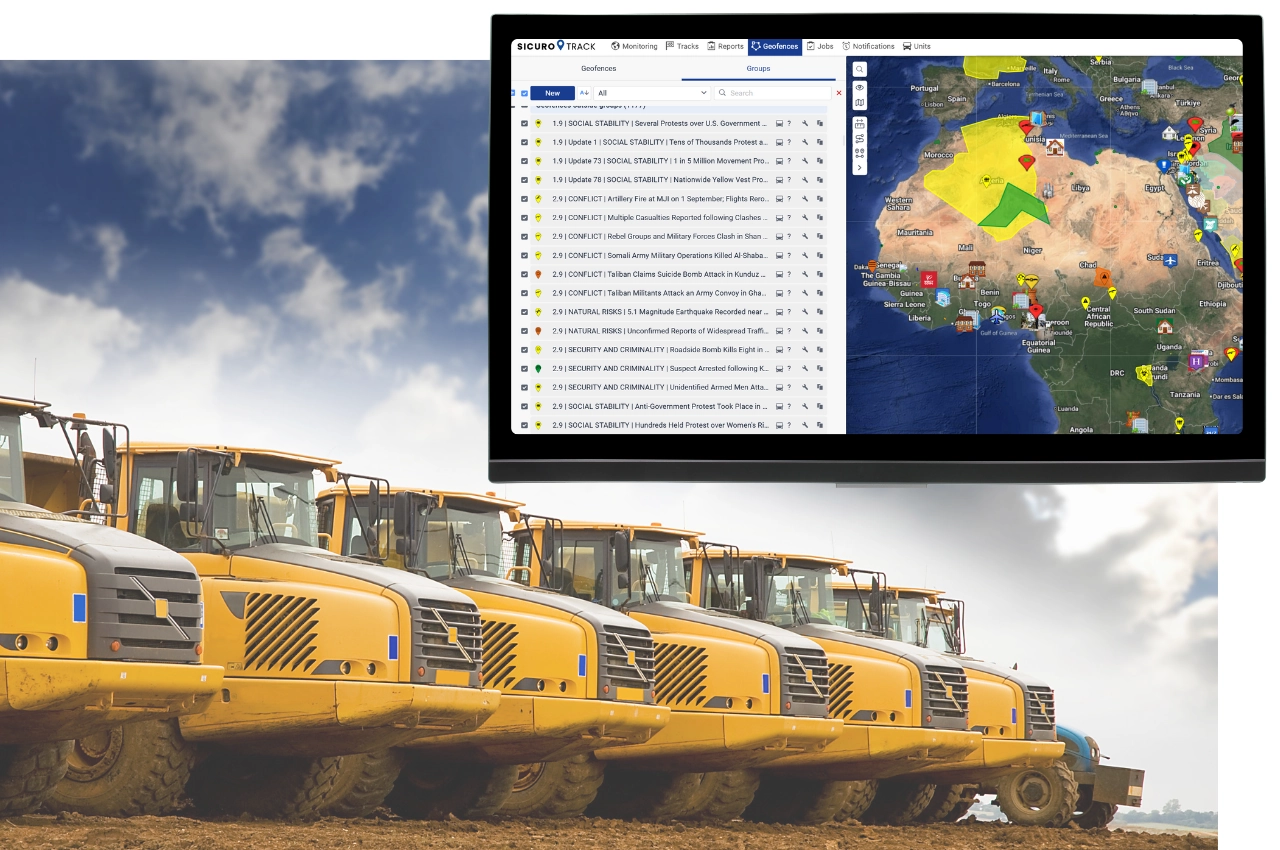
Fleet management across Africa is a complex, high-stakes operation. Vast geographies, unpredictable terrain, and limited infrastructure make visibility and control extremely difficult. When combined with fluctuating fuel costs, safety concerns, and regulatory hurdles, these factors can drastically increase operational risk and cost.
Key overarching pain points include:
- Poor infrastructure: Many routes across Africa have underdeveloped roads, making travel time and maintenance costs unpredictable.
- Connectivity gaps: Remote areas often lack GSM coverage, complicating GPS tracking and communication.
- Security risks: Vehicle theft, fuel siphoning, and hijackings remain significant concerns in high-risk zones.
- Fuel inefficiency: Unmonitored fuel use leads to massive wastage and cost overruns.
- Maintenance challenges: Limited access to service facilities increases downtime and reduces fleet lifespan.
- Regulatory complexity: Cross-border operations involve varying compliance requirements, documentation, and checkpoints.
For industries that depend heavily on vehicle and equipment fleets, such as mining, oil and gas, logistics, and construction, these challenges directly affect safety, productivity, and profitability.
Essential Fleet Management Features for Africa’s Leading Industries
Every business has unique fleet management requirements shaped by scale, location, regulations, and many additional factors. We highlight the key fleet management capabilities that boost performance across Africa’s mining, oil & gas, logistics, and construction sectors
Mining
For mining operations in Africa, where fleets often operate in remote, rugged terrain, under harsh conditions and with high-value equipment, the most critical features include:
- Payload & cycle monitoring
- Tracking haul-truck loads, dump cycle counts and loading/unloading times to optimise truck deployment.
- Monitoring idle‐time of trucks waiting for loaders or dumpsites, thereby reducing unproductive hours.
- Terrain & slope adaptation analytics
- Using telematics to monitor vehicle performance on steep or rough terrain, detecting when trucks are operating under extra strain (higher engine load, increased tyre wear) for proactive maintenance.
- Using telematics to monitor vehicle performance on steep or rough terrain, detecting when trucks are operating under extra strain (higher engine load, increased tyre wear) for proactive maintenance.
- Integrated equipment & machine health management
- Beyond vehicles, tracking excavators, loaders, conveyors, pumps, noting engine hours, vibration/fault sensors, component life.
- Beyond vehicles, tracking excavators, loaders, conveyors, pumps, noting engine hours, vibration/fault sensors, component life.
- Remote site connectivity & edge processing
- In remote African mines with poor cellular signal, systems that support satellite/hybrid connectivity, store data locally if offline, and sync once connection returns.
- In remote African mines with poor cellular signal, systems that support satellite/hybrid connectivity, store data locally if offline, and sync once connection returns.
- Environmental, sustainability & regulatory tracking
- Monitoring fuel consumption, emissions, usage outputs (tonnes/mined), and generating compliance/audit trails for environmental regulations.
- Monitoring fuel consumption, emissions, usage outputs (tonnes/mined), and generating compliance/audit trails for environmental regulations.
- Safety zones, geofencing and operator behaviour
- Defining restricted zones (blast areas, steep drop-offs), alerting if equipment enters unsafe areas, monitoring operator fatigue or speeding on site.
Oil & Gas
In the oil & gas industry, often involving pipelines, rigs, remote camps, heavy tankers, and strict HSE (Health, Safety & Environment) requirements, the fleet-management features needed are quite specific:
- Tank-linkage & fuel/petrol bunkering tracking
- Monitoring fuel/tanker trucks enroute to refineries, remote sites, pipeline stations; detecting unauthorized refuelling or fuel siphoning.
- Monitoring fuel/tanker trucks enroute to refineries, remote sites, pipeline stations; detecting unauthorized refuelling or fuel siphoning.
- Asset contingency & emergency dispatch readiness
- Tracking specialised service vehicles (e.g., oil-spill response trucks, pipeline repair units) and ensuring they’re maintained, fuelled and positioned for rapid deployment in remote zones.
- Tracking specialised service vehicles (e.g., oil-spill response trucks, pipeline repair units) and ensuring they’re maintained, fuelled and positioned for rapid deployment in remote zones.
- Geofenced speed and area restrictions
- Enforcing speed limits or access restrictions when vehicles approach pipelines, offshore platforms or sensitive zones; automatic alerts if limits exceeded.
- Enforcing speed limits or access restrictions when vehicles approach pipelines, offshore platforms or sensitive zones; automatic alerts if limits exceeded.
- Regulatory compliance modules
- Logging vehicle/operator inspection records, hazardous-goods certifications, safe-haul documentation; auto-alerting when renewal/improvement needed.
- Logging vehicle/operator inspection records, hazardous-goods certifications, safe-haul documentation; auto-alerting when renewal/improvement needed.
- Harsh-environment readiness & remote operation
- Monitoring vehicles operating in desert, offshore, swamp or remote terrain, ensuring connectivity, remote diagnostic capability, satellite fallback and ruggedised hardware.
- Security integration & vehicle disable capability
- In high-risk transport of hydrocarbons, the ability to remotely disable a vehicle or alert HQ to unauthorised detours is increasingly important.
Logistics & Transport
For logistics, haulage and distribution fleets in Africa, where long distances, border crossings, variable infrastructure and driver risk dominate, here are the standout features:
- Cross-border and multi-jurisdiction route oversight
- Tracking vehicles through multiple countries, managing customs/border hold-ups, varying toll/regulation regimes; route-adjustment alerts if delays occur or detours taken.
- Tracking vehicles through multiple countries, managing customs/border hold-ups, varying toll/regulation regimes; route-adjustment alerts if delays occur or detours taken.
- Live route optimisation with infrastructure-aware data
- Systems that incorporate real-time road condition alerts (flooding, poor surface, closed bridges) and suggest alternative paths to reduce delay and wear.
- Systems that incorporate real-time road condition alerts (flooding, poor surface, closed bridges) and suggest alternative paths to reduce delay and wear.
- Driver behaviour + fatigue monitoring over long haul
- Analytics to detect driver night-shift fatigue, long-haul stress, unauthorized stops; scoring systems and coaching modules to improve driver safety.
- Analytics to detect driver night-shift fatigue, long-haul stress, unauthorized stops; scoring systems and coaching modules to improve driver safety.
- Fuel‐card integration and unauthorised usage alerts
- High-mileage fleets are vulnerable to fuel theft, siphoning or misuse; monitors integrate fuel cards, compare refuelling events with GPS data, and alert anomalies.
- High-mileage fleets are vulnerable to fuel theft, siphoning or misuse; monitors integrate fuel cards, compare refuelling events with GPS data, and alert anomalies.
- Trailer/asset tracking & load monitoring
- Not just trucks but also trailers, containers or reefers need monitoring (especially for cold-chain or high‐value loads); integration with temperature sensors or door-open events.
- Not just trucks but also trailers, containers or reefers need monitoring (especially for cold-chain or high‐value loads); integration with temperature sensors or door-open events.
- Mobile & cloud visibility for remote managers
- Fleet managers may be in head offices far from operations; mobile apps giving real-time access to map, alerts, driver logs, and performance dashboards help manage remotely.
Construction
Construction fleets often consist of mixed asset types (earth-moving equipment, site vehicles, mobile cranes, dump trucks) dispersed across multiple job sites. In Africa, unique conditions add complexity. The features that matter most are:
- Site-location tagging and equipment dispatching
- Enable geofencing per job site, track when equipment moves from one site to another, log transport between sites and monitor idle time while equipment sits waiting.
- Enable geofencing per job site, track when equipment moves from one site to another, log transport between sites and monitor idle time while equipment sits waiting.
- Utilisation and job-site assignment analytics
- Measure actual working hours vs idle hours of machines (excavators, bulldozers); identify under-utilised machines, prevent rental overlap, optimise allocation.
- Measure actual working hours vs idle hours of machines (excavators, bulldozers); identify under-utilised machines, prevent rental overlap, optimise allocation.
- Maintenance planning tied to job-site environment
- Equipment operating in dusty, sandy or remote African sites needs more frequent servicing; integrating terrain/wear metrics to generate tailored maintenance alerts helps prevent breakdowns.
- Equipment operating in dusty, sandy or remote African sites needs more frequent servicing; integrating terrain/wear metrics to generate tailored maintenance alerts helps prevent breakdowns.
- Fuel usage and idle time tracking for large equipment
- Earth-moving machines can burn fuel even when idle; tracking usage, detecting long idle times or machines that haven’t moved for extended periods helps cost control.
- Earth-moving machines can burn fuel even when idle; tracking usage, detecting long idle times or machines that haven’t moved for extended periods helps cost control.
- Operator certification & safety compliance
- Construction sites require certified operators, equipment inspections, safety briefings; feature to manage operator records, certifications, and alert when refresher training is due.
- Construction sites require certified operators, equipment inspections, safety briefings; feature to manage operator records, certifications, and alert when refresher training is due.
- Mobile job-site dashboards & integration with project management software
- Field supervisors on site should be able to access fleet status (equipment on site, machine health, upcoming service) via a mobile interface, ideally integrated with project-management tools.
Why Sicuro Technology Is the Ideal Fleet Management Partner for Africa
Fleet management system in Africa demands more than basic tracking, it requires robust, intelligent systems that can handle tough environments, diverse regulations, and ever-rising operational costs.
Sicuro Technology, through its Fleet Management Solution, directly addresses Africa’s operational realities with a system designed for remote environments, high-security demands, and mission-critical operations.
Industries such as mining, oil & gas, logistics, and construction depend on technology partners who understand these conditions and offer proven solutions. Sicuro Technology delivers exactly that, a secure, data-driven, and field-tested fleet management platform tailored to Africa’s operational realities.
By combining real-time visibility, predictive maintenance, fuel optimisation, and driver safety tools, Sicuro empowers organisations to:
- Reduce operational costs
- Enhance safety and compliance
- Improve fleet uptime
- Maximise asset utilisation
- Achieve mission success, even in the most challenging environments
Sicuro Technology’s fleet management solution isn’t just a tracking platform, it’s a strategic enabler for Africa’s most demanding industries.