



The smart home is no longer a sci-fi fantasy where a simple voice command turns on the lights. As we look towards 2025, we stand on the brink of a true revolution in home automation, one driven by the profound power of Artificial Intelligence (AI). We’re moving beyond single gadgets and direct commands into an era of integrated, intelligent ecosystems that anticipate your needs and manage your life silently and invisibly. This is the world of Ambient AI, a technology that delivers comfort, security, and efficiency without requiring your constant input.
In this article, we’ll explore the five key ways AI will intelligently take control of your home in 2025, creating an experience that is more intuitive and powerful than ever before.
1. Predictive Automation: The Home That Knows You Better Than You Know Yourself
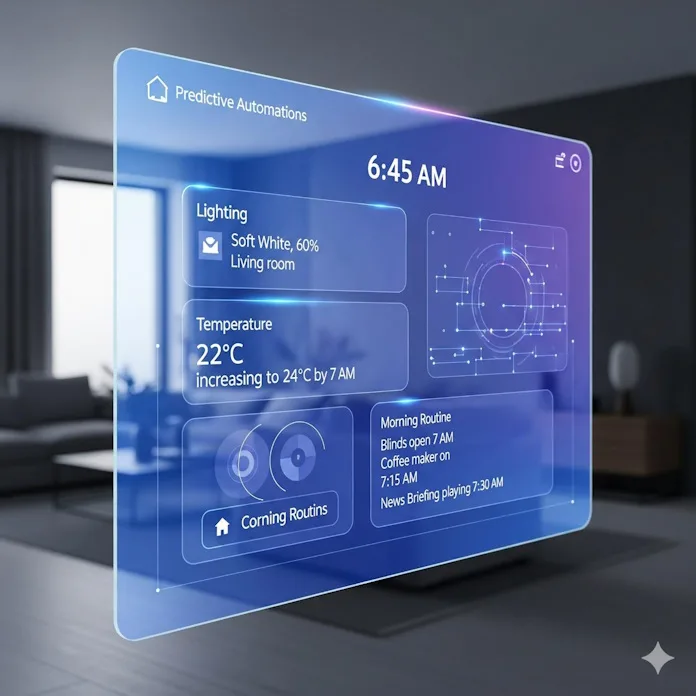
The first wave of smart homes was built on direct commands: “Alexa, turn on the lights.” The next generation of automation, however, is predictive. By analyzing your daily behavioral patterns through a network of Internet of Things (IoT) sensors, your home’s central AI learns when you wake up, what temperature you prefer, and even what kind of music improves your mood.
Imagine this: It’s 6:30 AM. Your bedroom blinds slowly open to let in the natural light, the thermostat adjusts the house to a perfect 72°F (22°C), and the coffee maker starts brewing your morning cup. All of this happens without you saying a word or pressing a button. The AI has learned this is your morning routine. It can even check the traffic on your commute and, if it’s heavy, wake you up 10 minutes earlier. This isn’t just automation; it’s an intelligent symbiosis with your living environment.
2. Proactive Security: Evolving from an Alarm to an Active Guardian
Traditional security systems only alert you when something bad has already happened, like a broken window. But AI-powered security systems go a step further, acting as proactive guardians. Modern security cameras with advanced computer vision, such as the systems offered by smart home providers like jahansmart.com, can now differentiate between a delivery person, a neighbor, your pet, or a suspicious stranger loitering on your property.
Instead of receiving dozens of false alarms from the neighbor’s cat, your system will only notify you when an unidentified person lingers too long at your front door. Smart video doorbells can automatically instruct a courier where to leave a package and even open the garage for a secure delivery. Furthermore, by analyzing unusual sounds inside the home—like breaking glass or dripping water—AI can alert you or emergency services before a major crisis occurs. This level of preventative security provides unparalleled peace of mind.
3. Optimized Energy Management: Hacking Your Utility Bills and Helping the Planet
One of the most tangible benefits of AI in the home is energy optimization. Next-generation smart thermostats don’t just adjust the temperature based on your presence; they analyze weather forecasts, your utility’s peak and off-peak electricity rates, and your personal consumption habits.
The AI intelligently decides the best and cheapest time to charge your electric vehicle, run the dishwasher, or heat the water. By learning your home’s insulation patterns, it understands how quickly your home loses or gains heat, allowing it to run the HVAC system in the most efficient way possible. This process not only leads to a significant reduction in your utility bills but also contributes to environmental conservation by reducing your energy footprint, creating a more sustainable home.
4. Personalized Health and Wellness: The Home That Cares for You
The smart home of 2025 is evolving into a personalized wellness hub. Artificial intelligence can now directly impact your physical and mental health. Circadian lighting systems, for example, adjust the color and intensity of light throughout the day to mimic the natural rhythm of the sun. This helps regulate your body’s internal clock, leading to better sleep at night and increased energy and focus during the day.
Air quality monitors continuously track pollutants, humidity, and allergens, automatically activating purifiers to create a clean and healthy breathing environment. Even smart mattresses can analyze your sleep patterns, provide detailed reports on your rest quality, and adjust the bed’s temperature for a deeper, more restorative sleep. These technologies transform the home from a mere shelter into an environment that actively works to improve your quality of life.
5. Proactive Maintenance: Fixing Problems Before They Happen
Nothing is more disruptive than a major home appliance breaking down unexpectedly. AI solves this with proactive maintenance. Modern appliances like refrigerators, washing machines, and HVAC systems are now equipped with sensors that monitor the performance of their internal components.
By analyzing data from these sensors, the AI can detect the early signs of a malfunction. For instance, if your refrigerator starts making an unusual noise or its energy consumption suddenly spikes, the system will alert you that a component may need inspection. It can even go as far as automatically scheduling a service appointment with a certified technician. This intelligent approach prevents costly emergency repairs and extends the lifespan of your valuable appliances.
Conclusion: The Future is Invisible
The future of the smart home is one where the technology becomes increasingly invisible, fading into the background of our lives. In 2025, Artificial Intelligence is set to deliver a seamless, intuitive, and effortless living experience. It’s a home that understands our needs without being told, protects us proactively, cares for our well-being, and helps us manage our resources. This is no longer just a smart home; it’s an intelligent life partner, freeing us to focus our time and energy on what truly matters.