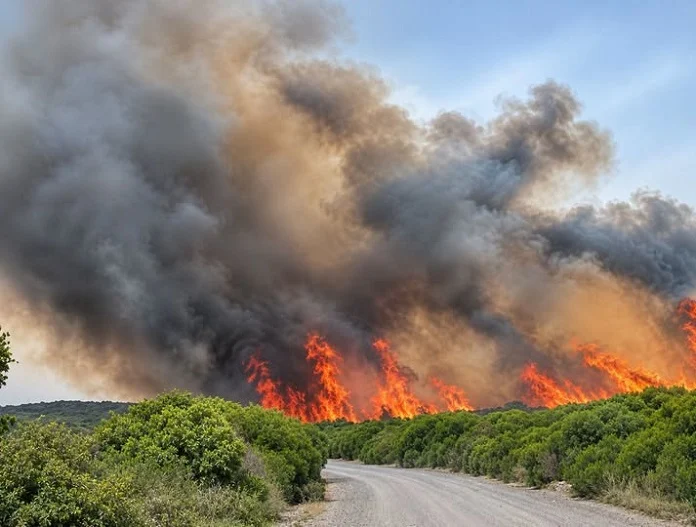
WESTERN CAPE — The Garden Route is facing escalating wildfire and water shortage risks as the region enters the 2026–2027 summer season amid forecasts of a strong El Niño. Environmental experts warn that rising temperatures and extreme weather conditions are severely testing the area’s preparedness, particularly as 2027 will mark the tenth anniversary of the deadly Knysna fires, which claimed lives and caused billions of rand in property damage.
Cobus Meiring of the Garden Route Environmental Forum (GREF) highlighted the immediate dangers facing the region. “Hardly into what is predicted to be a summer of extremes, out-of-control wildfires are already threatening lives, property and the natural environment along the Garden Route,” Meiring stated.
Weather forecasts indicate that a strong El Niño developing during the 2026–2027 period could bring significantly hotter and drier conditions to parts of South Africa. For the Southern Cape and the Garden Route, this climate pattern threatens to place intense pressure on already limited water resources if high temperatures and below-average rainfall persist.
Currently, water restrictions have been implemented in several towns across the region. This scarcity is compounded by ongoing population growth and development, which continue to drive up local water demand. Although the Garden Route is generally classified as a high-rainfall area, its specific geography, short river systems, and close proximity to the coast restrict the construction of large dams. Consequently, groundwater extraction requires careful management, and alternative solutions like desalination remain cost-prohibitive.
Alongside water scarcity, the threat of wildfires remains a primary concern. Prolonged dry spells, heatwaves, high temperatures, and strong winds can rapidly desiccate local vegetation. This natural drying process is further exacerbated by dense infestations of invasive alien plants, which significantly increase the volume of combustible material across the landscape.
In response to these compounding threats, Meiring is urging residents to exercise extreme caution when making fires, maintain proper firebreaks, clear their properties of invasive alien vegetation, and use water responsibly.
Emphasizing the historical context of the region’s vulnerability, Meiring noted, “The lessons of Knysna must never be forgotten. Prevention, preparedness and community cooperation are essential to protecting lives, livelihoods and the Garden Route’s natural heritage.”
The Garden Route Environmental Forum (GREF), which operates as a climate change think tank and a public platform for environmental managers, continues to monitor the situation. Further information regarding the forum’s initiatives can be found at grefecsf.co.za.