
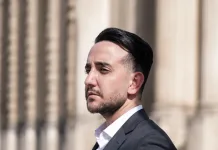

CAPE TOWN, Western Cape — African Transformation Movement (ATM) parliamentary leader Vuyo Zungula has strongly condemned President Cyril Ramaphosa’s urgent legal bid to halt the Section 89 impeachment process linked to the Phala Phala scandal. Speaking ahead of the Western Cape High Court hearing, Zungula argued that the president’s attempt to suspend the parliamentary inquiry politicizes a lawful procedure and fundamentally undermines constitutional oversight.
President Ramaphosa is seeking to suspend the impeachment process pending a judicial review of the Phala Phala report’s legality. His legal papers contend that he will suffer “irreparable harm” to his status, image, and dignity if the process continues, framing it as scrutiny driven by political adversaries.
Zungula firmly rejected this premise, stating that a leader who claims innocence and has acted “by the book” cannot logically claim harm from a lawful, constitutional process. He emphasized that the Section 89 procedure is inherently legal, having already been thoroughly scrutinized by an independent panel of legal experts who determined there was a “case to answer” warranting further investigation by an impeachment committee.
According to Zungula, the president’s application represents a direct undermining of the separation of powers by asking the judiciary to shield him from mandatory parliamentary scrutiny. He cited the “Viking Pony” judgment, which was affirmed by the Constitutional Court earlier this year, noting that it explicitly establishes that a decision to investigate or prosecute cannot be reviewed before a person’s guilt has been determined. Because the independent panel’s report merely recommends further investigation and does not determine culpability, Zungula argued it is not subject to review at this stage.
The ATM has filed a counter-application against the president’s move. Zungula warned that if the courts side with Ramaphosa, it would set a dangerous precedent for governance in South Africa. He noted that any future public official found wanting could simply cite “irreparable harm” to evade disciplinary processes, effectively rendering parliamentary oversight null and void.
Zungula also raised serious concerns about the conduct of parliamentary presiding officers. He criticized the Speaker of Parliament for electing to remain neutral rather than defending the institution from executive overreach, attributing this stance to her senior membership within the African National Congress (ANC). He accused the ANC of actively attempting to manipulate and frustrate the process to protect its leader.
As evidence of this obstruction, Zungula pointed to ANC-sponsored clauses in the proposed terms of reference. These include making the president’s testimony optional rather than mandatory, and requiring any former intelligence official to obtain approval from the Director-General of State Security before testifying—a move Zungula identified as a deliberate attempt to block whistleblower Arthur Fraser from providing testimony.
On the matter of jurisdiction, Zungula questioned the appropriateness of the Western Cape High Court, a lower court, interdicting a process mandated by the highest court in the land. He referenced paragraph 139 of the Constitutional Court’s judgment, which dictates that the impeachment committee must proceed with its work. The only condition under which the committee can stop, he noted, is if the independent panel report is formally reviewed and set aside by a court of law. That specific review case is scheduled to be heard in September.
Zungula concluded that the independent panel report is not flawed, explaining that the panel was confined to a strict 30-day deadline and restricted to the evidence placed before it, meaning they could not call witnesses or verify every detail. He urged the president to use the impeachment committee’s platform to state his case and clear his name, stressing that South Africa must maintain institutions that function according to the Constitution and the law, regardless of who holds office.
“The country must have set good norms, principles, and precedents so that whoever follows after him knows very well that they will be held accountable,” Zungula stated, emphasizing that ethical leadership and accountability must prevail over the perceived protection of any individual’s dignity.