



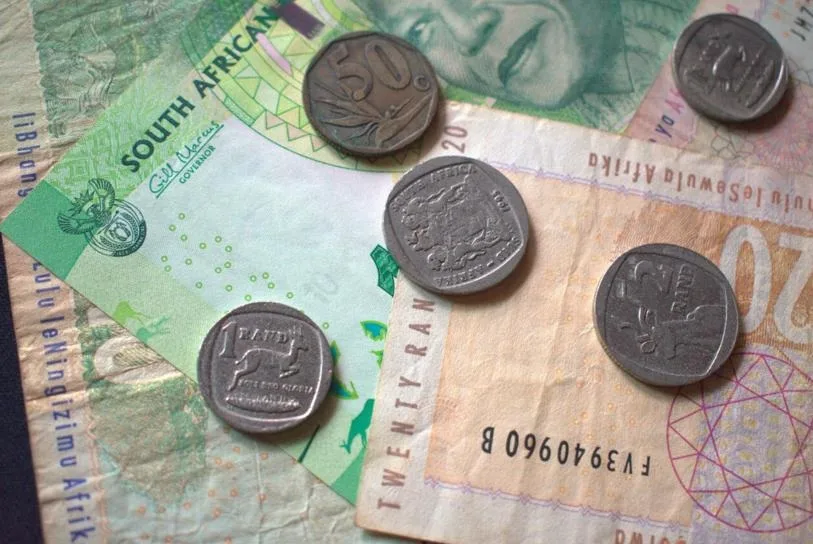
JOHANNESBURG — The South African rand has weakened significantly against the US dollar as escalating tensions between the United States and Iran continue to rattle global markets. With oil prices surging nearly 4% to above $84 a barrel, this geopolitical volatility is placing severe strain on emerging market currencies, setting the stage for potential domestic fuel price increases and broader economic headwinds.
The market turbulence follows Tehran’s declaration that the Strait of Hormuz is closed “until further notice,” a claim swiftly rejected by the US Central Command. Despite a potential ceasefire agreement signed a few weeks ago, global energy supply chains remain deeply constrained.
Chris Hattingh, Director of the Centre for Risk Analysis, warns that the combination of a weaker rand and elevated Brent crude prices will likely result in higher fuel prices for South African consumers in August. Hattingh noted that over 600 vessels remain stuck in the Persian Gulf, and refining capacity across several Gulf countries is still recovering from damage sustained between late February and the recent ceasefire. Compounding this supply crunch is a confirmed export ban on Russian diesel and oil, as Russia faces its own domestic energy shortages amid the ongoing conflict in Ukraine.
“For South Africa, this combination of a higher oil price and a weaker rand probably means higher fuel prices in August,” Hattingh explained. “All of that then translates to higher inflation and inflation expectations, which means the South African Reserve Bank will likely have to hike interest rates to bring it down.”
This macroeconomic pressure threatens to derail South Africa’s economic recovery. Growth in the first quarter of 2026 stood at just 0.5%. While the previous year saw relatively better performance driven by household consumption expenditure in a lower interest and fuel price environment, the current trajectory is far less optimistic. Hattingh highlighted that continuously increasing locally administered prices—such as electricity, water, and refuse tariffs set by various levels of government—are severely straining household disposable income. Consequently, the International Monetary Fund (IMF) recently revised its South African growth forecast for the year down to 1.1%, falling short of earlier projections of 1.3% to 1.6%.
In response to supply vulnerabilities, the Minister of Mineral Resources and Energy, Gwede Mantashe, recently emphasized the need to secure more fuel and oil supplies to ensure national stockpiles remain robust, even if it requires concessions from local suppliers. Hattingh agreed this strategy could help mitigate exposure to extreme global price fluctuations, but he cautioned that South Africa’s resilience has been systematically undermined in recent years.
“A lot of our strategic oil reserve was sold off over the last few years,” Hattingh noted. “Furthermore, many of our domestic oil refining facilities have been mothballed, sold off, or closed down. If that capacity had been maintained, our risk would be far less concentrated.”
Beyond energy security, Hattingh stressed that true economic resilience requires a competitive electricity market, a fully functioning logistics network, and restrained government tariff hikes.
On the geopolitical front, Hattingh observed a distinct shift toward a more transactional and volatile global order, with the United States increasingly leveraging its hard power capabilities. This dynamic forces “middle powers” like South Africa and Canada, as well as superpowers like China, to carefully navigate their alliances. While established frameworks like NATO face strain, Hattingh suggested that countries may strengthen alternative blocs like BRICS, deepen European Union trade ties, or, in South Africa’s case, accelerate regional integration through the African Continental Free Trade Area (AfCFTA).
Drawing parallels to Europe’s efforts to diversify away from Russian energy, Hattingh urged South Africa to leverage its internal resources, pursue offshore oil exploration, and collaborate more closely with African partners. He also pointed to the urgent need to rebuild the domestic manufacturing sector, which currently contributes only 13% to GDP, down from 25% to 30% in previous decades.
Achieving this structural transformation requires a dramatic increase in capital expenditure. Hattingh concluded by highlighting that South Africa’s fixed investment rate currently hovers between 13% and 15% of GDP, lagging far behind emerging market peers who consistently achieve 25% to 30%. Boosting investment in roads, bridges, and heavy machinery remains critical to creating jobs, improving the average quality of life, and insulating the economy from an increasingly unpredictable global landscape.