
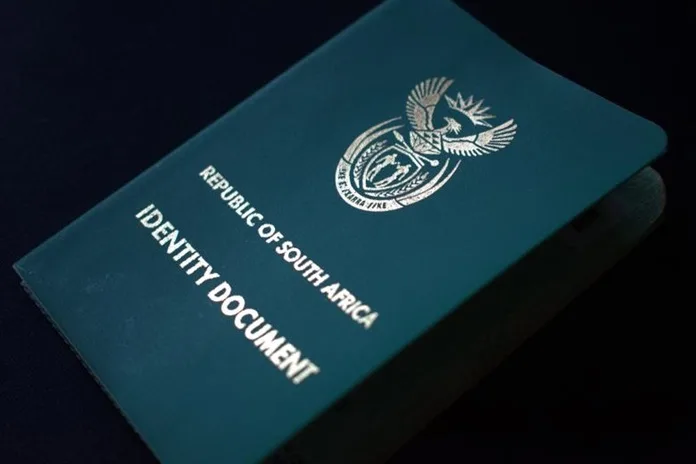
President Cyril Ramaphosa has announced that the South African government will phase out the green ID book, citing its exploitation by undocumented migrants and criminal syndicates for identity theft. The Department of Home Affairs will announce a cut-off date after which the document will no longer be recognised as a valid form of identification.
Ramaphosa further warned that officials who sell documents, facilitate illegal entry, or abuse their authority for personal gain are betraying public trust and will face consequences.
Thulani Mavuso, Deputy Director General: Operations at the Department of Home Affairs, confirmed that while the green ID book has been problematic for years, its discontinuation was delayed due to practical constraints. These included South Africans living abroad who still applied for green ID books at diplomatic missions, permanent residents who were previously ineligible for smart ID cards, and remote domestic offices lacking smart card infrastructure.
“We have resolved that particular problem,” Mavuso stated. Through a joint partnership with banks, the department will expand its service footprint to 750 bank branches by the end of the year. “There’s nothing that stops us now from actually discontinuing the green ID book, but the minister will announce the date.”
Regarding the rollout of smart ID cards, Mavuso reported that the department has exceeded 29 million cards issued—approaching its 38-million target—with over 4 million issued last year. He encouraged citizens to convert via participating banks such as Capitec, FNB, and Standard Bank, where the process takes approximately 5 to 10 minutes.
Mavuso addressed longstanding vulnerabilities tied to the green ID system, noting that some IDs issued in the 1990s lack corresponding birth records due to the integration of population registers from former TBVC states. To combat this, the department has completed digitising all civic birth records to enable cross-referencing with ID numbers and identification of fraudulent entries. A recent campaign has called on 377,000 individuals with blocked IDs—down from 2.5 million—to come forward and resolve their status.
On document fraud, Mavuso highlighted that counterfeit asylum permits (Section 22 permits) are often produced by external syndicates and do not exist in official systems. To strengthen passport integrity, new protocols now capture biometrics and photographs at the same station, while facial recognition technology is being deployed at ports of entry. An Electronic Travel Authorization (ETA) system, integrated with facial recognition, will further verify traveller identity upon arrival.
Enforcement efforts are also being intensified. The Border Management Authority, together with the South African Police Service and the Defence Force, now manages border and port security. Home Affairs focuses on inland enforcement and plans to recruit 280 additional officers this year to supplement its current force of 800. The department is also seeking further funding from National Treasury to bolster inland immigration enforcement. Infrastructure upgrades are underway at key commercial ports of entry, including Beit Bridge and Lebombo, identified as hotspots for irregular migration.
Mavuso clarified that two distinct dates will be announced: one to halt production of green ID books, and a later date when existing books will become invalid. Approximately 15 million South Africans still hold green ID books, and the expanded banking partnership aims to simplify their transition to smart cards.
Eligibility for smart ID cards has also been expanded. Naturalised citizens from visa-exempt countries, such as Zimbabwe, Zambia, the United States, and the United Kingdom, can now apply. The process is being extended to naturalised citizens from non-visa-exempt countries and to permanent residents, following the development of new verification modules to ensure procedural integrity.
The Department of Home Affairs urges citizens to proactively convert to smart ID cards ahead of the forthcoming deadlines.