SOUTH AFRICA – Following the recent South Africa GDP revision released by Statistics South Africa (Stats SA), the National Treasury has updated key fiscal ratios, revealing improved debt and deficit metrics across the medium term. The updates reflect a mechanical adjustment based on the revised economic data announced by Stats SA on October 29, 2026.
The 2026 rebasing and benchmarking of gross domestic product (GDP) data has increased the measured level of nominal GDP by 5.1%, adding R393 billion to the economy’s valuation. Because this higher nominal GDP figure serves as the denominator in various calculations, it effectively reduces the overall fiscal ratios.
According to the National Treasury, the debt-to-Gross Domestic Product ratio is now projected to peak at 74.6% in the 2025/26 fiscal year. This is a notable decrease from the 78.4% estimated in the 2026 Medium Term Budget Policy Statement (MTBPS). Furthermore, the debt-to-GDP ratio is now expected to fall below 70% by the 2032/33 fiscal year, achieving this milestone a year earlier than previously forecasted in the MTBPS.
Other primary fiscal ratios have similarly declined. The primary surplus is now calculated at 1.6% of GDP for 2026/27, compared to the 1.7% projected in the MTBPS, and is expected to rise to 2.8% in 2029/30, down from the earlier estimate of 2.9%. Additionally, the main budget deficit for 2026/27 is now recorded at 3.5% of GDP, an improvement from the 3.7% estimate. On average, the consolidated budget deficit improves by 0.2 percentage points of GDP for the current fiscal year and over the medium term, while the main budget primary surplus is revised down by an average of 0.1 percentage points over the medium term.
The National Treasury clarified that these revised ratios do not reflect any changes to the government’s underlying revenue, spending, or debt projections. The benchmarking exercise simply utilizes improved data and methods to incorporate major structural changes within the economy, ensuring the calculations more accurately reflect its true size and composition. Historically, Stats SA’s five-yearly benchmarking exercises have increased the estimated absolute size of the economy but have seldom impacted economic growth rates in a meaningful way.
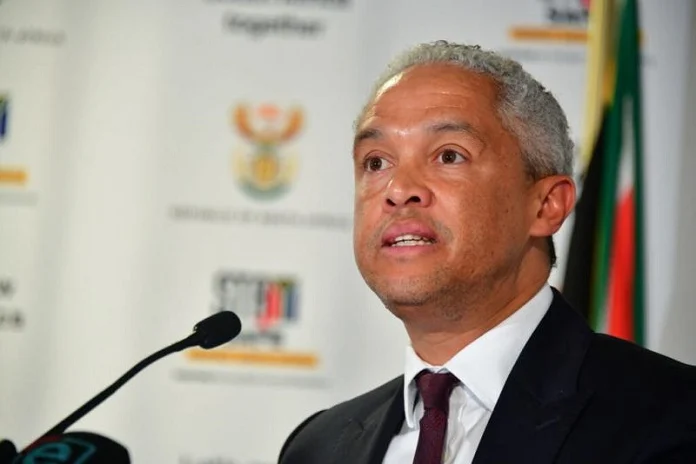
National Treasury Director-General Duncan Pieterse emphasized the positive impact of the updated metrics on the country’s economic standing.
“Our updated calculations confirm that government continues to achieve its fiscal targets, with the fiscal metrics looking even better than we had projected based on Statistics South Africa’s revised GDP data,” Pieterse stated. “We are restoring fiscal credibility and South Africa is seeing the benefits in lower borrowing costs and a stronger foundation for investment and growth.”
Further details, including updated economic forecasts and comprehensive fiscal projections, will be provided during the 2027 Budget.