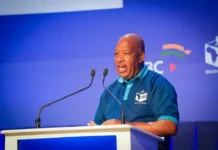
Deputy International Relations Minister Alvin Botes has emphasized that South Africans are demanding proper documentation for all migrants residing in the country, underscoring that legal status is essential for verifying lawful residence and ensuring accountability within the immigration system.
Speaking during Africa Day commemorations, Botes, who also serves as a member of the ANC National Executive Committee, acknowledged the continent-wide significance of the occasion while addressing the intensifying anti-migrant protests affecting parts of South Africa. He noted that this year’s observance occurs against a backdrop of tensions targeting individuals of African descent.
Botes recognized legitimate national concerns regarding undocumented African migrants, describing a complex relationship between these grievances and broader socioeconomic challenges, including unemployment, inequality, and poverty. “What South Africans want is for all migrants in the country to be properly documented so that everyone would be able to appreciate that our African brothers and sisters in South Africa are here for particular legal reasons,” he stated, referencing asylum seekers and those granted refugee status.
The Deputy Minister expressed concern about the targeting of African migrants through what he described as undue law enforcement mechanisms. He urged the public to allow the South African Police Service to carry out its mandate regarding immigration enforcement.
The discussion also addressed criminal activity involving foreign nationals. Recent law enforcement operations have uncovered drug manufacturing operations linked to Mexican nationals operating illegally in provinces including Mpumalanga and the North West. When questioned why migration concerns in South Africa often focus primarily on African migrants rather than nationals from other continents, Botes emphasized that crime prevention must be universal.
“No person should be able to organize and to run an organized crime cartel in South Africa, be it whether you are South African or whether you are a migrant,” Botes said. He commended the Minister of Police for reporting a recent decrease in serious and violent crimes, including murders.
Botes highlighted the importance of distinguishing between migrants with lawful status and those without legal standing. He referenced a recent incident in eThekwini where hundreds of African migrants staged a sleep-out outside a police station. According to the mayor and Home Affairs officials, only two individuals among the group were undocumented.
Addressing broader continental dynamics, Botes noted that Minister Ronald Lamola had called for further engagement during a recent SADC retreat. He indicated there is acceptance at the presidential level that the African Union should discuss the push and pull factors driving migration.
“The central issue is that a country like South Africa, whose economy should be deeply integrated within the SADC region, needs to ascertain how to deepen regional economic corridors to ensure that countries of origin are as prosperous as South Africa,” Botes explained. He warned that without this focus on economic diplomacy and trade, migration would remain a persistent challenge.
Botes also addressed diplomatic tensions, noting that engagements had occurred with Ghana’s foreign minister regarding optics surrounding incidents involving Ghanaian citizens in South Africa, which he described as containing artificially generated imagery. He recalled South Africa’s contributions to peace efforts in the Central African Republic as evidence of the country’s commitment to Pan-African solidarity.
Concluding his remarks, Botes reiterated that while the ANC is engaged on addressing undocumented migration and its underlying factors, taking the law into private hands remains unacceptable. He called for enforcement of municipal bylaws regarding the informal economy and continued support for Home Affairs to strengthen border management through the Border Management Agency.
“The main issue is about economic prosperity: how do we then become a catalyst as South Africa for further economic prosperity elsewhere on the African continent,” Botes stated.