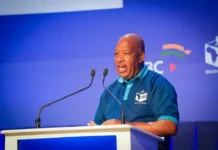
Princy Mthombeni, spokesperson for South Africans for Constitutional Reform, has voiced serious concerns regarding the prevalence of undocumented migrants working in South Africa without valid permits, following a meeting between Justice, Crime Prevention and Security Cluster ministers and members of the March and March movement.
The discussion, convened amid growing protests against illegal immigration, was described by Mthombeni as a last-minute arrangement that left civil society representatives with limited preparation time. “Our expectation was that the ministers would come to that meeting with solutions,” Mthombeni stated, noting that participants instead received a statistical presentation covering deportations, labor inspections, and migration figures from the last quarter of 2025 and early 2026.
According to the briefing, officials cited approximately 3 million undocumented foreign nationals currently in South Africa, though no source was provided for this estimate. Mthombeni questioned the methodology behind counting an inherently unregistered population, adding that many attendees believed the actual figure to be significantly higher.
Additional statistics shared during the session included:
- Over 232,000 companies employing foreign nationals, many of whom lack valid work permits;
- Approximately 1.2 million asylum seekers in the country, with only 90,000 classified as active cases and roughly 800,000 inactive;
- Around 113 refugees currently processed within the Home Affairs system.
Mthombeni characterized the presentation as downplaying on-the-ground realities and labeled the engagement a “box-ticking exercise” lacking tangible outcomes. Key concerns raised by participants included the security of South Africa’s northern borders, where intercepts of buses carrying undocumented individuals have been reported in areas such as Giyani and Limpopo. The spokesperson also highlighted the unresolved issue of corruption among Home Affairs officials, which they argue facilitates irregular migration.
On labor enforcement, Mthombeni criticized the current penalty framework for employers hiring undocumented workers. “It cannot be that they just get fined a certain amount of money which they can afford,” they said, noting that inspected workplaces often see the same workers return within days. The spokesperson called for stronger deterrents and systematic audits of Home Affairs personnel.
The discussion also turned to constitutional provisions. Mthombeni referenced Section 9 of the South African Constitution, which affirms that “South Africa belongs to all who live in it,” and argued that this language, alongside equal access provisions, enables non-citizens to access public healthcare, education, and social grants on par with citizens. “What is the exclusivity of being a South African besides having the right to vote?” Mthombeni asked, urging a national conversation on amending the Constitution to prioritize citizens’ socioeconomic rights.
When questioned about law enforcement commitments, Mthombeni noted that ministers reiterated community members cannot request documentation from individuals, as they are not immigration officers. However, the spokesperson expressed frustration over the perceived lack of visible enforcement: “We don’t see SAPS doing those jobs. Buildings are being hijacked. We see drug dealers conducting their businesses in our cities, but we don’t see law being enforced.” Corruption within police ranks, they added, remains unaddressed.
While the Deputy Minister of Home Affairs pointed to the newly tabled White Paper on immigration as a path forward, Mthombeni remained skeptical. “Many of the things presented in the white paper are not going to be addressed because of the Constitution the way it is right now,” they said.
The meeting concluded without new enforcement timelines or policy announcements. South Africans for Constitutional Reform has called for urgent, constitutionally grounded reforms to clarify citizenship benefits, strengthen border management, and ensure accountability for both employers and officials involved in irregular migration practices.