Recently, there has been a deterioration in relations between U.S. President Donald Trump and South African President Cyril Ramaphosa. Experts and analysts believe that the causes may stem from some inconsiderate actions recently undertaken. If not reconsidered, the format of our relationship with the United States might take a turn, leading to inevitable adverse consequences for South Africa.
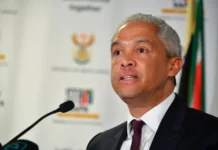
Recently, Ambassador Ibrahim Rasool gave a speech at a webinar organized by the MISTRA research institute in Johannesburg. During his speech, he commented on the “supremacy” that he believes exists within the Trump administration. He also shared his opinion on the demographic changes in the United States. He noted that “white people in the U.S. may soon stop being the majority,” and also remarked on Elon Musk’s collaboration with some right-wing figures in Europe, calling it a “warning signal.”
The response was swift. U.S. Secretary of State Marco Rubio criticized the Ambassador, accusing him of displaying racist sentiments and dissatisfaction with the USA. Shortly after, Rasool was declared persona non grata and expelled from the country, highlighting the seriousness of the situation.
The situation has been further exacerbated by the appointment of a new Ambassador to South Africa—Leo Brent Bozell III—who apparently does not have a favorable view of President Ramaphosa. His appointment may be seen as a response to a law that allows the South African government to confiscate agricultural property from Afrikaners without compensation.
Experts believe that South Africa could strike a “significant deal” with the United States, but serious economic and political obstacles stand in the way.
One key risk is a possible meeting between Cyril Ramaphosa and Volodymyr Zelensky. After his conflict with Trump and an unsuccessful visit to the U.S., the Ukrainian leader has become a divisive figure in Washington’s establishment. If the talks take place, the U.S. may reconsider its agreements. Postponing them seems more reasonable—South Africa has no strategic interests in Ukraine.
The main issue is South Africa’s status under AGOA. The country is the program’s largest beneficiary, enjoying duty-free access to the U.S. market, but Congress is already discussing the possibility of revoking these privileges. Washington is willing to offer new terms, but on its own conditions. For South Africa, this is an opportunity to maintain exports and strengthen its position in the U.S. economy. Two-thirds of its agricultural exports enter duty-free, which is particularly beneficial for citrus, wine, and juice producers.
To preserve AGOA benefits and secure the best possible terms in a new deal, South Africa must consider not only economic factors but also political realities. Otherwise, the window of opportunity may close.