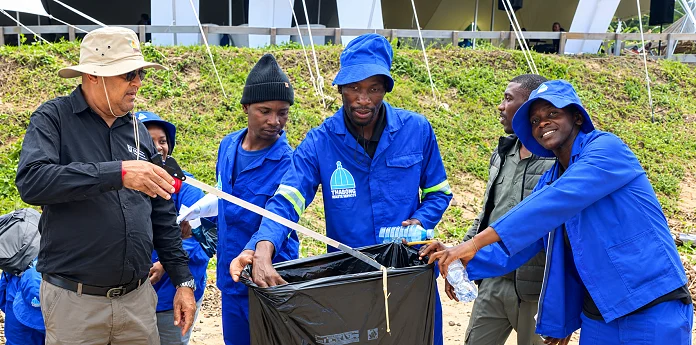
KWAZULU-NATAL — A comprehensive Durban mangrove clean-up initiative is gaining momentum at the Bayhead Mangrove Heritage Site, as the Department of Forestry, Fisheries and the Environment (DEFF) accelerates efforts to eradicate plastic waste and pollution from the critical coastal ecosystem.
Nestled within an industrial harbour setting, the Bayhead Natural Heritage Site represents a vital remnant of Durban Bay’s once-extensive mangrove system. It serves as a crucial sanctuary for significant biodiversity, providing a habitat for aquatic birds, crabs, and mudskippers. The recent environmental intervention follows a targeted, law enforcement-led anti-poaching operation designed to curb illegal gillnetting and related illicit activities in the surrounding waters.
To address the accumulating debris, DEFF Deputy Minister Narend Singh recently conducted a comprehensive site assessment alongside a coalition of key stakeholders. This multi-disciplinary task force included members of the South African Police Service (SAPS), the Expanded Public Works Programme (EPWP), Transnet, the eThekwini Municipality, and the Coastal Marine Taskforce. The primary objective of the assessment was to strategize the deployment of EPWP teams to extract plastics and other pollutants from the remnant mangrove forest, intertidal zones, and adjacent areas.
Speaking on the strategic direction of the project, Singh emphasized that safeguarding the coastline necessitates a dual-pronged strategy. This approach merges stringent enforcement against illegal harvesting with tangible, hands-on habitat restoration and pollution mitigation.
“Protecting our marine and coastal resources requires both decisive action against those who break the law and hands-on efforts to restore the habitats that support legitimate livelihoods and biodiversity,” Singh stated during the assessment.
Highlighting the synergy between the various role-players, the Deputy Minister noted the importance of unified action: “The collaboration between national enforcement agencies, local government, Transnet, and EPWP teams show how we can move from operations to tangible environmental recovery.”
Beyond immediate ecological restoration, the initiative is deeply intertwined with broader socio-economic and legislative goals. The clean-up forms a core component of national efforts to combat marine pollution and ensure strict compliance with the Marine Living Resources Act. Furthermore, by utilizing the Expanded Public Works Programme, the project actively supports job-creating environmental initiatives that provide vital economic relief and skills development to coastal communities.
As the EPWP teams and partner agencies continue their work on the ground, the department has confirmed that further updates regarding the clean-up outcomes, ecological impact, and ongoing environmental monitoring will be released as the project progresses.