PRETORIA, Gauteng — South Africa’s R10-billion fuel relief package and the broader fiscal implications of the Medium-Term Budget have taken center stage following Finance Minister Enoch Godongwana’s latest policy address. The announcement, which includes significant temporary reductions in the diesel and petrol levies, aims to provide immediate cost-of-living relief to consumers. However, a panel of economic and labor experts warns that the country’s push for debt stabilization is masking a deepening crisis in public services, fragile economic growth, and the heavy toll of ongoing austerity measures.
The Mechanics of the R10-Billion Fuel Relief
To cushion the economy against external price shocks, the National Treasury announced a targeted fuel levy reduction. From November 4 to December 1, the diesel levy will be reduced by R3 per litre, and the petrol levy by R1.50 per litre. This will be followed by a R1.50 per litre reduction for both fuels until January 5. The R10-billion cost of this intervention will be covered by redirecting funds previously allocated to the Central Energy Fund.
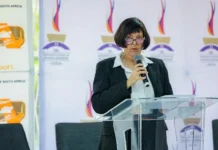
Bureau for Economic Research (BER) Chief Economist Lisette IJssel de Schepper noted that while the relief is temporary, it is a necessary intervention to suppress price shocks at the start of the value chain.
“If we had not seen the fuel levy receive relief, we would have likely seen further petrol and diesel price increases in November,” IJssel de Schepper explained. She highlighted that while higher-income households benefit the most from fuel price reductions, the broader economic impact is significant. Lower diesel prices directly assist farmers and freight operators, which helps prevent transport and distribution costs from filtering through to food prices and the general cost of living.
However, she cautioned that the relief is not a perfect measure, noting that while consumers will see savings at the pump, sectors like taxi associations historically struggle to lower fares when fuel prices drop.
Revised Growth Forecasts and the Debt Reality
The Medium-Term Budget also revealed a downward revision in economic growth expectations. Treasury cut its 2026 growth forecast to 1.2%, down from the 1.6% projected in February. The revised outlook anticipates 1.6% growth for the following year, reaching 2% by 2029. This downgrade is attributed to higher fuel prices, geopolitical conflicts—including the war involving Iran and the closure of critical oil export straits—as well as the impacts of the El Niño weather phenomenon.
According to IJssel de Schepper, while a 0.4% gap might seem like a rounding error to the public, it significantly impacts nominal economic growth, which directly determines government revenue.
On the debt front, the government reported that debt stabilized at 78.4% of GDP last year, slightly below the 78.9% peak projected earlier in the year. It is expected to ease to 76.6% by the 2029/2030 fiscal year. For the 2026/27 period, the government expects to collect R139.9 billion more than it spends before interest. However, with debt service costs swallowing R441 billion—meaning 21 cents of every rand of revenue goes toward debt repayment—the state still faces a borrowing deficit of just over R300 billion.
The Human Cost of Austerity and Public Sector Strain
While Treasury celebrates debt stabilization, labor and social advocates argue that fiscal consolidation has devastated public services.
Dr. Dick Forslund from Zabalaza for Socialism described the situation on the ground as a “tremendous crisis,” particularly in basic education and public health. He pointed out that the public health budget’s average growth next year is lower than inflation, equating to a real-terms cut. Highlighting the dire conditions, Dr. Forslund referenced severe overcrowding and equipment shortages at Murchison Hospital outside Port Shepstone, and noted that the health minister previously acknowledged that an average of 5,900 doctors and nurses have been quitting their jobs every year since 2015 due to dire working conditions.
FEDUSA Deputy General Secretary Ashley Benjamin echoed these sentiments, emphasizing that austerity has a human face. “Somebody has paid the price for this crisis… it is the workers in particular, public servants, but also workers in the private sector and the citizenry at large,” Benjamin stated, noting that ordinary South Africans are facing 10-to-12-hour queues at public hospitals.
Benjamin also raised serious concerns about the government’s offer of early retirement and voluntary exit packages in the public service, which are expected to save R4.4 billion. “When these early retirees exit the public sector, government is not replacing them with new doctors, new nurses, new policemen, and that puts more pressure on public servants and erodes the quality of service,” he warned.
While FEDUSA welcomed the government’s commitment to employ 10,000 labor inspectors to enforce labor laws, Benjamin rejected the notion of these roles being temporary internships, demanding they be permanently employed to ensure decent work for all.
Rethinking Tax Policy and Fiscal Priorities
Looking at the broader macroeconomic picture, Dr. Forslund challenged the narrative that the government’s finances should be viewed like a household budget. Unlike a household, a government has the power to tax and implement structural reforms.
Forslund criticized the fuel levy as a regressive tax that hits the rich and poor equally, suggesting it should eventually be replaced with a progressive personal income tax. To fund essential services without relying heavily on regressive taxes or foreign borrowing—which he warned against, specifically criticizing the coalition government’s reliance on World Bank and IMF foreign-currency loans—Forslund advocated for taxing the wealthy, imposing wealth taxes, and curbing illicit financial flows.
Furthermore, he highlighted a moral failing in the budget’s approach to social crises. Despite acknowledging that over 25% of children under five suffer from malnutrition and stunted growth, the budget allocates a meager R1.6 billion over three years to address child hunger. Dr. Forslund also criticized the government’s ongoing legal appeals regarding the R350 Social Relief of Distress (SRD) grant, arguing that with debt stabilized, the state’s moral imperative must shift toward eradicating child hunger and protecting the most vulnerable.
Ultimately, while the R10-billion fuel relief provides a temporary shield at the pumps, the consensus among experts is clear: the true test of the Medium-Term Budget will not be found in Treasury’s debt ratios, but in whether these macroeconomic adjustments translate into tangible relief for South Africa’s clinics, schools, and everyday households.