



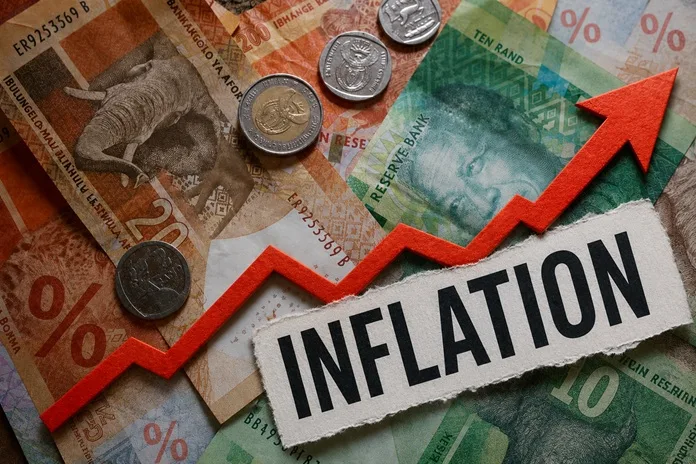
JOHANNESBURG, Gauteng — The South African middle class is currently shouldering a growing debt burden as inflation climbs to 5%, driving financial stress to its highest levels in years. According to economist Peter Baur, this mounting pressure is compounded by the South African Reserve Bank’s recent decision to hold interest rates steady, leaving households to navigate rising costs for fuel, electricity, and food amid profound global uncertainty.
South Africans are paying more across the board, with new data from Stats SA confirming the 5% inflation mark. Despite this upward trajectory, the Reserve Bank opted not to hike interest rates, keeping the repo rate at 7% and the prime lending rate at 10.5%.
Peter Baur noted that the decision was surprising, revealing that the governor was reportedly outvoted 3-to-2 in the deliberation. While the central bank remains strict on inflation to protect the strength of the South African rand, Baur explained that while a quarter-basis-point climb was expected, the door remains open for an interest rate increase later this year.
Global Uncertainty and Imported Inflation
A significant driver of the current financial distress is a volatile global landscape. Baur highlighted several compounding international factors, including ongoing conflict in the Middle East, the unresolved war in Ukraine, and the impact of the Trump administration’s policies on global trade patterns.
These geopolitical dynamics have pushed oil prices past the $100 per barrel mark. This surge directly impacts domestic energy costs and the price of fertilizers, which in turn drives up food production costs for local households. Furthermore, Baur pointed to the rising costs of technology, including the global expansion of artificial intelligence infrastructure and computer components, as an escalating expense that is severely impacting middle-income households.
Because the inflation South Africa is experiencing is predominantly imported, changing local demand dynamics alone cannot shield the economy from these external price shocks.
Household Debt and Shifting Survival Strategies
The financial strain is visibly altering consumer behavior. Recent data from Debt Busters indicates that South Africans are less enthusiastic about seeking additional income streams compared to previous years, painting a dire picture of consumer fatigue.
Baur emphasized that the structural challenges of the South African economy, particularly persistent high unemployment, are exacerbating the situation. The debt-to-household-income ratio has turned negative, meaning many families are spending more than they earn, leading to increased credit and interest rate costs.
In response, households are aggressively restructuring their spending patterns toward basic survival. Families are now forced to make difficult trade-offs, prioritizing essential expenditures like food, education, and transport over discretionary spending. This shift is reflected in declining consumer and business confidence indices, signaling widespread uncertainty about the future of the local economy.
Economic Bright Spots Amid the Crunch
Despite the grim outlook for household budgets, Baur identified several foundational strengths in the South African economy. The rand has remained relatively strong against major international currencies like the US dollar and the euro since August of last year, despite ongoing volatility.
Additionally, South Africa boasts solid, globally competitive financial institutions and systems. The country’s improving standing with credit rating agencies also serves as a key positive factor. On a broader scale, Baur noted that emerging markets are increasingly viewed as alternative areas for economic investment and growth, which could work in South Africa’s favor as global investors look beyond traditional Western markets.
While economic growth recently touched the 1% mark, Baur cautioned that the manufacturers’ Purchasing Managers’ Index (PMI) remains below 50, indicating contraction and lingering anxiety about future economic performance.
Navigating the Path Forward
When asked about potential solutions to ease consumer strain, Baur stated that government communication regarding strategic goals and infrastructural development is already robust, as seen in recent State of the Nation addresses. The focus remains on finding innovative ways to close structural gaps in the economy.
For individual households, Baur’s advice is pragmatic: “tying down the tent.” He urged families to protect their incomes, prioritize stability, and continue restructuring debt. On a macro level, he emphasized the need to support foreign investment, bolster trade, and advance infrastructural development. He also suggested that policymakers explore methods to alleviate household pressures, such as implementing fuel price controls or other regulatory measures to ease the burden at the pump.
Until global uncertainties stabilize, the South African middle class will likely continue to navigate a tightrope of restricted spending, high debt, and the ongoing challenge of making every rand count.