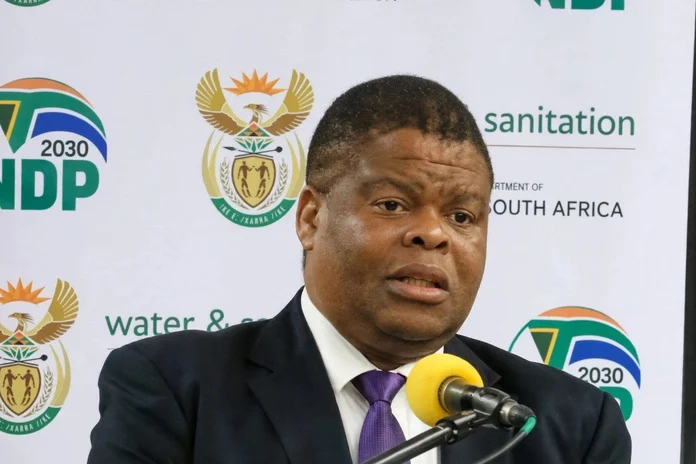
GAUTENG — The South Africa water crisis has prompted the Department of Water and Sanitation to urge Gauteng residents to significantly reduce their consumption as the country braces for the 2026/27 summer season. Deputy Minister of Water and Sanitation David Mahlobo warned that a combination of rising demand, a prolonged heatwave, and anticipated El Niño conditions are severely pressurizing national water supplies and worsening existing shortages in areas already experiencing disruptions.
Currently, Gauteng residents consume an average of 250 liters of water per person daily. This figure is significantly higher than the international average, which ranges between 137 and 173 liters per person. The department has stated that it cannot increase current water allocations to meet this rising demand.
Addressing the methodology behind the consumption data, Mahlobo clarified that while the 250-liter figure is calculated based on water pumped divided by population density, it is used as a guided metric. He noted that the calculation accounts for water services but does not fully isolate infrastructure inefficiencies, such as physical leaks, illegal connections, and unauthorized water extraction. Mahlobo highlighted a stark disparity, pointing out that while some citizens have entirely dry taps, residents in affluent areas continue to waste water on swimming pools, irrigation, and inefficient business practices.
The national water supply system remains highly vulnerable. Rand Water is currently pumping at maximum capacity. Mahlobo noted that during the State of the Nation Address (SONA), the President authorized an additional temporary license of 200 million liters for Rand Water to pump, in consultation with Water and Sanitation Minister Pemmy Majodina and Mahlobo.
Despite these measures, specific regions are over-extracting. Johannesburg South has been drawing nearly 194 megaliters, while Ekurhuleni has exceeded 300 megaliters, negatively affecting areas below the consumption line such as Bedfordview. The system has also faced severe weather-related disruptions. A lightning strike at an Ekurhuleni substation recently caused outages across Pretoria, Ekurhuleni, Mpumalanga, Govan Mbeki, Leytonburg, and Thembisa. Additionally, a strike at a Mapleton substation affected five municipalities before technical teams, alongside Executive Mayor Doctor Xhakaza, restored the system.
In Tshwane, regarding the recent outbreak of gastrointestinal diseases linked to water supply issues, Rand Water was deployed to assist. Mahlobo confirmed that phase two of this intervention has been completed, and the system is currently being cleaned. As of the latest assessment, the Johannesburg South system is operating at 47% capacity, which the department considers a stable level.
Mahlobo issued strict directives to the public, urging citizens to close taps if water is not flowing to prevent unexpected flooding when pressure returns, and to cease non-essential water use such as gardening, irrigation, and car washes. He also addressed the upcoming democratic voting process, emphasizing the need to ensure voters in vulnerable areas have access to hydration while standing in voting lines during the anticipated heatwave.
Looking ahead, meteorologists have forecasted continued high temperatures alongside potential storms. To mitigate further infrastructure damage, the department is collaborating with the Minister of Electricity and provincial Premiers to protect critical substations, ensuring that no bulk supply lines to Rand Water are compromised. Mahlobo praised the ongoing around-the-clock efforts of engineers and scientists, and commended local leaders, including Doctor Xhakaza and Mayor Nasiphi Moya, for maintaining transparent communication with citizens regarding service delivery amidst the ongoing election period.